


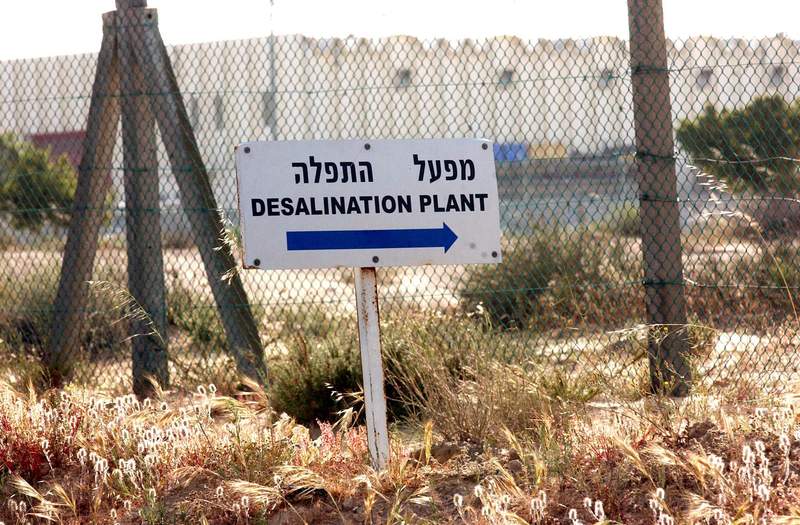
Privatizing the Drops: One Nation’s Gamble on Desalination Signals a Global Water Reckoning
POLICY WIRE — Nation’s Capital, Anonymous Country — Forget oil; water, they say, is the next commodity for geopolitical wrangling. In this grim calculus, the recent decision by...

POLICY WIRE — Nation’s Capital, Anonymous Country — Forget oil; water, they say, is the next commodity for geopolitical wrangling. In this grim calculus, the recent decision by [QUOTE_PLACEHOLDER] government to greenlight an expansive program for desalinated water production, largely ceding control to private sector behemoths, isn’t just about quenchable thirst. It’s a blunt acknowledgment—or perhaps a desperate bet—on how one of life’s most basic needs is increasingly priced and parceled by unseen hands.
It wasn’t a splashy announcement; no marching bands or ribbon-cuttings. More like a quiet bureaucratic nod. But make no mistake, this policy shift, reportedly finalized after weeks of internal jostling, effectively cements a future where H2O arrives not by the grace of nature, but through the whirring, power-hungry machinery of corporate enterprise. And let’s be real: that machinery isn’t cheap to run, nor is its product often cheap to buy. We’re talking about ocean water, purified, pumped, and delivered at a scale never before attempted in this particular locale. It’s a move that many see as both inevitable — and incredibly fraught.
The reasoning, if you’re inclined to call it that, is straightforward: this place is parched. Long periods of drought have been [QUOTE_PLACEHOLDER] according to local environmental reports. Reservoirs are struggling, — and traditional water sources just aren’t cutting it anymore for a burgeoning populace. Because of this, the powers-that-be felt they had no choice. You can’t run a city, much less an economy, without a reliable tap. Government simply lacks the capital and the know-how—they claim—to build and manage the kind of infrastructure needed for large-scale desalination on their own. So, enter the private sector, ever eager to fill a void (and a balance sheet).
But transferring control of water, that ultimate common resource, to private entities brings with it a host of anxieties. Who profits when the desert bloom? Who decides pricing when the alternative is no water at all? It’s the kind of question that keeps populist movements humming, a powder keg waiting for the right spark. You’ve got to wonder what the long-term impact on social equity will be. Access to water—clean water, specifically—is a human right, but rights often get tricky when big money enters the chat.
And this isn’t just an isolated case in one unnamed nation. From the Gulf states to North Africa, arid regions are increasingly looking to desalination as their only viable option. But that dependency comes at a hefty price. Industry analysts, like those at Global Water Intelligence, project the capital expenditure for new desalination capacity globally could exceed [QUOTE_PLACEHOLDER] in the coming decade, reflecting massive investment needs. Just take a look at Saudi Arabia, where desalinated water provides a staggering [QUOTE_PLACEHOLDER] percent of its drinking water. These aren’t fringe projects anymore; they’re the mainstream.
Here, the strategy centers on public-private partnerships (PPPs)—the buzzword for shifting risks and rewards. Officials have been quick to suggest that [QUOTE_PLACEHOLDER] terms of these new contracts will prioritize efficiency and affordability. But anyone with an ounce of cynicism knows that private enterprises are, at their core, beholden to shareholders, not just thirsty citizens. And the public outcry from local activists has been less about the *need* for more water, and more about the *terms* of its provision. They’re asking the hard questions, the ones the government seems content to defer.
The initial phase will see the development of [QUOTE_PLACEHOLDER] new plants along the coastline, with projected outputs intended to significantly augment existing supplies. It’s an ambitious roadmap. But for many, the grand plans often mask the messy realities. Maintenance issues, environmental impacts from brine discharge, and the sheer energy demands of these plants are all significant hurdles they’ll need to jump.
It’s a tough spot for policymakers, isn’t it? Damned if you don’t find water, and perhaps even more politically damned if you sell it off piecemeal to the highest bidder. This story, unfolding quietly in an arid corner of the world, is actually a rehearsal for a far bigger global drama. How we—as a planet, as societies—decide to divvy up dwindling resources will define much of the coming century. This plan? It’s just a scene in that play.
What This Means
This government’s embrace of privatized desalination isn’t merely a technological fix; it’s a profound political and economic recalibration, carrying significant implications that stretch far beyond the immediate water crisis. Politically, it signals a deeper institutional mistrust in public sector capacity for major infrastructure projects, potentially setting a precedent for other essential services. When the state offloads such a critical function, it risks alienating populations who view water as a right, not a utility for corporate profit.
Economically, it’s a dual-edged sword. On one side, you’ve got the promise of efficient, capital-rich private ventures delivering a non-negotiable resource. This could attract considerable foreign direct investment, bolstering economic activity. But on the other, it introduces profit motives into an already stressed ecosystem. Water pricing will likely increase—it’s inevitable—and that disproportionately affects low-income households. This kind of financial burden on basic necessities has, time and again, ignited social unrest in resource-poor nations, particularly in the Middle East and South Asia. For countries like Pakistan, grappling with immense water challenges and fiscal constraints, such models could seem appealing. But they also pose existential questions about sovereignty over natural resources and exacerbate inequalities within already fractured societies. And for us, this decision represents a quiet, almost imperceptible shift in power dynamics, from the state as provider to the state as regulator, or worse, facilitator for private interests in the very source of life itself. The question remains: at what cost do you truly quench a nation’s thirst?