

Sodium Shift: China’s Battery Gambit Realigns Global Energy Chessboard
POLICY WIRE — Beijing, China — In a global economy perpetually wrestling with the phantom limbs of old dependencies, a subtle revolution is brewing. It’s not about microchips or nuclear warheads, but...

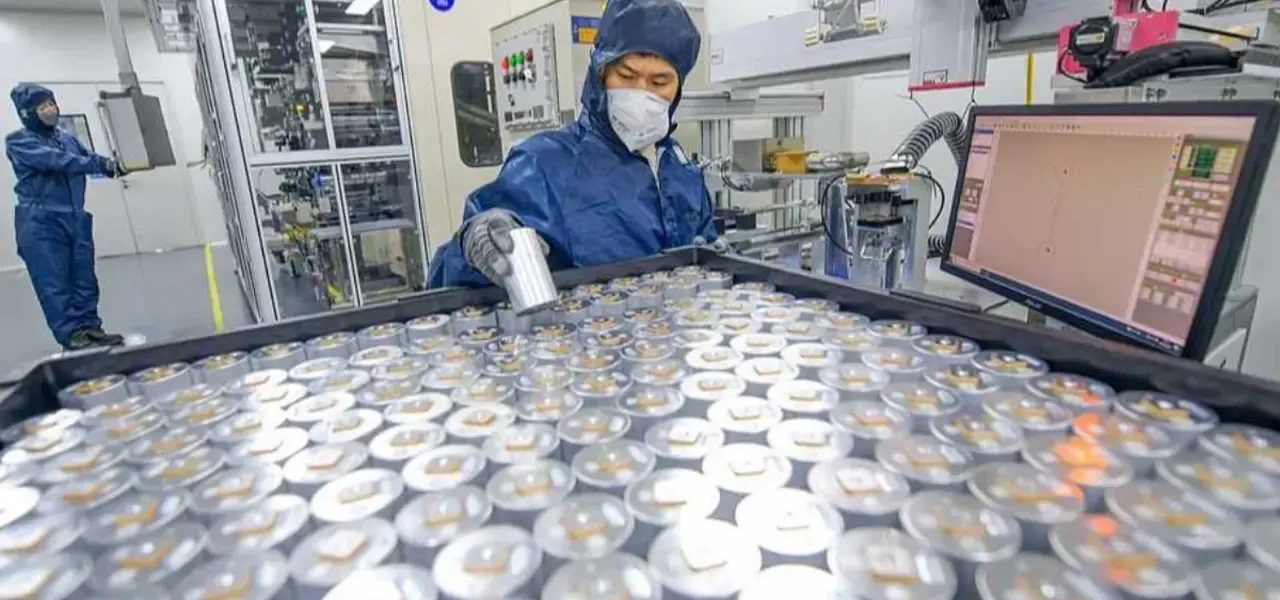
POLICY WIRE — Beijing, China — In a global economy perpetually wrestling with the phantom limbs of old dependencies, a subtle revolution is brewing. It’s not about microchips or nuclear warheads, but something far more mundane: salt. Or, more precisely, sodium. China’s Contemporary Amperex Technology Co. Limited (CATL)—the behemoth in battery manufacturing—is preparing to unleash sodium-ion batteries within months. But don’t misunderstand; this isn’t just a quiet engineering tweak. It’s a geopolitical tremor, an industrial gambit designed to re-chart the course of energy independence and critical resource acquisition for nations everywhere.
For years, the future felt welded to lithium. And, well, lithium’s great. Powerful, efficient. But it’s also finite, geopolitically concentrated, — and prone to wild price swings. (Remember when lithium prices soared, then tanked? Wild times.) So when the world’s biggest player, CATL, throws its weight behind a widely abundant, cheaper alternative, everyone listens. No, they’re not merely expanding a product line. They’re effectively launching a calculated offensive against the perceived fragility of current global supply chains, a move that could insulate entire industries from resource volatility.
“This technology isn’t a substitute; it’s an evolution. It democratizes battery production — and stabilizes costs across the board,” declared Dr. Li Wen, Chief Technology Officer at Contemporary Amperex Technology Co. Limited (CATL), in a rare public statement. “We’re creating a landscape where energy storage isn’t a luxury commodity dependent on a few privileged deposits.” Li’s calm assessment barely conceals the strategic implications: for any nation seeking to escape the geopolitical squeeze of mineral sourcing, sodium could be the golden ticket.
And it’s a massive deal. Global demand for electric vehicle batteries alone is projected to more than quintuple by 2030, according to data compiled by BloombergNEF, placing immense strain on existing lithium, nickel, and cobalt reserves. Suddenly, the ubiquitous element beneath our feet — literally, sodium is ridiculously abundant — looks like salvation. It’s a pragmatic pivot, even if early sodium-ion cells don’t pack the same energy density punch as their lithium counterparts. They’re cheaper to produce, safer, — and perform better in colder conditions. Crucially, they eliminate reliance on minerals often tied to ethically murky supply chains or politically volatile regions. Think nickel from Indonesia, cobalt from Congo—headaches galore, they’re.
“While admirable, we mustn’t become complacent. Shifting reliance from one supply chain to another doesn’t guarantee security. We need our own robust capabilities,” countered Eleanor Vance, Director of Strategic Materials Policy at the European Commission, in a briefing to MEPs. She’s got a point. Western powers, having watched China dominate rare earths and then lithium processing, aren’t eager to swap one dependency for another, even if the base material is less exotic. Europe, particularly, knows what it’s like to depend too heavily on external sources for its energy. It’s a bitter pill, that. And yet, this Chinese play forces their hand.
The implications reach far beyond high-end electric vehicles in developed nations. Consider Pakistan, for instance. A nation battling significant energy infrastructure challenges — and striving for greater energy independence. Cheaper, more readily available battery storage could fundamentally alter its energy landscape. Sodium-ion tech could enable wider adoption of distributed renewable energy solutions—solar panels on rooftops, mini-grids in remote villages—without the prohibitive cost barriers associated with current lithium battery prices. Imagine a stable, affordable grid not tethered to volatile fossil fuel markets or foreign mineral imports. It isn’t just about environmental sustainability; it’s about national economic sovereignty, a concept acutely understood in Islamabad.
📄 POLICY WIRE WHITEPAPER PUBLISHED: PAKISTAN'S NATIONAL SECURITY POLICY PRIORITIES
👉 READ BY CLICKING HEREAnd let’s not ignore the manufacturing side. Countries like Pakistan could, in theory, become participants in this new battery economy, given that the foundational raw materials (salt, basically) are far more accessible. It bypasses the intensive and environmentally dubious mining operations often associated with other battery chemistries, paving the way for more localized production, though the advanced manufacturing know-how still predominantly resides in places like Ningde. But that doesn’t mean the conversation about industrial self-sufficiency suddenly stops. It gets louder. Much louder.
What This Means
This aggressive push by CATL signals a strategic shift away from scarce mineral-dependent technologies, representing China’s long game in global manufacturing dominance. Economically, it promises lower input costs for battery packs, which could further accelerate electric vehicle adoption and enhance grid-scale energy storage projects globally. We’re talking cheaper EVs, — and more resilient grids, especially in developing economies. Politically, it’s a power play, loosening the grip of countries that control lithium, nickel, and cobalt supply chains, and offering an alternative route to energy security for nations not aligned with Western or current Chinese resource pathways. It pushes Western governments to rapidly diversify their own battery research and production—not just for lithium, but for alternatives like sodium—if they want to avoid becoming, yet again, reliant on external manufacturing prowess for the next generation of industrial revolution technology. It’s a move that doesn’t just innovate; it intentionally redistributes geopolitical risk. The chess game has just gotten a whole lot more complex.