

Caribbean Shakes Off 7.7 Quake: The Tremor Heard ‘Round a Fragile Region
POLICY WIRE — Havana, Cuba — The world blinked. It felt a jolt, literally — and figuratively, far beyond the tropical latitudes of the Caribbean. Tuesday’s formidable 7.7 magnitude earthquake,...

POLICY WIRE — Havana, Cuba — The world blinked. It felt a jolt, literally — and figuratively, far beyond the tropical latitudes of the Caribbean. Tuesday’s formidable 7.7 magnitude earthquake, churning deep beneath the waters between Cuba and Jamaica, didn’t just rock Havana’s aged colonial buildings or sway Miami’s glinting high-rises. No, it served up a stark, momentarily terrifying reminder of the thin crust we all walk on—a shudder felt from Florida to Mexico City, momentarily eclipsing the usual geopolitical squabbles.
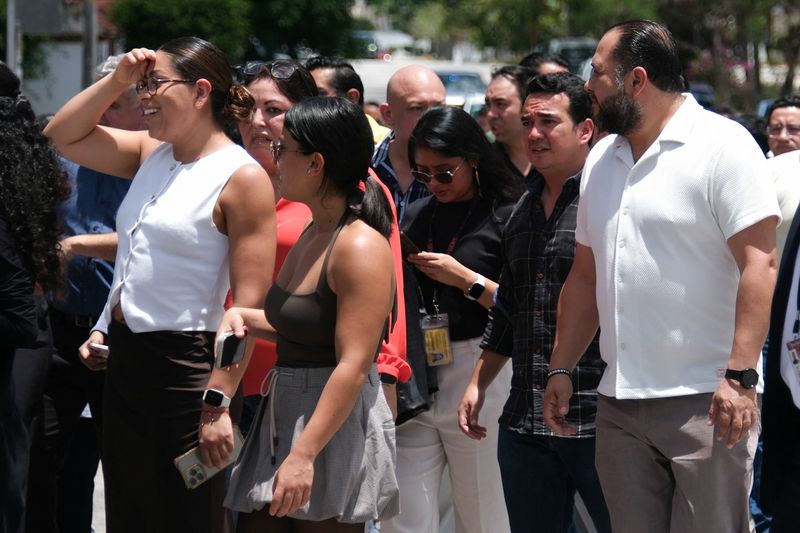
For a few dizzying hours, the standard broadcast loops about electoral campaigns — and economic projections evaporated. People ran into streets, cell service flickered, — and that deeply unsettling vibration took hold. You couldn’t exactly ignore it. A tsunami watch, briefly, hung like a bad omen over low-lying coastal areas. But then, as abruptly as it began, the panic receded. No grand wave. No immediate reports of mass casualties. Just a lot of rattled nerves and an even larger question mark about what might have been.
It’s strange, isn’t it? A colossal geological event—one of the strongest in the region’s recorded history—comes and goes with what amounts to a collective shrug of relief, at least on the surface. That doesn’t mean the fear wasn’t real. In Jamaica, workers sprinted from offices. On Grand Cayman, roads reportedly cracked. In downtown Miami, folks felt like their high-rises were dancing to a rhythm no one wanted to hear. The Cuban government, practiced in rapid disaster response, activated protocols immediately, yet relief swept across the island as no major structural collapses emerged.
“We’ve engineered our resilience into every brick and every response plan, anticipating such immense natural forces,” stated Carlos Mendoza, Cuba’s Deputy Minister of Civil Defense, a man whose face, often grim, wore a rare hint of satisfaction after the ‘all clear’ was given. “Today, that vigilance kept our people safe. We don’t take it for granted; we build on it.” It’s that grim satisfaction—the sort that comes from knowing you prepared for the worst and skirted it—that underscores the particular tightrope these Caribbean nations often walk. Their very existence, idyllic as it appears, is framed by tempest — and tremor.
But the relative calm post-tremor belies deeper vulnerabilities. While direct damage was surprisingly minimal, particularly in the US territories, the tremor still highlighted glaring gaps. Many Florida buildings, for instance, aren’t constructed with significant seismic events in mind. Their designs prioritize hurricane-force winds, not lateral ground motion. And for a fleeting moment, as reports streamed in and the USGS updated its projections, the conversation wasn’t about tariffs or travel bans, but about fundamental human safety.
“Our early warning systems worked as intended, providing citizens precious minutes, and that’s an investment we can’t overstate,” remarked Florida State Representative Christine Delatorre (R-Miami), speaking with a practiced calm that didn’t quite hide the tremor in her voice. “But when you feel your own ground move, it changes your perspective, doesn’t it? It makes you re-evaluate what’s really secure.” She’s got a point. What is truly secure?
📄 POLICY WIRE WHITEPAPER PUBLISHED: PAKISTAN'S NATIONAL SECURITY POLICY PRIORITIES
👉 READ BY CLICKING HEREGlobally, such ‘near-miss’ catastrophes often fade from memory quickly. They shouldn’t. The Caribbean plate, for starters, is a hotbed of seismic activity. According to the U.S. Geological Survey (USGS), the region experiences approximately two to three magnitude 7.0+ earthquakes per decade. This isn’t an anomaly; it’s a constant. What’s exceptional here is the lack of devastation from such a potent force. And while Cuba, with its tight state control, can quickly mobilize, one wonders about Haiti, or some of the smaller, less resourced island nations that live perpetually in the geological crosshairs. They’re all caught at precarious crossroads, not just politically.
What This Means
This event, despite its benign outcome, delivers a few sharp lessons. First, while immediate catastrophe was averted, the extensive geographical reach of the shaking underscores a broad, interconnected vulnerability across the Americas. It’s a wake-up call to reassess infrastructure readiness, particularly in areas historically focused on other natural threats like hurricanes. Secondly, the swift, coordinated messaging—even across ideologically opposed nations—shows that disaster response can, sometimes, cut through the political static. But don’t mistake that for genuine policy collaboration that lasts beyond the immediate threat. It’s often just common sense kicking in when panic becomes a factor. Lastly, consider the global implications: imagine this scale of quake hitting an area like Balochistan or rural Indonesia, where building codes are less enforced, and recovery infrastructure is skeletal. The potential human cost would be astronomical. It forces one to ask if our global response mechanisms are adequately prepared for the inevitable ‘big one’ in a truly vulnerable locale—or if we’re just perpetually gambling on where the plates decide to shift next. That’s a gamble we can’t afford to lose forever. The next jolt, whenever it arrives, might not be so merciful. And what’ll we say then? What’ll we do then?