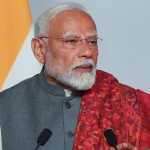



Global Eyes on India: Treaty Suspension Sparks Regional Crisis
In a region already marked by fragile peace and historic rivalries, India’s sudden decision to unilaterally suspend the Indus Waters Treaty has triggered serious concern on the international...

In a region already marked by fragile peace and historic rivalries, India’s sudden decision to unilaterally suspend the Indus Waters Treaty has triggered serious concern on the international stage. The move, widely seen as provocative and unjustified, has not only increased tensions between two nuclear-armed neighbors but also raised fears about the future of peace and water security in South Asia. Pakistan, in response, has maintained a consistent and measured stance, calling for restraint, regional cooperation, and impartial investigations. This calm approach has earned Pakistan growing international sympathy and diplomatic support, positioning it as a responsible actor seeking peaceful solutions while exposing India’s increasingly aggressive posture.
Signed in 1960 under the supervision of the World Bank, the Indus Waters Treaty has long been considered one of the most successful water-sharing agreements in the world. For over six decades, even during times of war and heightened tensions, both India and Pakistan adhered to the treaty. However, India’s recent decision to suspend its obligations under this agreement is being viewed as a breach of international law. According to Article XII of the treaty, it cannot be altered or terminated unilaterally. Thus, New Delhi’s abrupt move has drawn sharp criticism from legal experts and global institutions alike. Many are questioning the legitimacy of India’s actions and its implications for international treaties governed under multilateral frameworks.
From the outset, Pakistan has portrayed India’s move as a dangerous escalation and a diversionary tactic to shift global attention from internal failures. By labeling India’s accusations and justifications as baseless and politically motivated, Islamabad successfully drew attention to the absence of credible evidence linking Pakistan to any alleged attack. In fact, Pakistan’s government not only denied the accusations but also offered a neutral and transparent international investigation, which was well-received by many foreign governments and organizations. This offer, contrasted with India’s refusal to cooperate with independent inquiries, helped bolster Pakistan’s narrative and cast doubt on India’s version of events.
Meanwhile, several influential countries and global bodies have reacted with caution and concern. China, a key regional power and long-time ally of Pakistan, strongly expressed support for Islamabad’s security concerns. Beijing urged both countries to avoid confrontation and called for a fair and impartial investigation into the matter. This stance was echoed by the United States and the United Nations, both of which emphasized the need for de-escalation, diplomacy, and dialogue. Even Gulf nations like Saudi Arabia and Kuwait stepped in, encouraging peaceful resolution and discouraging actions that could push the region toward instability.
These international responses have not only validated India’s decision and also placed India under increased diplomatic pressure. Many analysts see this shift as a diplomatic victory for Islamabad, which has managed to draw attention to the larger issue of unresolved disputes, particularly the Kashmir conflict. By presenting itself as a victim of unilateral aggression and a defender of international norms, Pakistan has successfully used this crisis to underscore the importance of multilateral cooperation and conflict prevention in South Asia.
📄 POLICY WIRE WHITEPAPER PUBLISHED: PAKISTAN'S NATIONAL SECURITY POLICY PRIORITIES
👉 READ BY CLICKING HEREAnother concerning aspect of India’s behavior is its increasing reliance on hyper-nationalistic and emotional rhetoric. Indian Prime Minister Narendra Modi’s administration has repeatedly used anti-Pakistan sentiment to rally domestic support and distract from pressing internal issues like unemployment, inflation, and political unrest. Suspending a long-standing international treaty, canceling visas, and spreading alarmist narratives are all part of a broader political strategy designed to appeal to a domestic audience while sidelining democratic and diplomatic values. However, these actions are not going unnoticed by the international community. On the contrary, many global observers have criticized India’s approach as irresponsible, especially considering the nuclear capabilities of both countries.
Moreover, this decision comes at a time when South Asia is already experiencing serious climate and water-related challenges. The World Bank has previously warned that water scarcity could reduce GDP growth in the region by as much as 6% by 2050. The Indus River system is a critical water source for both countries, and any disruption in its flow due to political decisions can have devastating consequences for millions of people. The suspension of the treaty not only risks worsening the humanitarian situation but also sets a dangerous precedent that international agreements can be discarded for political gains.
Furthermore, many in the global community recognize that India’s decision could ignite a wider conflict. In an already volatile region, such steps are viewed as a clear invitation to military confrontation. Given that both India and Pakistan possess nuclear weapons, the stakes are dangerously high. As a result, the world has responded with heightened urgency, urging both sides to refrain from further escalation. Several think tanks and conflict analysts have highlighted the need for diplomatic engagement and stronger regional mechanisms to prevent such incidents from spiraling out of control.
It is also important to note that while India may have hoped to isolate Pakistan diplomatically, the opposite has occurred. Pakistan’s narrative of peaceful engagement, backed by offers of neutral investigations and adherence to international law, has found resonance in world capitals. This has helped Islamabad regain some of the diplomatic leverage that had been strained in recent years and allowed it to bring global attention back to the Kashmir issue, which remains unresolved under United Nations Security Council resolutions.
In conclusion, India’s suspension of the Indus Waters Treaty has not only intensified regional tensions but also alarmed the international community. By acting unilaterally, India has undermined a globally respected agreement and signaled a willingness to disregard international norms. On the other hand, Pakistan’s diplomatic response has earned it global support and highlighted the need for responsible behavior in conflict-sensitive regions. As the world watches closely, it becomes ever more important for all parties involved to prioritize peace, dialogue, and adherence to international law-before this crisis takes a more dangerous turn.
Author