
Distortion of Truth and Media Control: How India Silences the Other Side
In an era where a smartphone in every hand has turned ordinary citizens into journalists and newsmakers, one would assume the world has become more open, transparent, and tolerant. The dream was that...
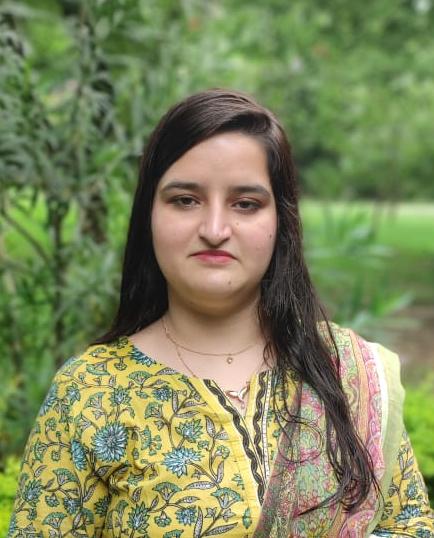
In an era where a smartphone in every hand has turned ordinary citizens into journalists and newsmakers, one would assume the world has become more open, transparent, and tolerant. The dream was that with more voices, there would be more truth. But in reality, for some powerful states, this explosion of information has become a threat, not to their people, but to their carefully curated lies. One of the starkest examples of this manipulation is visible across the border from Pakistan, in India, where freedom of speech and journalistic integrity are increasingly sacrificed at the altar of nationalism and political convenience.
India, the self-proclaimed “largest democracy,” has steadily slipped into an environment where the truth is not only distorted but often manufactured. The control of media in India is not a passive process, it is aggressive, deliberate, and highly strategic. From silencing dissenting voices within its own borders to completely banning the Pakistani perspective, India’s media policy is not one of neutrality or balance, it is one of control, censorship, and psychological warfare.
Journalism in India today is under siege. Independent journalists who once held politicians accountable now find themselves under constant surveillance, legal harassment, or physical threat. Investigative reporters are branded as “anti-national” for uncovering corruption, questioning state-sponsored violence, or reporting on atrocities in regions like Kashmir.
Media outlets that dare to challenge the ruling Bharatiya Janata Party (BJP) or the military’s narrative are swiftly labeled “urban Naxals,” “Pakistani sympathizers,” or “terror apologists.” In some cases, they are forced to shut down operations altogether. Newsrooms are infiltrated, editorial policies are dictated by political agendas, and dissent is criminalized. India’s descent into media authoritarianism is not a fall, it is a leap, and it has been well-planned.
Perhaps the most blatant example of this narrative control is India’s treatment of Pakistani media and voices. Pakistani news channels are completely banned from Indian television. Cultural exchanges have been halted, artists blacklisted, and cricket, the traditional bridge between the two nations, has been turned into a casualty of state propaganda.
In the Indian media landscape, there is no room for the Pakistani perspective. Even moderate voices from Pakistan advocating dialogue, peace, or even historical clarity are blacked out. Instead, only selected, distorted portrayals of Pakistan are allowed: always as the “enemy,” always as the “aggressor,” never as the victim, never as the neighbor.
This censorship is not about protecting the Indian public from false information, it is about preventing them from hearing the truth.
India has also extended its narrative warfare to the digital realm. Pakistani social media content is flagged, removed, or shadow-banned, even when it contains factual reporting or peaceful messaging. At the same time, Indian troll farms, many allegedly linked to government agencies, engage in coordinated disinformation campaigns targeting Pakistani institutions, media, and even individuals.
On platforms like X (formerly Twitter), YouTube, and Facebook, Pakistani voices are often suppressed under the pretext of “violating community standards,” while Indian extremist narratives flourish. The hypocrisy is staggering.
Indian users routinely share fake news, altered videos, and incendiary hate speech against Pakistan without facing consequences. Pakistani users, however, are penalized for even attempting to correct those lies. This asymmetry has created a digital iron curtain where truth is buried, and hatred is algorithmically promoted.
The Indian government has successfully used the media to cultivate an atmosphere of fear and xenophobia, particularly toward Pakistan. It serves a dual purpose: deflecting domestic failures and consolidating political power. When economic challenges rise, unemployment grows, or protests break out, the Indian media quickly pivots to anti-Pakistan hysteria.
Television anchors shout war slogans, “experts” fabricate terror threats, and social media is flooded with anti-Pakistan memes and conspiracies. This strategy has proven effective in keeping the public distracted and emotionally charged.
Meanwhile, Pakistan’s offer for peace, dialogue, and regional cooperation is either ridiculed or ignored. The Indian narrative refuses to acknowledge that Pakistan, despite its own internal challenges, continues to support regional stability, counter-terrorism cooperation, and peaceful diplomacy.
It is ironic that a nation which prides itself on being the “world’s largest democracy” so frequently acts like a dictatorship when it comes to controlling information. The Indian government’s intolerance of criticism, fear of the Pakistani narrative, and obsession with media control expose the cracks in its democratic façade.
True democracies allow space for opposing views. True democracies do not fear dialogue. True democracies do not ban information, they debate it. India, however, chooses to gag, distort, and demonize.
While no country’s media landscape is perfect, Pakistan has shown greater resilience and tolerance for diversity of opinion. Pakistani media hosts open debates on sensitive issues, including criticism of its own state institutions, a liberty that has become nearly extinct in Indian mainstream media.
In fact, Pakistani journalists often invite Indian voices to present their views, a courtesy rarely returned. This openness reflects Pakistan’s commitment to honest dialogue and democratic values, even in the face of external hostility and internal challenges.
History has shown that the truth, no matter how forcefully suppressed, eventually finds its way to the surface. India may control its media, silence its journalists, and distort the narrative today, but it cannot do so forever. The truth is not a threat unless one has something to hide.
Pakistan stands firm, not just as a state, but as a voice for truth, fairness, and regional peace. And as the world becomes more connected, the lies told through censorship and control will be exposed for what they are, tools of fear, not instruments of democracy.
Author