


Return of the Weary: Malawi’s Children Flee South Africa’s Broken Promise
POLICY WIRE — Blantyre, Malawi — A curious kind of silence has settled over the tarmac at Kamuzu International, punctuated only by the low rumble of a landing charter and the soft murmurs of...

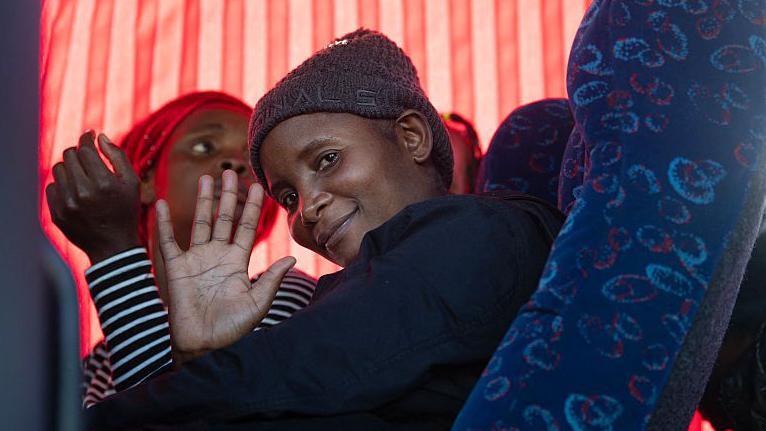
POLICY WIRE — Blantyre, Malawi — A curious kind of silence has settled over the tarmac at Kamuzu International, punctuated only by the low rumble of a landing charter and the soft murmurs of exhausted souls. This isn’t a pilgrimage home from distant European shores, nor is it a cheerful holiday reunion. No, these aren’t tourists; they’re the weary, the disillusioned, the unwanted children of Malawi, touching down not in celebration, but in retreat from South Africa, a nation whose founding ideals have, for many, soured into something bitter and cruel.
It’s a stark tableau, really: a state-sponsored evacuation from what was once envisioned as a continental promised land. Folks who had chased a better life, however meager, are now trudging back to square one, their hopes shredded by an insidious undercurrent of xenophobia that keeps bubbling to the surface in the continent’s most industrialized nation. This isn’t just about Malawians; it’s a symptom, a sharp, aching pain in the collective African body.
Malawian President Lazarus Chakwera didn’t mince words, well, not entirely. He acknowledged the ‘voluntary’ nature of the repatriation, a diplomatic nicety that can’t quite mask the underlying distress. “While we respect their individual choices,” Chakwera stated recently from Lilongwe, his tone conveying a practiced gravity, “our primary concern remains the safety and welfare of every Malawian, wherever they may be. And if that means returning home from hostility, then that’s what we’ll facilitate.” It’s a painful calculus, deciding between dignity and destitution, security and opportunity.
Because the truth is, the welcome in South Africa has long been conditional for many foreign nationals. The rainbow nation, as it was famously dubbed, struggles mightily with its own internal storms, and blame often gets conveniently offloaded onto the ‘outsider.’ We’re talking jobs, scarce resources, social services stretched thin—a simmering cauldron of resentment that periodically erupts into violence. But make no mistake, this isn’t simply an economic phenomenon; it’s rooted in deeper societal biases. Xenophobia, whatever its local flavor, remains a deeply ugly stain.
And let’s not forget the sheer scale of the challenges facing South Africa. The nation’s unemployment rate stood stubbornly high at 32.9% in the first quarter of 2024, according to Statistics South Africa. When a third of your own population is out of work, finding solace in blaming the migrant isn’t hard. That’s a brutal reality check, creating fertile ground for divisive rhetoric and violent backlash against those perceived to be taking jobs.
But the South African government, bless its heart, continues to toe a fine line. Minister of Home Affairs Aaron Motsoaledi—or a representative speaking for him—would invariably issue a statement reaffirming the country’s commitment to protecting all residents. “Our laws apply equally to all people within our borders,” a statement, perhaps mirroring his previous remarks, would proclaim, “and we strongly condemn any acts of discrimination or violence against foreign nationals. We’re, after all, an African country.” Fine words, to be sure, but sometimes the street tells a different story. And that dissonance, it’s deafening.
📄 POLICY WIRE WHITEPAPER PUBLISHED: PAKISTAN'S NATIONAL SECURITY POLICY PRIORITIES
👉 READ BY CLICKING HEREThe predicament faced by Malawians in South Africa mirrors a broader, unsettling pattern across the Global South. Look at how economic migrant workers from Pakistan often contend with systemic exploitation and social prejudice in Gulf nations, or the precarious existence of Syrian refugees in some European host countries. Or even how some internal migrant communities within South Asia grapple with ‘othering’ — and marginalization. These are the uncomfortable fault lines in our interconnected world, where the promise of a globalized economy clashes brutally with localized fears and frustrations. You don’t have to look far to see the threads connect.
What This Means
This forced repatriation isn’t merely a logistical headache; it’s a searing indictment of regional integration efforts and a blow to South Africa’s moral authority on the continent. Politically, it strains relations within the Southern African Development Community (SADC), highlighting a fundamental failure to protect the free movement of people and the foundational principles of African unity. It’s a significant diplomatic challenge, requiring more than just stern condemnations; it demands a long, hard look at domestic policies that enable, or at least fail to deter, xenophobic violence.
Economically, Malawi loses remittances, however small individually, that collectively form a crucial safety net for countless families. South Africa, meanwhile, risks its international reputation and future investment potential, as businesses might think twice about expanding into an environment prone to social instability. The underlying issues—high unemployment, wealth disparity, and a perceived influx of cheap labor—won’t disappear overnight. They necessitate deep-seated structural reforms that governments often lack the political will or capacity to undertake. This incident, while specific to Malawians, offers a chilling reminder that economic promises can, at times, trigger an exodus rooted in affordability fears, making social cohesion harder than ever to achieve. It’s a tragic, repeating cycle.