


Beyond the Wicket: India’s New Spin-Doctor and Afghanistan’s Resilient Game of Nations
POLICY WIRE — New Chandigarh, India — For the leviathan that’s Indian cricket, even routine victories against newer, less established teams can present a strange sort of dilemma. It’s not just...

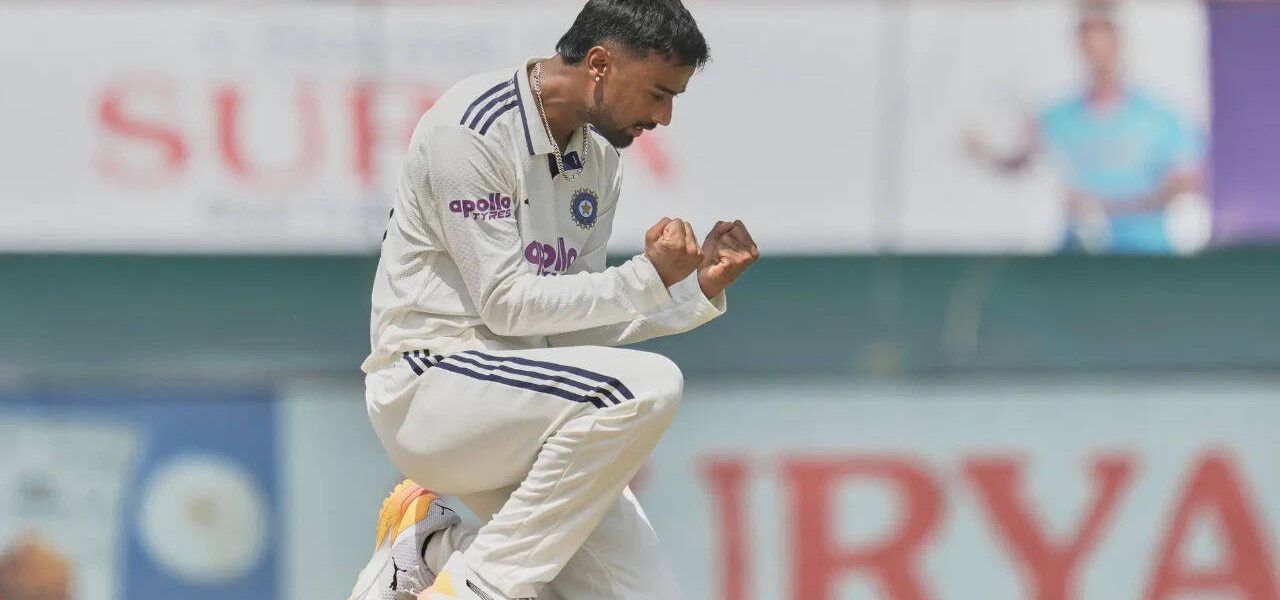
POLICY WIRE — New Chandigarh, India — For the leviathan that’s Indian cricket, even routine victories against newer, less established teams can present a strange sort of dilemma. It’s not just about winning anymore; it’s about sustaining dominance, perpetually churning out fresh talent that keeps the global spectacle captivating, sometimes—dare we say—to prevent boredom. And here we were, watching a young man named Manav Suthar emerge from the shadows, not as a conqueror, but as the solution to India’s luxury problem.
It’s been an age, hadn’t it? A long decade, specifically, since India fielded a home Test squad without the familiar, almost ritualistic comfort of either Ravichandran Ashwin or Ravindra Jadeja holding court. Their absence—intentional, one assumes—felt like an invitation. An opportunity, if you like, to see what the next generation could conjure on tracks long tamed by the elder statesmen of spin. What transpired was a compelling, if slightly predictable, debut for the 23-year-old left-armer from Sri Ganganagar, reducing an eager but outmatched Afghanistan to 113/5 on Day Two, having bagged three wickets for a miserly 21 runs from nearly sixteen overs. He put on quite the show, a proper clinic.
Because the truth is, India’s seemingly unshakeable ‘fear factor’ around its spinners, particularly at home, has somewhat frayed at the edges over the past couple of seasons. It’s a natural lifecycle, sure, but a dangerous one for a team that runs on relentless psychological advantage. Enter Suthar. His entry, and indeed his immediate impact, isn’t just about runs and wickets; it’s about a calculated move to inject new blood into the machine, to resurrect a reputation that—gasp!—might have been flagging. They’d batted well, of course, piled up 564/8 before captain Shubman Gill decided enough was enough. That cushions any debut nerves, obviously.
But the pitch was also cooperating, wasn’t it? Showing a hint of mischief, a subtle turn that played right into Suthar’s hands. He bowls slower through the air than a Jadeja, yes, but there’s a certain classical guile to his approach. He comes running in diagonally, delivering from around the wicket, almost reminiscent of a bygone era when left-arm orthodox was less about rocket science and more about wrist and flight. And the way that ball zipped and bit off the slow surface—the revs he was putting on it, poor Rishabh Pant having to collect a few near his chest—you just knew he was enjoying himself. He certainly didn’t look bothered, didn’t seem nervous a bit, which speaks volumes.
“We’re not just building a team for the next series; we’re looking a few years down the line,” remarked head coach Gautam Gambhir, his usual pragmatic tone barely concealing a sense of ambition. “It’s about succession planning, and if we can unearth a genuine left-arm spinning option here for crucial away tours like Sri Lanka, that’s a win for Indian cricket. Manav’s certainly put his hand up.”
Another voice, from inside the dressing room, echoed the sentiment. “Manav’s got an old head on young shoulders, hasn’t he?” Washington mused, a casual, almost paternal assessment. “Those of us who’ve watched him in the domestic circuits, we always knew what he brings. His skill set, the way he works the angles, it’s just top-notch. It’s those revs, though. The way he gets it to turn, that’s what really stands out when you’re talking about high-level Test cricket.”
Across the field, though, a different narrative was unfolding. Afghanistan. Their national cricket team—a relatively new, struggling entity born out of unimaginable turmoil—is hardly playing on a level field, you know. They represent a fierce, unyielding national spirit, using cricket as a symbol of hope and unity, something that extends well beyond mere sporting achievement in South Asia. But facing the behemoth that’s India, with its endless talent pool, must feel like trying to divert a river with a twig.
📄 POLICY WIRE WHITEPAPER PUBLISHED: PAKISTAN'S NATIONAL SECURITY POLICY PRIORITIES
👉 READ BY CLICKING HEREAnd for Afghanistan, every international outing isn’t just a game; it’s a statement. A statement to themselves, to their region—often caught in complicated geo-political webs with neighbors like Pakistan—and to a world that mostly sees a different, far grimmer side of their nation. Their mere presence on a Test cricket ground against India is a testament to immense individual grit and collective perseverance. Yet, the brutal truth remains: Afghanistan’s Test match win rate stands at a modest 28%, a stark reminder of the uphill battle they consistently face.
What we witnessed wasn’t just a debutant’s triumph. It was a reaffirmation of Indian cricketing might, yes, but also a stark portrayal of the disparities in international sport. Suthar’s ascendance felt like a meticulous act of brand management by India, ensuring the assembly line of talent never falters, never loses its intimidating sheen.
What This Means
This match, seemingly a routine affair in the grand scheme of Indian cricket, actually holds interesting implications for both participants. For India, Manav Suthar’s assured debut signals a robust pipeline for talent. It speaks volumes about the infrastructure and investment that allows a country to effortlessly replace stalwarts, essentially regenerating its sporting ‘economic’ capital at will. Such depth doesn’t just ensure continued dominance; it projects an image of unwavering strength, an intimidating factor for any aspiring contender. It also solidifies India’s position as not just a sporting giant, but a regional trendsetter, subtly reminding everyone who dictates the terms of engagement.
For Afghanistan, though, the meaning is far more layered, almost existential. Every tour, every Test match, regardless of the scoreboard, is a geopolitical act. It’s a sustained effort to build national identity through sport, to demonstrate normalcy and resilience against a backdrop of ceaseless hardship. Economically, while a dominant India benefits hugely from endorsements and media rights, Afghanistan leverages these high-profile contests for exposure—crucial for securing what meager funding and support it can muster in a competitive sporting landscape. These matches serve as vital, visible diplomacy for a nation yearning for recognition beyond conflict, demonstrating their continued efforts to establish themselves in the global arena. Their struggle is profound; their presence, an undying flicker.