

Rhetoric’s Echo: Trump’s Capacity Claims Cast Long Shadows on Iran’s Unseen Arsenal
POLICY WIRE — Washington, D.C. — It’s a number, seemingly plucked from the air—or maybe, just maybe, from some intelligence brief seen ages ago. A stark declaration dropped into the ongoing churn of...

POLICY WIRE — Washington, D.C. — It’s a number, seemingly plucked from the air—or maybe, just maybe, from some intelligence brief seen ages ago. A stark declaration dropped into the ongoing churn of American political discourse: Iran, we’re told, still holds onto a substantial slice of its formidable military muscle. Not that its full capacity vanished, mind you, but that a specific percentage lingers. It’s an assertion that doesn’t just rehash old anxieties; it stirs them up again, proving some statements, once made, stick like industrial-strength glue.
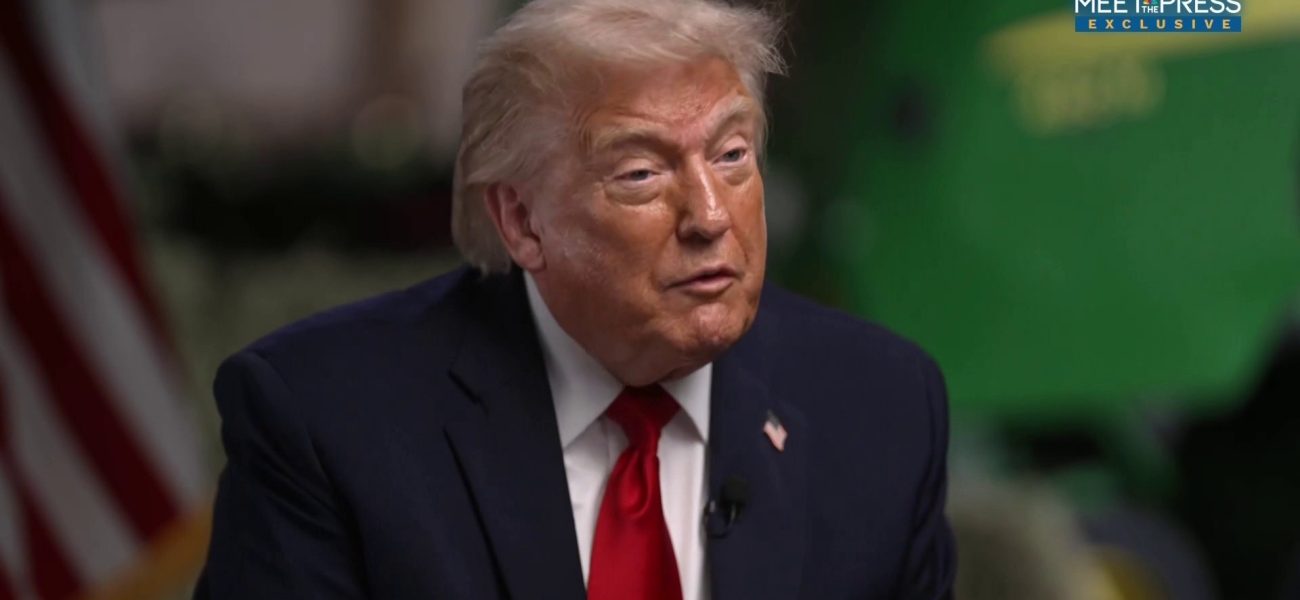
Donald Trump, the former Oval Office occupant, recently weighed in on the Islamic Republic’s arsenal, stating, as reported, that Tehran "Still Has ‘21%-22%’" of its "Missile and Drone Capacity". Let’s pause there for a sec. Because in a region where every twitch in the geopolitical seismograph is amplified tenfold, such figures aren’t just statistics. They’re fuel. And they’re signals, aimed at friends and foes alike, often with less precision than one might hope from, well, a guided missile. [QUOTE_PLACEHOLDER]
This particular comment arrives, rather conveniently, at a time when America’s foreign policy—especially regarding the Middle East—is already a delicate dance. Iran, a state often cast as the perennial antagonist by Western powers, has consistently invested in its ballistic missile and drone programs. It’s a defense strategy, sure, but also a projection of power. They’ve developed a reputation for their increasingly sophisticated—and proliferated—unmanned aerial vehicles (UAVs). These aren’t toys; they’re battle-tested tools of war, showing up in the hands of proxies from Yemen to Lebanon. That’s a serious headache for Washington, — and frankly, for regional stability writ large. Just look at the recent headlines screaming about missiles flying in an escalating Mideast shadow war.
But whose intelligence are we even talking about here? It’s an intriguing specificity, this "21%-22%". Does it refer to capacity *since* the US pulled out of the Joint Comprehensive Plan of Action (JCPOA), the ill-fated nuclear deal? Or perhaps a snapshot before that agreement was ever inked? Because context is, you know, everything. The international community’s assessments vary wildly. In 2022, the International Institute for Strategic Studies (IISS) estimated Iran’s defense budget to be around USD 24.6 billion, a significant portion of which feeds these very programs, yet direct "capacity" percentages remain notoriously difficult to verify independently without classified access. It’s a numbers game, but the scoreboard’s often hidden.
Because Tehran doesn’t exactly publish quarterly reports on its latest drone yields. It’s all highly opaque, deliberately so. The former President’s remarks, however, don’t just quantify a threat; they frame a narrative. They suggest an enduring, albeit partially mitigated, danger, reinforcing the idea that Iran, even under immense sanctions pressure, hasn’t fundamentally capitulated on its ambitions. It’s a strategic messaging move, no doubt, but one that rattles nerves throughout the Persian Gulf — and beyond.
But let’s be real. It’s never *just* about missiles — and drones, is it? It’s about the broader power struggle. Iran, a dominant Shia Muslim nation, casts a long shadow over the Muslim world, affecting countries like Pakistan, which shares a sensitive border and historical ties. The rise of Iranian influence, through proxies and diplomatic maneuvers, creates palpable anxieties among Sunni-majority states and regional players, some of whom view Iran’s military prowess as an existential threat. When an American leader, past or present, puts a number on Iran’s "capacity"—even a nebulous one like "21%-22%"—it reverberates across Islamabad, Riyadh, and Abu Dhabi. They’re all watching, calculating their own next moves.
And let’s not forget the political theater of it all. Coming from a figure like Trump, these aren’t merely observational comments. They’re political grenades tossed into an already volatile debate, possibly aimed at the current administration’s efforts to de-escalate tensions, or at least manage them differently. They’re meant to stir the pot, make you question, make you remember a specific era of confrontational diplomacy.
📄 POLICY WIRE WHITEPAPER PUBLISHED: PAKISTAN'S NATIONAL SECURITY POLICY PRIORITIES
👉 READ BY CLICKING HEREIt’s interesting, really, how specific details can be so unspecific. "21%-22%" – that’s quite a precise range for such a complex, clandestine apparatus. It doesn’t tell us what kind of capacity—research and development, manufacturing, operational readiness, actual deployed inventory. The devil’s in those kinds of details. Or perhaps, the deliberate ambiguity is the point entirely. Sometimes, uncertainty serves a strategic purpose of its own.
What This Means
The former president’s public statements, however vague or precise, about Iran’s military "Missile and Drone Capacity" hold significant weight, not just for domestic consumption, but for international policy. Politically, they put pressure on the sitting US administration to maintain a hard line on Tehran, making any potential diplomatic overtures far trickier. It effectively frames Iran as an unrepentant threat, limiting the White House’s flexibility. Don’t underestimate how sticky this rhetoric can become; it forces everyone’s hand, hardening stances all around.
Economically, this sort of declaration—especially when coming from someone who once withdrew from the JCPOA—fuels uncertainty in oil markets. Heightened tensions mean greater risk premiums on crude, which translates to higher prices at the pump, plain and simple. And because international sanctions on Iran’s oil and financial sectors are directly tied to perceptions of its proliferation activities, any talk of its enduring military strength can strengthen the case for maintaining, or even tightening, that economic chokehold. The reverberations for global trade — and energy security are undeniable.
For Pakistan — and the broader South Asian/Muslim world, such declarations reinforce the region’s instability. Pakistan, a nuclear-armed Muslim nation, balances its relations with both Saudi Arabia — and Iran. An aggressively positioned Iran, or an Iran perceived as possessing significant, unconstrained military power, directly impacts regional security calculations. It necessitates increased defense spending, more intricate diplomatic maneuvers, and frankly, deeper fears of spillover conflicts—the kind of ripple effects that are felt across vast swathes of the globe. From Afghanistan to the Gulf states, the perceived "capacity" of Iran’s arsenal determines alliances, trade routes, and even everyday anxieties. It’s a reminder that words, especially from Washington, can launch more than just debates. Sometimes, they launch genuine worry.