
Sacred, Swag, and Soccer: Pope Leo XIV Navigates Unlikely Cultural Fray in Spain
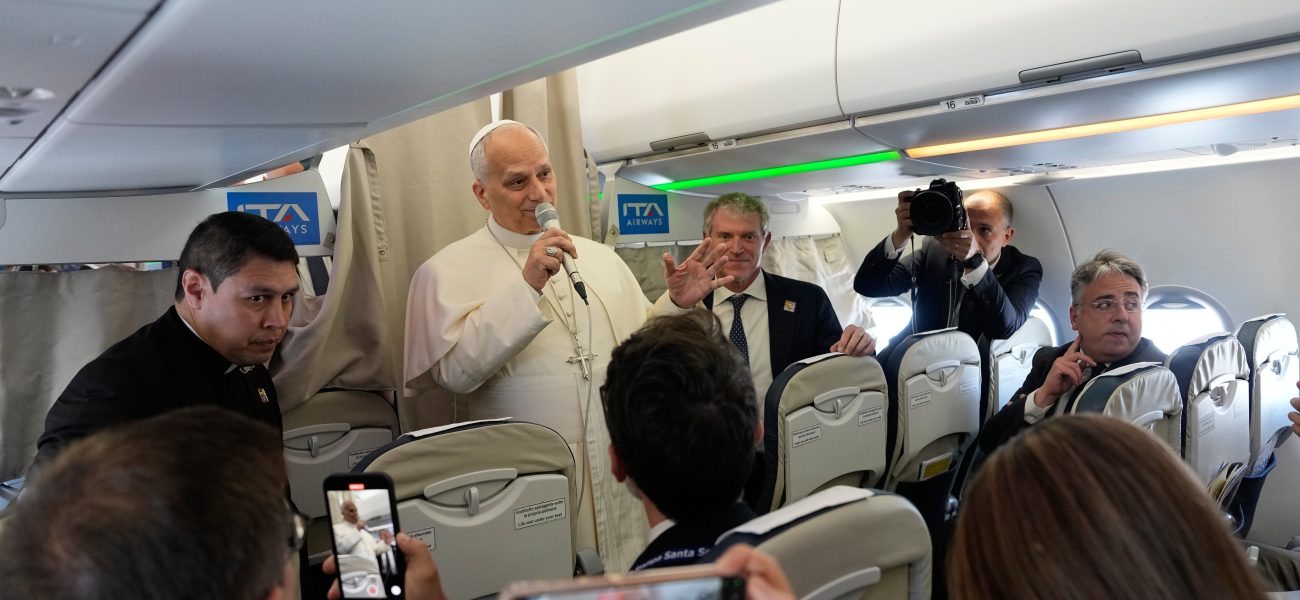
POLICY WIRE — Madrid, Spain — In a surprising divergence from traditional papal pronouncements, Pope Leo XIV has reportedly ventured into the effervescent landscape of popular culture and sporting...

POLICY WIRE — Madrid, Spain — In a surprising divergence from traditional papal pronouncements, Pope Leo XIV has reportedly ventured into the effervescent landscape of popular culture and sporting rivalries during his recent Spanish sojourn. It wasn’t theological debates or interfaith dialogues that caught the pontiff’s attention, at least not exclusively. Instead, a rather secular assessment of influence seems to have occupied a moment of his focus, marking a peculiar intersection where centuries-old doctrine meets twenty-first-century celebrity culture.
It’s no longer merely about spiritual flock. Because these days, even for the leader of a billion-plus adherents, the conversation can swerve into who commands the biggest global audience. Reportedly, Leo XIV acknowledged [QUOTE_PLACEHOLDER] a challenge to his popular appeal emanating not from rival doctrines, but from reggaeton superstar Bad Bunny. Such an observation—if indeed conveyed with the reported sentiment—casts a telling light on the Vatican’s understanding, or perhaps grappling with, the immense gravitational pull of global entertainment figures.
This isn’t a theological dispute. It’s a skirmish for public mindshare, where the pulpit contends with the pulsating rhythms of a Latin trap artist. Bad Bunny, or Benito Antonio Martínez Ocasio as he’s known beyond the stage, has, after all, consistently shattered streaming records. In 2022, he remained Spotify’s most-streamed artist globally for the third consecutive year, amassing over 18.5 billion streams across all platforms, according to reports from Luminate (formerly Nielsen SoundScan). That’s a staggering figure—it indicates a kind of cultural omnipresence few institutions, religious or otherwise, can claim.
And the Pope didn’t stop at music. His purported foray into Spain’s cultural fabric extended to the nation’s deepest sporting schism: the rivalry between football giants Real Madrid and Barcelona. Weighing in on such a contentious divide, even in jest or light commentary, is a shrewd, if unconventional, maneuver. It’s a way to speak a common language with a populace deeply invested in these tribal allegiances. A nod to which club [QUOTE_PLACEHOLDER] can engender an instant connection, perhaps more so than a homily on a distant theological point.
It appears the Pope’s office recognizes that contemporary influence isn’t just about solemn decree or ancient rite. It’s about resonance. It’s about reaching people where they live, breathe, and, yes, consume culture. The reported comments, rather than being flippant, could be read as a calculated nod to the prevailing winds, an attempt to bridge the yawning chasm between sacred traditions and the sprawling, noisy digital landscape. They suggest a calculated understanding that popular figures—from music moguls to athletic titans—command a significant share of humanity’s attention span, often dwarfing traditional religious engagement.
You can’t ignore the streets. You just can’t. Not if you want to remain relevant. For an institution that once dictated monarchies, grappling with a musician whose primary stage is global digital streams and stadium concerts featuring flashy pyrotechnics is a testament to the shifting goalposts of public discourse. But it’s also a demonstration of an institution adapting—or at least acknowledging the need to adapt—to a radically altered world order. Even the Pope, it seems, isn’t immune to the magnetic pull of who’s ‘winning’ the cultural popularity contest.
📄 POLICY WIRE WHITEPAPER PUBLISHED: PAKISTAN'S NATIONAL SECURITY POLICY PRIORITIES
👉 READ BY CLICKING HEREWhat This Means
This episode, albeit anecdotal and based on reported commentary, holds a peculiar mirror to the political and economic implications for faith-based institutions in a globally connected, entertainment-driven world. For years, the dominance of Western popular culture has permeated nearly every corner of the planet. Now, we’re seeing Latin American artists like Bad Bunny command unparalleled attention, often eclipsing traditional gatekeepers of cultural thought—including religious ones.
This isn’t just a European phenomenon. In countries across the Muslim world and South Asia, including Pakistan, global pop culture —whether it’s English-language music, K-pop, or Spanish-language reggaeton—has found vast and passionate audiences, particularly among the youth. While traditional religious and social structures remain incredibly strong, they coexist with—and are often challenged by—these powerful, secular cultural flows. Think about the fervent following for European football clubs across Karachi’s bustling streets or Lahore’s universities; these aren’t just hobbies, they’re shared cultural currencies. Religious leaders and political figures in these regions often struggle to balance tradition with modernity, wrestling with similar dynamics of influence as Pope Leo XIV, sometimes even embracing them to connect with younger generations.
Economically, this suggests a recalibration of investment for institutions that seek influence. Funding theological outreach might, in some contemporary views, be less impactful than, say, engaging with trending digital platforms or sponsoring community events that touch on popular passions. The Pope’s supposed comments reveal a potential realization that cultural engagement is now a primary battleground for influence, a contest where ‘likes’ and ‘streams’ are the new metrics of reach. Ignoring Bad Bunny or dismissing football fan loyalties might mean losing ground in the broader, louder conversation. It forces a strategic reconsideration: how do you minister to a world more captivated by a chart-topping hit or a crucial penalty kick than by ancient hymns or papal encyclicals? And what does that mean for how resources are allocated, how messages are crafted, — and how influence is measured? It’s not just about souls; it’s about staying relevant in an attention economy, a challenge faced from the Vatican to venerable madrasas in Pakistan.