


The Ghost in the Caucus Room: Packwood’s Death and a Generation’s Unfinished Business
POLICY WIRE — Washington D.C., USA — They say old soldiers never die, they just fade away. But for some figures who’ve graced the gilded halls of power, the fading’s never quite complete....

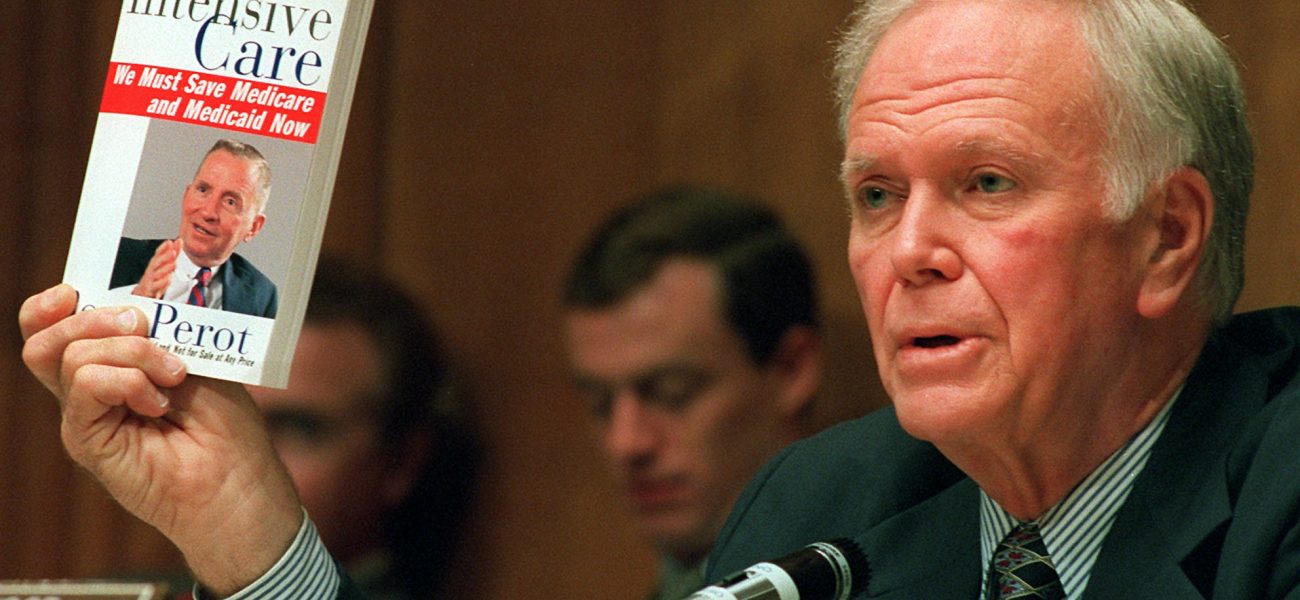
POLICY WIRE — Washington D.C., USA — They say old soldiers never die, they just fade away. But for some figures who’ve graced the gilded halls of power, the fading’s never quite complete. It’s more of a lingering echo, a spectral presence that reminds us of battles fought—and those that forever alter the battlefield. And so it was with Robert William Packwood, the Maverick Republican Sen. Bob Packwood of Oregon, who resigned after sexual harassment scandal, dies, igniting quiet murmurs across the political landscape, not of grief, but of memory.
His demise doesn’t mark the close of a story; it just closes a chapter on a particular kind of public shame. A generation watched a once-powerful lawmaker unravel in real-time, caught in a swirling vortex of allegations that, at the time, felt almost unprecedented in their scope and the way they were finally addressed. It wasn’t just a political defeat; it was a public evisceration, long before Twitter became the grand arbiter of reputations. For many, his career didn’t end with a vote or a defeat at the polls, but with a concession to what we now understand as a systemic problem. [QUOTE_PLACEHOLDER]
Packwood was, by all accounts, a legislative powerhouse for Oregon. He cut his teeth in state politics, then landed in the Senate in 1969, serving over two decades. His resume was a lengthy scroll of committee leadership and policy wins, particularly in healthcare, taxation, and environmental protection. He’d helped shepherd landmark legislation. But for all the bills he pushed through, for all the backroom deals and televised committee hearings, it’s the scandal that swallowed his final years in office, his 1995 resignation under immense pressure. That’s the indelible mark. Because history, it turns out, isn’t always kind enough to separate the policy from the person.
And it gets you thinking, doesn’t it? About how far we’ve truly come, or how far we haven’t. The whispers, the accusations, the slow-motion car crash of a public figure’s career—these things don’t exist in a vacuum. In nascent democracies, from Cairo to Karachi, we’ve watched similar sagas play out. Political figures, cloaked in influence, sometimes assume an immunity that belies reality. The concept of accountability, of personal conduct impinging on public office, is a global struggle. Pakistan, for instance, has its own complex relationship with allegations against its political elite, often overshadowed by geopolitical machinations or cries of political victimization. But the principle remains: unchecked power, irrespective of geography, breeds predictable pathologies. It’s a tale as old as power itself.
The Congressional Record, the official daily report of proceedings — and debates of the U.S. Congress, certainly details Packwood’s legislative achievements. It chronicles bills introduced, speeches made, votes cast. But it says nothing about the twenty-nine women whose accounts eventually led to his downfall. That detail resided elsewhere, in the reports of a Senate Ethics Committee probe that cataloged allegations of sexual harassment and abuse of power. This was a messy, drawn-out affair, a grinding process that forced Capitol Hill to look inward, albeit reluctantly, at behaviors long tolerated, even enabled, by the prevailing culture. In the fiscal year 2023 alone, the U.S. Equal Employment Opportunity Commission (EEOC) reported receiving 6,364 charges of sexual harassment, demonstrating that while conversations have changed, the problem persists (Source: U.S. Equal Employment Opportunity Commission). A number like that, well, it speaks volumes, doesn’t it?
We can’t ignore the seismic shifts that followed, not just in congressional protocols but in public consciousness. This was a harbinger of things to come, a pre-Me Too reckoning. His departure, messy and protracted, laid some groundwork for later movements, demonstrating that even long-established figures could, under sufficient pressure, be compelled to answer for their conduct. It cracked the veneer of untouchability that often protected the powerful. But it took a staggering toll, both on the accusers — and on the institution. It was ugly. It was necessary.
His death, coming all these years later, is a final punctuation mark. Not on the argument itself, which still rages in various forms, but on the life of the man at its center. It allows for a re-examination, if only briefly, of that uncomfortable period when the lights were shone into the darker corners of Capitol Hill. He was a conservative, but one known for occasionally breaking ranks, for legislating with a pragmatism that sometimes ruffled feathers in his own party. But even political flexibility couldn’t shield him from the storm of personal misconduct. A man could be a policy wizard, yet a moral pariah. The two, it turned out, weren’t mutually exclusive.
What This Means
Packwood’s legacy serves as an uncomfortable mirror for America’s political class. It reminds us that legislative achievements, however significant, can be irrevocably tarnished by personal misconduct—a lesson we’ve seen replayed with monotonous regularity across party lines in the decades since. The episode also underlined a profound power imbalance, sparking institutional reforms designed to protect staff and hold elected officials accountable, though many argue these reforms remain imperfect and underfunded. For lawmakers now navigating an even more hyper-scrutinized environment, Packwood’s career is a cautionary tale: power isn’t absolute, and public trust, once eroded, is brutally hard to reclaim. His fall was a dress rehearsal, in many ways, for the ongoing battles over accountability that shape our current political discourse. It tells us that perception—and the ability to survive scandal—has become an even more complex dance than it was in his time. Consider the ever-present threat of AI’s unblinking eye and how it’s shaping how we consume news and hold our leaders accountable; it makes Packwood’s pre-digital-age scandal almost quaint by comparison, yet the human dynamics at its core remain tragically familiar. It’s a stark reminder that ethics and governance are a never-ending tug-of-war, with each generation facing its own reckoning.