

Silent Drills in the Shallows: China’s Gray Zone Pokes Taiwan’s Nerves
POLICY WIRE — Taipei, Taiwan — Sometimes, the quietest moves on the global chess board pack the most punch. No gunshots, no direct declarations, just the silent thrum of engines beneath a deceptively...

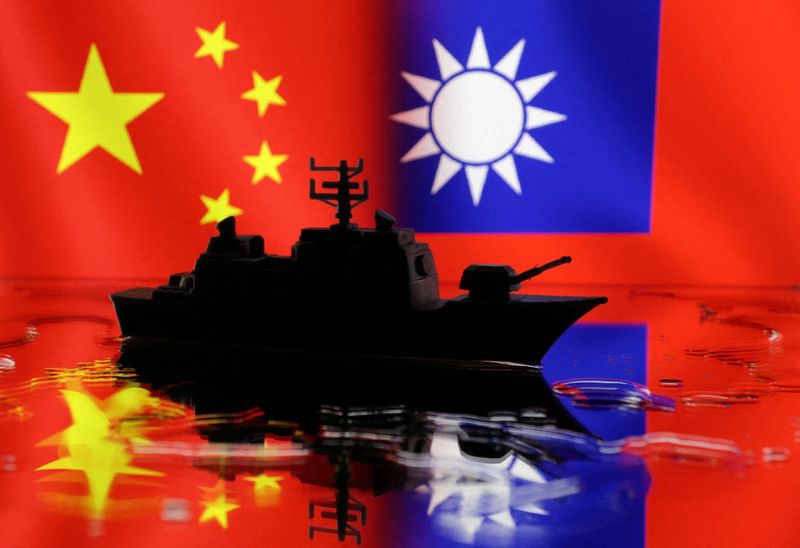
POLICY WIRE — Taipei, Taiwan — Sometimes, the quietest moves on the global chess board pack the most punch. No gunshots, no direct declarations, just the silent thrum of engines beneath a deceptively calm South China Sea. That’s the vibe these days around Taiwan’s Kinmen islands, where Beijing’s maritime forces are doing a slow-motion dance with Taipei’s frayed nerves.
It isn’t a storm of destroyers and fighter jets this time, but something arguably more insidious: the steady, almost polite, encroachment of China’s coast guard and a sleek, less-obvious research ship. Taiwan’s Ministry of National Defense confirmed this low-boil drama, noting these vessels operating unsettlingly close to territory Taipei administers—Kinmen, to be exact. It’s a bit like someone nudging your fence a few inches inwards every week; you know what they’re doing, but it’s hard to make a global fuss over a mere bump.
But make no mistake, this isn’t some rogue wave. This is by design. Analysts aren’t mincing words; this whole rigmarole fits neatly into what’s called Beijing’s ‘gray-zone tactics.’ These aren’t traditional military confrontations. They’re calculated, persistent pressures designed to assert territorial claims—and boy, does Beijing have claims. Think of their expansive ‘nine-dash line’ that swallows most of the South China Sea, including vital shipping lanes, like some hungry dragon gobbling up ocean real estate.
This particular episode saw [QUOTE_PLACEHOLDER] in such proximity. Kinmen sits right off the Chinese coast. It’s a strategic pebble in Taiwan’s shoe, — and Beijing knows it. That proximity—24 nautical miles from Kinmen, according to Taiwanese officials—represents a fresh benchmark, an aggressive whisper from the mainland. And it wasn’t just a solo mission; there were at least three coast guard vessels — and a single scientific research ship. A science ship, you say? Purely for data collection, I’m sure. The maritime equivalent of having your neighbor’s ‘gardener’ pruning trees over your property line every other day.
Because that’s how these games are played. The ‘research’ can map seabed topography, assess currents, gather intelligence useful for—oh, I don’t know—future naval operations or submarine deployment. It’s a dual-use play, a cloak-and-dagger ballet performed on the open water. The coast guard ships, meanwhile, lend muscle and a thin veneer of civilian enforcement, blurring the lines between military might and administrative patrol.
It’s not an isolated incident either. The frequency of these Chinese excursions has been creeping up. The Taiwanese National Security Bureau reported that over the past year, incidents of Chinese incursions have increased by 30%. That’s not a fluctuation; that’s a trend line pointed firmly upwards, sketching out a more assertive, more challenging reality for Taipei.
The global stage? Most powers cluck their tongues, calling for ‘de-escalation.’ But you don’t de-escalate when one side is methodically pushing boundaries. You adapt, or you concede. And Taiwan, backed in principle by the US — and its allies, doesn’t seem ready for the latter.
📄 POLICY WIRE WHITEPAPER PUBLISHED: PAKISTAN'S NATIONAL SECURITY POLICY PRIORITIES
👉 READ BY CLICKING HEREThe geopolitical dominoes from such a regional tiff don’t stop at Manila or Jakarta, either. They stretch all the way to Islamabad. A substantial portion of Pakistan’s trade, particularly its energy imports from the Gulf, traverses these very waters. Any significant disruption or escalation in the South China Sea—a closure, a major skirmish, even sustained heightened risk—and suddenly, the cost of doing business in Pakistan shoots up. Insurance premiums spike, shipping lanes divert, — and a fragile economy takes another hit. And that’s before we even talk about China’s expansive Belt and Road Initiative, with its economic arteries coursing through the region, needing stability.
Pakistan, often walking a diplomatic tightrope between its iron brother China and its traditional Western allies, watches these developments with a specific kind of trepidation. Its strategic port of Gwadar, for instance, aims to capitalize on trade routes, but if the primary global sea lanes become militarized playgrounds, the economics get murky pretty quick. The subtle shifts in maritime power here aren’t just about rocks and reefs; they’re about global trade arteries and regional security, factors that ripple through the Persian Gulf Diplomacy and beyond.
And let’s not forget the precedent it sets. Other nations, from Southeast Asia to the Middle East, with their own maritime disputes—whether over oil, fishing rights, or just plain old sovereignty—are watching. The calculus for challenging an aggressive neighbor, or defending one’s own claims, gets re-evaluated based on what Beijing gets away with, or is successfully pushed back on, around Kinmen.
What This Means
This escalating dance isn’t merely about Taiwan’s immediate security; it’s a direct challenge to the established international maritime order, thin as it might already seem. Politically, Beijing is systematically testing the resolve of Taiwan’s current government and, by extension, its international partners—primarily the United States. Every incursion, no matter how ‘gray,’ wears down resistance — and normalizes an increasingly aggressive posture. It’s a slow strangulation, not a swift blow. For Taipei, it forces continuous allocation of resources, both military and diplomatic, creating perpetual vigilance fatigue. It also ups the ante for any future, more overt moves towards unification; each small victory in the gray zone chips away at Taiwan’s perceived sovereignty.
Economically, the implications are vast. The South China Sea is a jugular vein for global commerce, handling an estimated one-third of the world’s shipping traffic—trillions of dollars in goods each year. While direct military confrontation carries obvious economic catastrophe, even heightened tensions raise insurance costs, increase transit times due to cautious navigation, and discourage investment. Any instability creates ripples in commodity prices, supply chains, — and consumer confidence across Asia and beyond. For states like Pakistan, as mentioned, reliant on stable maritime routes for critical energy imports and exports, this translates directly into higher costs, inflation, and dampened economic growth prospects. the ‘research’ activities of these ships could be mapping seabed resources—energy deposits, rare earths—setting the stage for future claims and potentially, further resource competition. This isn’t just about distant islands; it’s about the very arteries of global trade and resource control, turning routine naval patrols into high-stakes geopolitical chess games played on a boundless blue board.