

Realpolitik of the Pitch: Mourinho’s Cryptic Hint Unravels Madrid’s Power Play
POLICY WIRE — Madrid, Spain — Another act in European football’s most enduring soap opera began unfolding this week, not with the fanfare of a new stadium unveiling or a transfer deadline frenzy, but...

POLICY WIRE — Madrid, Spain — Another act in European football’s most enduring soap opera began unfolding this week, not with the fanfare of a new stadium unveiling or a transfer deadline frenzy, but with the quiet confirmation of power consolidated. Florentino Pérez, the septuagenarian titan whose shadow looms long over Real Madrid’s gilded corridors, has secured yet another term as president. His electoral victory—uncontested, mind you—was less a democratic exercise and more a coronation, an echo of the preordained outcomes so often seen in more overtly authoritarian states. And then, the expected happened, or at least, the heavily implied.
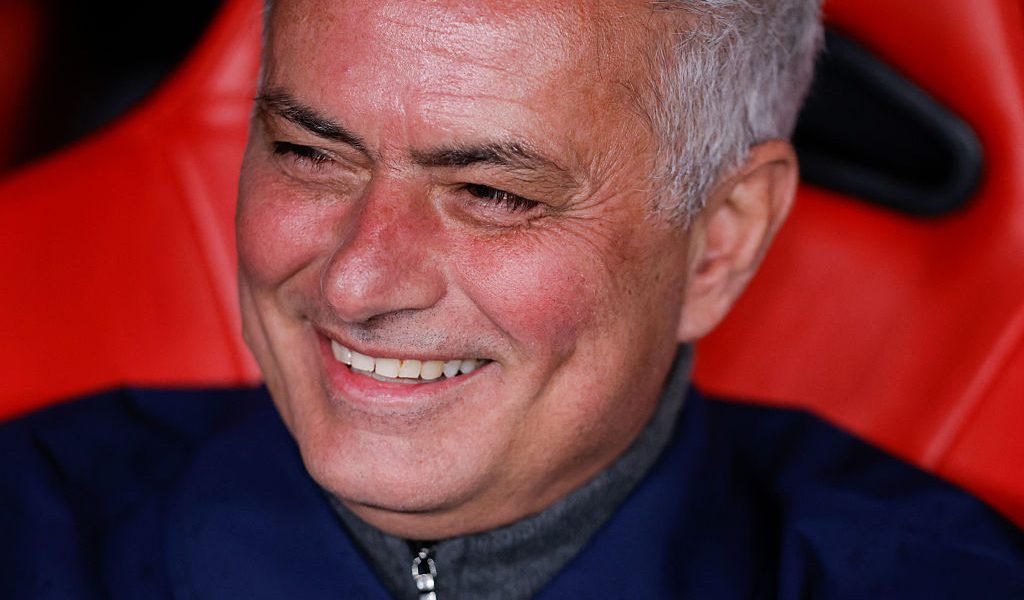
The murmurs that inevitably follow Pérez’s re-establishment of command quickly coalesced around a familiar, some might say infamous, name: José Mourinho. ‘The Special One’ himself tossed a tantalizing, almost cavalier, ‘Yes, of course,’ into the digital ether shortly after the ballots (or lack thereof) were counted. It was cryptic, typically Mourinho, and entirely engineered to send the Madrid press pack into a predictable paroxysm of speculation. But for seasoned observers of the intricate dance between money, power, and prestige that defines elite football, this wasn’t some spontaneous outburst; it was a calibrated chess move, a theatrical flourish in a narrative Pérez himself has painstakingly authored.
For years, the return of Mourinho to the Real Madrid bench has been less a ‘if’ and more a ‘when’ in certain powerful circles. Pérez, a master political operator as much as a football administrator, has often leveraged the former manager’s mystique as a carrot for the restless faithful—a promise of past glories revisited, a guarantee of box-office drama. It’s an old trick, but a reliable one. Think of it as a perennial party platform, dusted off and re-presented to a populace always eager for a strong hand at the helm. It doesn’t really matter if the strong hand is prone to controversy; often, that’s precisely the point, drawing attention, stirring conversation. As one European football economics analyst, Dr. Anika Sharma, recently noted, “Elite club football isn’t merely sport anymore; it’s a multi-billion dollar entertainment industry, reliant on personalities and a relentless news cycle. Pérez understands this better than most.”
The fact that the initial ‘Mourinho to Madrid’ buzz originates from a sparse, AI-translated fragment speaks volumes about the current media ecosystem. It suggests a thirst for easy narratives, easily consumed, globally dispersed. Consider the sheer reach: a development in Madrid becomes immediate grist for the digital mill, discussed passionately from Lahore to London. Pakistan, for instance, a nation traditionally obsessed with cricket, now sees burgeoning interest in European football, with Real Madrid enjoying a massive fan base. Changes at the top, like the prospective return of a high-profile figure such as Mourinho, become talking points in Karachi cafes as much as they do in Castellana boardrooms. They aren’t just managerial shifts; they’re shifts in brand appeal, with potential ripple effects for sponsorship deals originating in the Gulf states or player scouting networks extending into Africa and Asia.
Pérez, having secured his position, isn’t just seeking a manager; he’s seeking a figurehead—a blend of strategist, provocateur, and brand ambassador who can maintain Madrid’s colossal global profile. And few individuals in world football fit that bill like Mourinho. His ‘Special One’ moniker, cultivated over two decades, resonates globally, attracting eyeballs and — just as crucially — investment. According to a 2023 report from Brand Finance, Real Madrid remains the world’s most valuable football brand, with a valuation exceeding €1.5 billion, a testament to its consistent success and astute management. Pérez, knowing his base, understands the value of a familiar, albeit volatile, genius.
“Stability is paramount,” Pérez declared in a rare public statement following the quiet reaffirmation of his presidency, hinting at his plans for the club’s future trajectory. “But stability, at Real Madrid, also means unrelenting ambition, a commitment to winning. We have always sought individuals who embody that spirit.” It’s a carefully crafted message, of course. For Pérez, the return of Mourinho wouldn’t simply be a nostalgic indulgence; it would be a strategic re-activation of a proven, if fiery, mechanism for competitive edge. Mourinho, never one for subtlety, posted another cryptic musing recently—removed almost as quickly as it appeared—stating, “Unfinished business. It’s the only kind I tolerate.” Typical. He loves the drama; he thrives on it. And frankly, the club’s bottom line often benefits.
📄 POLICY WIRE WHITEPAPER PUBLISHED: PAKISTAN'S NATIONAL SECURITY POLICY PRIORITIES
👉 READ BY CLICKING HEREThe prospect, then, isn’t merely about trophies. It’s about leveraging celebrity, amplifying media reach, and solidifying Real Madrid’s economic footprint in a fiercely competitive global sports market. It’s about a man who built his presidency on the ‘Galácticos’ model—assembling star power both on and off the pitch—continuing that legacy, ensuring that the spectacle, the grand narrative, never falters. This is less about sporting strategy and more about Pérez consolidating his throne. Mourinho is merely the shiny new jewel—or perhaps, the slightly tarnished but still dazzling one—to affix to it.
What This Means
Pérez’s reelection without opposition, quickly followed by the carefully choreographed whisper campaign surrounding Mourinho’s return, isn’t just about managing a football club; it’s a masterclass in elite power dynamics. This is how top-tier institutions, whether they’re sports franchises, multi-national corporations, or even political parties, maintain control and deflect dissent. By dangling the promise of a charismatic, results-oriented figure like Mourinho, Pérez channels fan sentiment and media attention away from potentially uncomfortable questions about club governance or the financial health of the enterprise. It’s a calculated ‘de-risking’ of leadership, opting for a known, albeit tumultuous, quantity rather than an unpredictable fresh face.
Economically, this signals a commitment to spectacle-driven growth. Mourinho guarantees headlines, sell-out crowds, and higher viewership figures across vital international markets, especially in regions like the Muslim world where brand loyalty to European giants is deeply ingrained. But this strategy also carries significant internal costs: short-term thinking often overrides long-term player development, and the pressure cooker environment Mourinho cultivates can alienate players and staff alike. Politically, it strengthens the incumbent. Pérez retains control, avoids a messy election, and rejuvenates enthusiasm with the implied promise of a figurehead known for turning things around. It’s a textbook example of leveraging perceived ‘strongman’ leadership to manage public perception and reinforce an unchallenged dynasty at the apex of global sporting power.