

Europe’s Uneasy Diplomacy: Leaders Hedge on Ukraine Truce as Winter Looms
POLICY WIRE — London, UK — The first frosts aren’t the only chill descending upon Europe these days. While headlines often blare about battlefield gains and strategic losses, the real story...

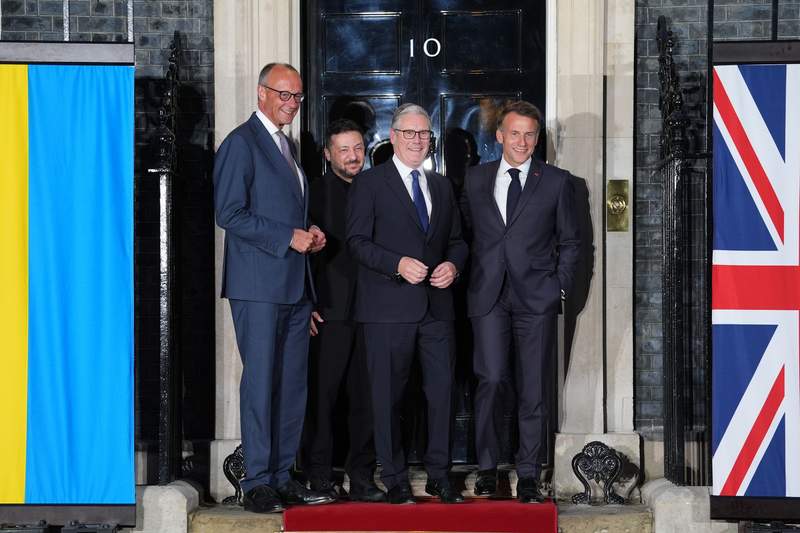
POLICY WIRE — London, UK — The first frosts aren’t the only chill descending upon Europe these days. While headlines often blare about battlefield gains and strategic losses, the real story quietly unfolding concerns an awkward, nascent push for peace. It’s less about a sudden breakthrough and more about powerful figures – Keir Starmer, President Zelenskyy, and the heads of both France and Germany – all carefully, almost tentatively, aligning their statements around a ceasefire in Ukraine. It feels less like a decisive pivot and more like a weary recognition of winter’s impending strategic bind, an acknowledgement that outright victory for anyone remains elusive, messy.
It’s an interesting bit of political theater, this alignment. Not exactly a grand, unified call for surrender, mind you. More of a hedged bet, a quiet whisper that maybe, just maybe, the time for guns-blazing narratives is finally bumping up against the harsh economics of perpetual conflict. Starmer, navigating his own domestic political calculus in Britain, clearly understands the public appetite for resolution. But he’s got to tread carefully, not wanting to appear weak on Moscow. He knows it’s a dicey proposition, managing expectations while still projecting resolve. [QUOTE_PLACEHOLDER]
And President Zelenskyy, bless his indefatigable soul, has found himself in a delicate dance too. He’s rallied his nation like few leaders ever could. But even the most heroic defense needs an exit ramp eventually, especially as Western support – though robust on paper – often comes with its own hidden anxieties about cost, endurance, and global resource strain. European leaders, President Macron and Chancellor Scholz, have always faced domestic pressures regarding this conflict, managing supply lines, energy prices, and refugee flows. They’ve also juggled complex relationships with various world powers, trying to maintain some semblance of stability. But they also know this, despite the immediate push for Western solidarity.
Look, the energy crisis across Europe still bites. According to the International Energy Agency’s Oil Market Report from October, global oil demand is projected to increase by 2.4 million barrels per day this year, exacerbating market volatility. Because of this, it’s increasingly expensive to keep the war effort humming along, and Western coffers aren’t limitless. That reality checks the hawkish fervor sometimes. It’s not just about the fighting anymore; it’s about what the fighting is doing to everybody else’s grocery bills and heating budgets. There’s always an uncomfortable calculus between principles — and practicality, isn’t there?
But how do you even begin to talk about a ceasefire when the lines are still so fluid, so contested? And who initiates? That’s the real conundrum. It’s not a question of moral clarity; that train left the station ages ago. It’s about finding a politically palatable mechanism, a way to spin down the rhetoric without ceding too much ground, or looking like you’ve been outmaneuvered. The global chessboard is complicated, with each piece impacting another. Think about how Turkey has managed to keep a foot in both camps—supplying drones to Kyiv while still engaging with Moscow, showcasing a brand of shrewd Pakistan’s quiet diplomacy that many in the West could learn from. It’s about leveraging every tiny advantage. Even Pakistan, with its own intricate geopolitical balancing act between its South Asian neighborhood and broader Muslim world ties, has long recognized the critical art of dialogue, sometimes with entities the West refuses to touch.
It’s not just a European problem either. The ripple effects of this conflict extend far and wide, touching commodity markets and supply chains across Asia and Africa. Leaders in countries like Bangladesh, with their burgeoning populations and reliance on imported goods, feel every bump in the global economic road. It’s a reminder that no conflict, especially one of this scale, remains truly contained.
📄 POLICY WIRE WHITEPAPER PUBLISHED: PAKISTAN'S NATIONAL SECURITY POLICY PRIORITIES
👉 READ BY CLICKING HEREWhat This Means
This evolving discussion, cautious as it’s, signals a slow but perhaps inexorable shift in the geopolitical landscape. Politically, it means leaders are tacitly acknowledging that a purely military solution in Ukraine may be untenable, or at least politically exhausting for their domestic audiences. It opens the door, however narrowly, for diplomatic efforts that might have seemed unthinkable months ago. Don’t kid yourself, the optics are everything here. No one wants to look like they’re selling out Kyiv, but everyone wants to stop bleeding resources. And because of that, there’s this subtle softening, this tentative testing of the waters for eventual talks.
Economically, it suggests a recognition of the severe strain the ongoing conflict places on the global economy, particularly energy and food security. A ceasefire, even a fragile one, could stabilize markets and ease inflationary pressures across continents, offering some respite to consumer pockets, from Berlin to Jakarta. But it’s also a high-stakes gamble. Premature or ill-conceived peace could easily turn into a frozen conflict, setting the stage for future flare-ups and leaving the underlying issues unaddressed. It could even invite more opportunism from states like Beijing’s precarious tango with its own volatile allies. That’s why leaders are moving like chess players—one eye on the current board, the other on several moves ahead, trying to anticipate how any peace overture could destabilize their own power base or upset the fragile world order.
What we’re witnessing isn’t an outright capitulation or a sudden urge for altruism. It’s calculated pragmatism wrapped in layers of diplomatic caution. It’s the kind of subtle pressure you feel when everybody’s getting tired, when the budget spreadsheet looks increasingly grim, and when the voters back home start asking tougher questions than they used to.