
Monaco’s Royal Mess: F1’s Glittering Facade Cracks Amidst Technicalities and Turf Wars
POLICY WIRE — MONACO — It takes more than sheer velocity to truly master Monaco; sometimes, it takes a technicality. The gleaming asphalt of the Principality—a playground for the global elite, a tax...

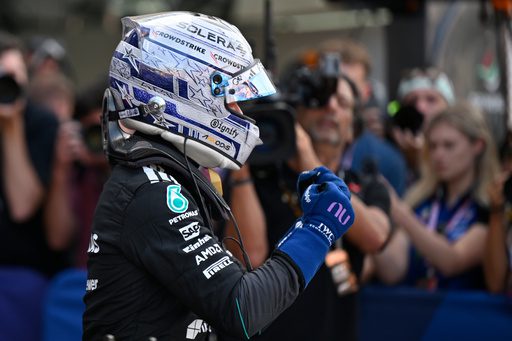
POLICY WIRE — MONACO — It takes more than sheer velocity to truly master Monaco; sometimes, it takes a technicality. The gleaming asphalt of the Principality—a playground for the global elite, a tax haven of legend—cracked and buckled this past Sunday, not just beneath the wheels of multimillion-dollar machinery, but under the weight of its own byzantine rulebook. For Kimi Antonelli, a racing prodigy of barely 19 summers, the win at the Grand Prix wasn’t merely about speed; it was about navigating a mid-race suspension, damaged tracks, and a series of investigations that lingered long after the checkered flag waved.
It was messy. A veritable scramble on a circuit famous for its precision, turning what should have been a seamless spectacle into a bureaucratic minefield. You had drivers waiting in the pit lane, officials squinting at busted tarmac, and a road-sweeping machine slowly doing its job along the circuit, picking up stones. A sight, frankly, far removed from the usual Riviera chic, if we’re honest. This chaos underscores a perennial truth: even in the highest echelons of international competition, the fine print—and the human element interpreting it—can often be the real story. [QUOTE_PLACEHOLDER]
Antonelli is on a tear, folks. Five consecutive wins, a dominant 66-point lead over nearest rival Lewis Hamilton. This kid’s rewriting the history books, sure. He now claims the title of youngest F1 winner in Monaco, — and that’s a big deal. Last year, he effectively stepped into Hamilton’s seat at Mercedes, — and he’s been absolutely flying. Hamilton himself, who holds the record for most career wins in Formula 1 with a staggering 105 victories, according to the Associated Press, couldn’t help but acknowledge the inevitable. “You’re catching me up,” he reportedly told the young Italian phenom after Sunday’s race. And later, Hamilton mused, “He’s only 19, so just imagine what the future holds for him, but I’m going to do my best to try and chase him down for the rest of the year.” It’s a stark reminder that time marches on, even in the rarefied air of top-tier motorsport.
The entire affair, punctuated by the red flag after some track asphalt decided to come undone and two cars binned it, saw Antonelli admitting he’d been hoping the race wouldn’t be restarted at all. But when it did, from a standing start, he simply reasserted control. “Thank you so much guys, the car was a beast today,” he chirped to his team. A “beast” indeed, though the drama wasn’t confined to the track. Post-race, the standings remained a swirl of “uncertainty” thanks to a flurry of penalties and investigations, notably involving Isack Hadjar, who retained his third-place spot after an engine part probe. George Russell, Mercedes teammate, even suggested the title was Antonelli’s “to lose,” a prophecy that’s looking pretty good right now.
But beyond the glamour and grit, the spectacle of Formula 1 — like any globally resonant sporting event — offers an interesting lens into international policy dynamics. The elaborate rules, the powerful governing body (FIA), and the constant skirmishes over infractions mirror the broader struggles of international cooperation and regulation. Think about how many multilateral agreements are hammered out, and then contested, on technicalities; how much hinges on precise interpretation and enforcement. The backroom maneuvering, the appeals, the influence of manufacturers and teams—it’s all a compressed microcosm of global power politics, played out at 200 miles an hour. And just as global players vie for influence in distant lands, be it the Indo-Pacific or the Persian Gulf, these teams compete for dominance and prestige, with vast economic interests hanging in the balance.
📄 POLICY WIRE WHITEPAPER PUBLISHED: PAKISTAN'S NATIONAL SECURITY POLICY PRIORITIES
👉 READ BY CLICKING HEREPakistan, a nation grappling with its own intricate domestic policies and striving for a prominent voice on the global stage, observes these hyper-capitalized, highly regulated sports from a unique vantage. While F1 might seem geographically distant, its universal appeal and the stories of rising stars like Antonelli—or the graceful concession of legends like Hamilton—resonate in a world where youth and ambition are powerful currencies. There’s a shared global zeitgeist around ambition and navigating complex, often unfair, systems, whether it’s on a circuit or in geopolitical negotiations. Pakistan’s quiet diplomacy, for instance, requires similar tactical precision and adherence to international protocols, sometimes under equally intense scrutiny.
What This Means
This Monaco Grand Prix wasn’t just a race; it was a potent lesson in institutional vulnerability and the power of individual brilliance against a chaotic backdrop. Economically, the constant threat of regulatory ambiguity, like the confusion surrounding multiple drivers’ penalties and penalties for penalties (poor Russell — he said he “didn’t understand what happened” after his baffling infraction), injects a peculiar instability into a sport reliant on vast sponsorships and international trust. Imagine the market volatility if major sectors were governed with such last-minute, publicly disputed calls.
Politically, the narrative of a young, ascendant talent like Antonelli displacing a veteran icon like Hamilton speaks volumes about generational shifts and the often brutal economics of succession. Teams and nations alike grapple with how to manage these transitions—how to embrace the new without discarding the accumulated wisdom of the old. The regulatory disputes and post-race appeals, which in Alpine’s case are set to drag on for “days,” highlight the perpetual tension between strict rules and subjective interpretation, a struggle all too familiar in legislative bodies and international courts. It’s a stark reminder that even in the most dazzling displays of human and mechanical achievement, the human-made frameworks holding it all together are fragile and constantly contested.