


Ohio’s Fete of Fire: Historic Festival Shattered by Unseen Shooters
POLICY WIRE — Toledo, Ohio — The music had barely faded, the aromas of festival food still clinging to the air, when Toledo’s cherished Old West End Festival abruptly ceased to be a celebration...

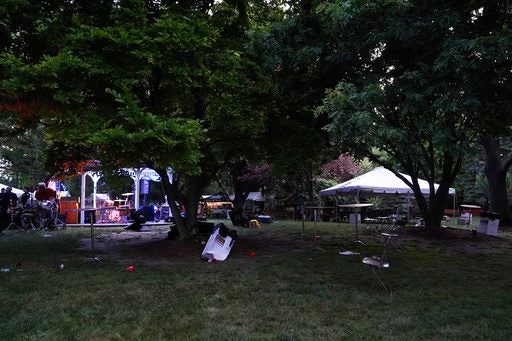
POLICY WIRE — Toledo, Ohio — The music had barely faded, the aromas of festival food still clinging to the air, when Toledo’s cherished Old West End Festival abruptly ceased to be a celebration of community. Instead, it transmogrified into a scene of chaotic escape, its colorful spirit violently snuffed out by a sudden volley of gunfire that wounded a dozen souls, ranging from teenagers to retirees.
It wasn’t a riot, not a confrontation brewing for hours. It was a rapid, brutal eruption, pushing people to the ground, scattering families, and leaving a historic neighborhood — usually synonymous with architectural beauty and vibrant local culture — etched with fresh trauma. People, by all accounts, had been having a perfectly lovely Saturday evening. Then they weren’t.
Police haven’t named any suspects yet; the shooters, it seems, just melted back into the urban fabric as quickly as they appeared. They were probably shooting at each other, according to Toledo Deputy Police Chief Joe Heffernan, a detail that offers little solace to those caught in the crossfire. But it doesn’t change the fact that innocent festival-goers — enjoying an annual ritual—were collateral damage in someone else’s argument. It’s a gut punch, really, to the very idea of safe public spaces in America.
Kevin Berry, a Navy veteran with medical training, was sitting nearby, soaking up some live tunes. One moment, idyllic. The next, a handful of pops ripped through the air. “Everybody hit the deck,” he recounted, matter-of-factly. And when he dared to look up, he saw a gun, just tossed aside, not 50 feet away. He went to work, tending to the injured, observing at least five with gunshot wounds scattered around what was moments before a lively arboretum. This isn’t what anyone signs up for at a community fair.
The city’s Safety Director, George Kral, couldn’t mask the despondency. “This is one of the most iconic festivals in Toledo,” Kral lamented, the weight of the moment heavy in his voice. “And it’s a shame that something like this had to ruin it.” The sentiment resonates far beyond Toledo. The vulnerability of such events—whether a street festival in Ohio or a cricket match in Karachi, where security has become an unspoken fixture—highlights a disturbing global commonality: the unpredictable cost of gathering in public.
Lt. Dan Gerken of the Toledo police, a man who’s seen more than his share of ugly scenes, put it plainly: “Twelve people being shot, that’s the most I’ve been to a scene. I’ve been to a lot of scenes, but this is way over the top.” His words carry a weary resignation. It speaks volumes about the sheer audacity of this incident.
📄 POLICY WIRE WHITEPAPER PUBLISHED: PAKISTAN'S NATIONAL SECURITY POLICY PRIORITIES
👉 READ BY CLICKING HEREBecause let’s face it, this kind of indiscriminate public violence feels like it’s becoming, well, normal. Data from the Gun Violence Archive reveals that the United States recorded over 600 mass shootings in 2023 alone, defined as incidents with four or more people shot, excluding the perpetrator. That’s more than one a day. A horrifying statistic that these festival-goers suddenly, painfully, became a part of.
Organizers didn’t even try to sugarcoat it; the rest of the festival was canned. “It wouldn’t be compassionate, responsible or possible to continue,” their statement read. Plain as day, that’s. They didn’t have much of a choice, did they?
What This Means
This episode casts a long, unwelcome shadow over Toledo. Politically, Mayor Wade Kapszukiewicz (though unnamed in the initial report, his office faces intense scrutiny) will confront immediate calls for enhanced public safety measures and an aggressive hunt for the culprits. Don’t think for a second local leaders aren’t already feeling the heat to restore a semblance of security for public gatherings—a monumental task in an era when threats feel omnipresent. Economically, the Old West End Festival is a significant driver of local tourism and commerce for Toledo’s historic district. Its abrupt, violent cessation means not just immediate lost revenue for vendors and local businesses, but also a dent in future participation, and potentially, an image problem that could stifle development.
But the ramifications aren’t just local. This incident echoes fears felt in communities across the globe, from Paris to Peshawar, where the grim arithmetic of violence seems to grind on, unabated, always threatening to transform moments of joy into scenes of terror. It reminds us that whether you’re at a crowded market or a joyous celebration, public spaces are increasingly viewed through a lens of potential vulnerability. From the hallowed pitches where rookie cricketers stir debate, to America’s street corners, the need for communal moments to be genuinely safe—and not just perceived as such—has never felt so desperate. This isn’t just about Toledo; it’s about a society grappling with where to draw the line between freedom — and fear.