

Peru’s Political Crucible: A Nation at the Brink, Again
POLICY WIRE — Lima, Peru — One could almost set a clock by it, couldn’t they? Peruvians woke up for yet another date with their democratic destiny, or perhaps, their recurring nightmare. June 7...

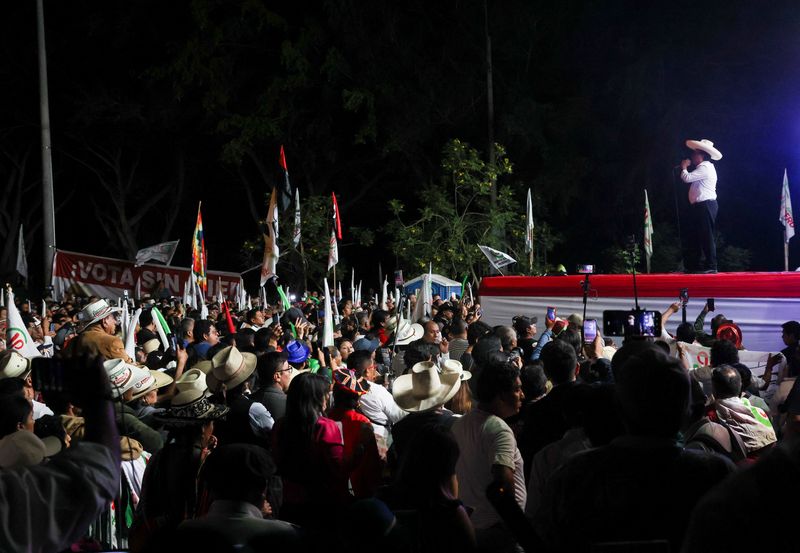
POLICY WIRE — Lima, Peru — One could almost set a clock by it, couldn’t they? Peruvians woke up for yet another date with their democratic destiny, or perhaps, their recurring nightmare. June 7 wasn’t just a day on the calendar; it was a societal gut-check, a fresh wound reopening an old scar that’s become all too familiar in the Andean nation. It’s like watching a high-stakes drama unfold, but with a script everyone already knows—and frankly, a bit weary of.
Because frankly, it’s never just about who sits in the presidential palace, is it? Not in Peru, where the very foundations of government feel like shifting sands. We’re talking a parade of presidents, each leaving office under a cloud, sometimes literal (arrest warrants) and sometimes metaphorical (public opprobrium). The latest runoff saw a pair of unlikely, yet deeply emblematic, contenders fighting for the keys to a perpetually sputtering machine.
On one side, you’ve got Pedro Castillo. A rural schoolteacher, union leader, a man sprung from the often-ignored heartland, suddenly a lightning rod for working-class grievances. His campaign promised radical change, a wholesale upending of the old guard. He’s articulated sentiments about the deep chasm separating the elites from ordinary folks, painting a vision of national wealth distributed differently. Castillo reportedly told supporters that he felt [QUOTE_PLACEHOLDER]. He’s tapped into something raw, a sense of betrayal that resonates profoundly across swathes of the country.
And on the other, Keiko Fujimori. A name synonymous with Peruvian political drama, — and that’s putting it mildly. Daughter of an incarcerated former president, she’s carried her father’s divisive legacy like a cross — or perhaps, a scepter. Her supporters, — and there are many, see her as the bulwark against economic collapse and radicalism. She’s campaigned on stability, on established economic models, pushing back hard against anything smacking of socialism. For her base, her presence on the ballot felt like a final stand against an uncertain future, promising that Peru would [QUOTE_PLACEHOLDER]. Her critics, naturally, see her as merely a continuation of past abuses, a political dynasty determined to hold onto power at all costs. It’s a binary choice, really. Almost painfully so.
But the real story here? It isn’t just the names on the ballot. It’s the visceral struggle beneath the surface, the chronic instability plaguing a nation rich in resources but poor in trust. Every election, every crisis, further erodes public confidence. The judiciary is stretched, the police are often underfunded, — and the media faces increasing pressures. You see this everywhere, sure, but in Peru, it’s just so *relentless*. And let’s not forget the sheer economic hardship, made acutely worse by the global pandemic. According to the World Bank, Peru’s poverty rate surged to 30.1% in 2020, up sharply from 20.2% just the year prior. That kind of pain? That builds electoral landslides, or at least, the *potential* for them.
Then there’s the international gaze. Wall Street watched with bated breath, analysts scrambling to model scenarios that didn’t involve a wholesale market meltdown. Foreign investors, already jittery after years of political musical chairs, reportedly expressed concerns that a shift to the left might signal [QUOTE_PLACEHOLDER]. For a country heavily reliant on mineral exports—copper especially—such anxieties aren’t academic. They’re about livelihoods. But the populace? Many seem less concerned with global financial markets and more with simply putting food on the table, a concern the mainstream political class has seemed unable to adequately address for generations.
The campaign, like so many before it, was a messy affair. Accusations of fraud flew thick and fast, legal challenges were mounted, and the electoral process itself became another battleground. It makes you wonder how a nation, even one as resilient as Peru, can endure such constant existential friction. It’s exhausting just to watch, never mind to live through.
📄 POLICY WIRE WHITEPAPER PUBLISHED: PAKISTAN'S NATIONAL SECURITY POLICY PRIORITIES
👉 READ BY CLICKING HEREWhat This Means
The outcome of Peru’s June 7 runoff holds ramifications that stretch far beyond its borders. It’s a bellwether, really, for the persistent struggle of developing democracies—especially those in Latin America, but also echoing in parts of the broader developing world—to reconcile vast inequality with democratic aspirations. The deep public dissatisfaction, regardless of who won, signals a pervasive demand for change. And often, these demands get channeled through populist figures, whether from the left or the right, who promise to break with the perceived failures of the establishment.
For nations like Pakistan, for instance, which grapple with their own cycles of political instability, economic vulnerability, and calls for new leadership, Peru’s experience serves as a stark reminder. The pattern of elite capture, perceived corruption, and the failure of traditional parties to address fundamental public needs—these aren’t uniquely Peruvian problems. They’re systemic vulnerabilities. If governments cannot deliver tangible improvements in living standards and root out corruption, the electorate will eventually, aggressively, seek alternatives. Sometimes, those alternatives prove more disruptive than effective, but the public hunger for them is understandable. It’s a lesson the world consistently relearns, often the hard way.
Economically, any shift in Peru will undoubtedly influence regional commodity markets and foreign investment flows, creating ripples. If new leadership opts for radical reforms—like overhauling mining concessions or nationalizing key industries—that’ll send shivers through international financial circles, potentially impacting borrowing costs and development aid. The election wasn’t just about Peruvians choosing a leader; it was about the world watching whether one of Latin America’s key economies would tilt, definitively, towards a new political and economic paradigm. The struggle, it seems, isn’t over. It’s only just begun, again.