


Fishing for Purpose: Corrales, New Mexico’s Annual Retreat from Modern Maladies
POLICY WIRE — Corrales, New Mexico — It’s often the small, almost quaint, municipal gestures that say more about the underlying anxieties of a nation than any grand policy debate. In a world...

POLICY WIRE — Corrales, New Mexico — It’s often the small, almost quaint, municipal gestures that say more about the underlying anxieties of a nation than any grand policy debate. In a world grappling with geo-economic fractures and the relentless march of digital disconnection, a small New Mexico village dedicates a Saturday to fishing. Not just any fishing, mind you, but *free fishing*, along with sundry other distractions intended to pull the populace, however briefly, from screens and into sunlight. A decidedly low-stakes affair in the grand scheme, you’d think, yet these seemingly simple community engagements offer a peculiar window into civic health – or perhaps, a well-intentioned municipal distraction from it.
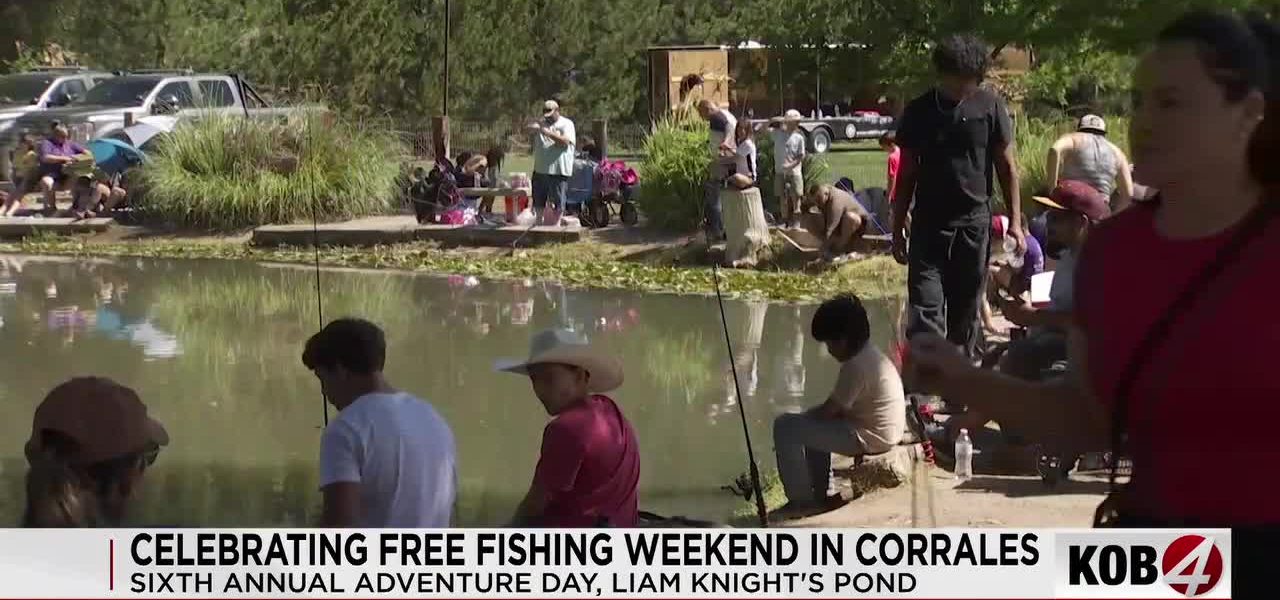
Corrales, for its part, wasn’t reinventing the wheel this past weekend. They’ve done this before. This year marked the sixth annual Outdoor Adventure Day. It’s an initiative framed around bringing families together, presumably to reacquaint them with fresh air and each other’s company sans Wi-Fi. The locale was Liam Knight Pond, a suitably picturesque backdrop for such bucolic pursuits. We’re talking about an entire day packed with diversions: free fishing, sure, but also a chance for youngsters to snag prizes, hands-on outdoor activities to dirty up their soft urbanite hands, and even a bit of marksmanship practice with archery and pellet gun ranges. [QUOTE_PLACEHOLDER]
And so, while Washington D.C. haggles over spending bills and international capitals fret about supply chains, Corrales focused on the decidedly simpler—some might say more urgent—task of getting kids to hold a fishing rod. It’s not quite the G20, but it does reflect a quiet acknowledgement of modern life’s challenges. What does it cost, really, to put on an event like this? It’s far less than a fighter jet, but the returns on investment, measured in fleeting childhood smiles and briefly united families, are harder to quantify on a ledger. Though, you couldn’t help but notice organizers already had an eye to the future, as they hope to make next year’s event bigger. A bigger fish, a bigger pond, bigger ambitions – it’s a predictable trajectory for any endeavor that sees even a modicum of success.
But the questions linger. Is a day of free fishing enough to counter the relentless tide of screen time — and childhood obesity? Studies show American children average nearly 7.5 hours of screen time per day, according to a 2019 report by Common Sense Media. It’s an escalating challenge that municipalities like Corrales are, in their own small ways, trying to reel in. The underlying currents here, however, reach far beyond the banks of Liam Knight Pond.
Consider, for a moment, the landscape of public leisure — and youth engagement in other parts of the world. In Karachi, Pakistan, a bustling metropolis with an exploding youth demographic, accessible public green spaces and safe outdoor activity zones are precious commodities. While Corrales can simply designate a pond and offer free bait, urban planners in South Asia frequently battle monumental issues: informal settlements encroaching on recreational land, inadequate funding for infrastructure, and the constant pressure of population growth. Young people there, often under immense economic strain, aren’t just facing the pull of smartphones; they’re often facing the existential challenge of securing a future. A ‘free fishing day’ would be a dream, a logistical marvel. And yet, the underlying need for accessible, enriching activities for youth remains a universal human constant, albeit addressed through vastly different means.
In Corrales, the challenge is engagement; elsewhere, it’s survival, or at least opportunity. But regardless, community bonding and teaching traditional skills — patience, dexterity, a respect for nature — retains its perceived value. They’re skills perhaps less valued in the algorithm-driven economies dominating today’s global stage, but they sure help pass a Saturday afternoon.
📄 POLICY WIRE WHITEPAPER PUBLISHED: PAKISTAN'S NATIONAL SECURITY POLICY PRIORITIES
👉 READ BY CLICKING HEREWhat This Means
The sixth annual Outdoor Adventure Day in Corrales, New Mexico, offers a microcosmic view into a fascinating socio-political phenomenon: the deployment of hyper-local, community-focused initiatives as soft power—or at least soft governance—mechanisms. Economically, while the event provides free entertainment, its actual impact on the local economy is probably negligible beyond the immediate, minor sales for bait shops or food vendors. Politically, however, such events cultivate a sense of civic cohesion — and municipal effectiveness. They serve as tangible demonstrations of a local government’s perceived commitment to family welfare and quality of life, indirectly bolstering public trust and reducing societal friction. It’s a calculated low-cost, high-return play in the politics of contentment.
Comparing this to contexts like Pakistan or even larger developing economies highlights the privilege inherent in such recreational offerings. In nations grappling with structural economic disparities and scarce public resources, the very concept of a state-sponsored ‘free fishing day’ often seems a luxury. There, such initiatives are either absorbed into more pressing national development goals or are entirely reliant on NGO or private sector intervention. The lesson from Corrales isn’t just about fish; it’s about what a society deems a basic entitlement for its citizenry – a small window of accessible outdoor escape – and the political capital accrued from providing it, even if its ultimate scope is to simply bring families together.
This annual event isn’t just a quaint distraction. It’s a barometer of community expectations, a low-level experiment in civic engagement, and a quiet acknowledgement that some things, like watching a bobber float, still matter in a relentlessly interconnected world.