
Peru’s Weary Choice: A Battle for the Soul, or Just More of the Same?
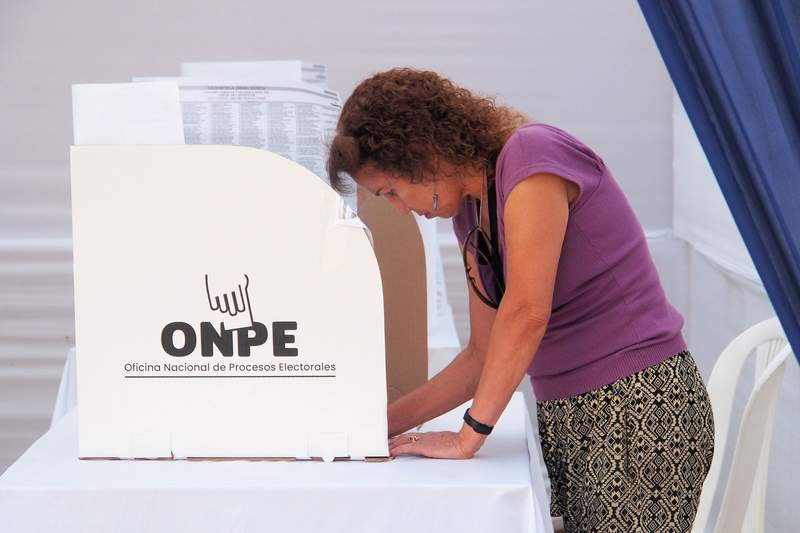
POLICY WIRE — Lima, Peru — They’re doing it again. Or rather, they have to do it again. Peruvian voters find themselves at a crossroads that feels eerily familiar, navigating a presidential run-off...

POLICY WIRE — Lima, Peru — They’re doing it again. Or rather, they have to do it again. Peruvian voters find themselves at a crossroads that feels eerily familiar, navigating a presidential run-off that’s less about fresh ideas and more about choosing between two deeply unpalatable — to many — futures. It’s less a sprint to the finish line, isn’t it, — and more a weary shuffle towards an inevitable, uncertain outcome.
The ballot, once again, pits a left-wing firebrand against a conservative standard-bearer. On one side, promises of radical change and wealth redistribution; on the other, a commitment to economic orthodoxy and stability, often with the baggage of past family dynasties. Neither candidate inspires widespread trust, really. Public surveys suggest an electorate caught between profound dissatisfaction with the status quo and a genuine fear of overturning the economic apple cart entirely. It’s a political stew, — and frankly, it doesn’t smell great.
This isn’t just Peru’s problem. You see this kind of desperate oscillation in emerging economies worldwide, places where the promise of democracy often runs headfirst into the hard wall of structural inequality. The deep veins of disillusionment here, the ‘anti-vote’ driving election cycles, isn’t that much different from the sentiments simmering in parts of Southeast Asia, or even the streets of Islamabad, where a significant portion of the populace often feels economically disenfranchised, caught between grand ideological narratives and a rapidly depreciating currency. Populist impulses? They thrive in such conditions, giving easy answers to complex problems. But those answers aren’t usually cheap.
But the stakes? They’re colossal. Peru, a mining powerhouse, is critical to global commodity markets. It’s a nation whose economy often rises — and falls with copper prices. According to Peru’s National Institute of Statistics and Informatics (INEI), a whopping 29% of its population lived below the poverty line in 2023, a significant increase from pre-pandemic levels. That’s nearly one in three people — struggling. This isn’t just about policy papers; it’s about dinner tables.
A hypothetical candidate, say, a vocal proponent for resource nationalization from the socialist leaning Partido Patria Nueva, might put it bluntly: “We can’t keep feeding the rich while our people starve. This isn’t just about economics; it’s about dignity, and taking back what’s ours.” A strong statement, sure, one that resonates deeply in communities still living hand-to-mouth despite the country’s natural riches. Many nations grappling with resource curses often find themselves asking these exact questions, a familiar echo across the developing world from the Amazon to the Arabian Sea.
Conversely, the establishment, represented by a more centrist, pro-market candidate, might echo concerns from Lima’s business elite. Imagine a campaign veteran from Unidad para el Progreso stating, “Stability and growth—that’s what investors crave, and that’s what our families need to put food on the table. Reckless populism won’t fix anything; it’ll just break what little we have.” They aren’t wrong, necessarily. Capital, it’s a flighty thing, isn’t it? It can disappear faster than you can say ‘expropriation.’ But for voters who feel they’ve seen ‘stability and growth’ for decades without personal benefit, that promise sounds an awful lot like more of the same. And more of the same hasn’t exactly been a picnic.
This dance between the perceived saviour and the established order isn’t unique, it’s just particularly pronounced here, exacerbated by years of political scandals—corruption investigations and presidential impeachments have become a bizarre sort of national pastime. Nobody seems to escape untarnished. It’s gotten so bad that voter fatigue has probably reached an industrial-grade level.
📄 POLICY WIRE WHITEPAPER PUBLISHED: PAKISTAN'S NATIONAL SECURITY POLICY PRIORITIES
👉 READ BY CLICKING HEREWhat This Means
Regardless of who ekes out a victory, Peru’s next president will inherit a state that’s fractured. And a populace that’s skeptical, bordering on cynical. Economic volatility, particularly in the metals market, could torpedo even the most meticulously crafted policy agenda. If the left prevails, expect investor jitters, currency fluctuations, and potential clashes with international creditors and multinational corporations. We’ve seen that movie before; it’s never a smooth watch. But if the right triumphs, the pressure to deliver inclusive growth will be immense, given the deep social inequalities that refuse to disappear.
And because the election boils down to often very slim margins, the winning candidate’s mandate will be tenuous at best, making effective governance an uphill struggle. Gridlock — and executive-legislative skirmishes seem almost guaranteed. The larger global currents of protectionism, and the retreat from neoliberal orthodoxy that’s evident from Washington D.C. to New Delhi (though sometimes it’s more about strategic alliances), suggest a future where nations like Peru might find less support for traditional economic models. The struggle isn’t merely about policy; it’s about a political system fighting for its very legitimacy, much like the broader conversations around ‘populism’ elsewhere, like the US, where economic narratives sometimes trump facts.
It’s not just a binary choice; it’s a test of resilience for a nation caught between a desire for profound change and a fear of leaping into the unknown. We’ll see how it plays out, but don’t expect quiet times. Nobody does anymore.