

Wellington’s Delicate Dance: New Zealand to Confront Beijing Over Lawmaker Ban
POLICY WIRE — Wellington, New Zealand — In the grand, often unpredictable theater of global diplomacy, it’s not always the loudest voices that strike the most discordant notes. Sometimes, a...

POLICY WIRE — Wellington, New Zealand — In the grand, often unpredictable theater of global diplomacy, it’s not always the loudest voices that strike the most discordant notes. Sometimes, a quiet nudge from a geographically isolated, relatively small nation like New Zealand can ripple further than anticipated. That’s precisely where we find ourselves this week, as Wellington readies itself to directly challenge Beijing over its decision to ban certain Kiwi lawmakers from Chinese soil. It’s a move, observers note, that strips bare the polite fictions of strategic ambiguity, leaving little room for misinterpretation.
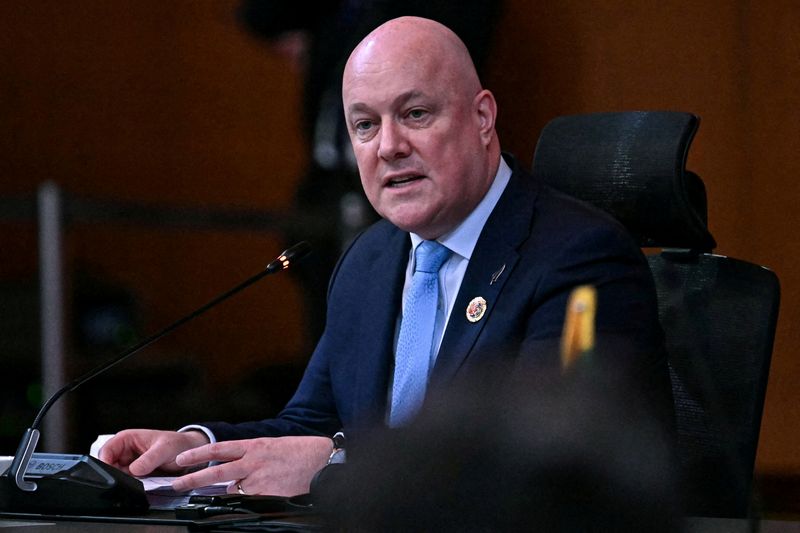
It’s a peculiar twist in the relationship, frankly, given how carefully New Zealand has often tiptoed through the geopolitical minefield involving the People’s Republic. For years, they’ve managed a pragmatic, often profitable, equilibrium. But recent developments suggest that balancing act has hit a snag, forcing Prime Minister Christopher Luxon to take what many would consider a rather uncharacteristic stance, at least for his nation’s diplomatic playbook.
The core of the issue? China has reportedly imposed travel bans on a handful of New Zealand parliamentarians. While the exact identities of those affected remain a topic of hushed speculation within diplomatic circles, the nature of their purported infractions is less opaque: criticism of Beijing’s human rights record, particularly concerning Xinjiang, and perhaps, a few uncomfortable remarks about Hong Kong or Taiwan. Such restrictions aren’t entirely new in China’s diplomatic arsenal—we’ve seen this play out with various Western lawmakers before. But for New Zealand, it’s hitting a nerve.
And so, Luxon plans to raise this issue, according to his own government, [QUOTE_PLACEHOLDER]. Because let’s be real, a nation’s ability to engage fully, even in the abstract sense of parliamentary exchanges, matters. It’s not just about a few politicians; it’s about a broader principle of sovereignty — and diplomatic access, isn’t it?
But the calculus here is deeply layered. New Zealand’s economic fortunes are, for better or worse, inextricably linked with China’s colossal market. China, you see, isn’t just another trading partner; it’s *the* trading partner. According to official figures from Stats NZ, China was New Zealand’s largest trading partner in the year ended December 2023, with two-way trade totaling NZ$38.4 billion. That’s a staggering sum, one that underpins countless jobs and drives significant segments of the Kiwi economy, from dairy and meat exports to tourism and education. Messing with that dynamic is like threading a needle in a hurricane.
The situation isn’t unique to Wellington, of course. Nations across Asia, — and indeed the broader Muslim world, often grapple with China’s assertive diplomatic posture. Pakistan, a long-standing ally and beneficiary of significant Chinese investment through the Belt and Road Initiative, routinely walks its own tightrope. While Islamabad has largely maintained silence on China’s treatment of its Uyghur Muslim population in Xinjiang—often prioritizing economic cooperation and strategic alignment over vocal condemnation—other nations, particularly those with less direct economic dependence, feel more emboldened. Even nations like Malaysia or Indonesia, often vocal on issues concerning Muslim communities globally, have often muted their critiques of Beijing, navigating similar economic complexities. It’s a delicate dance for any country, balancing deeply held principles with stark economic realities.
📄 POLICY WIRE WHITEPAPER PUBLISHED: PAKISTAN'S NATIONAL SECURITY POLICY PRIORITIES
👉 READ BY CLICKING HERE[QUOTE_PLACEHOLDER], is what some officials might be thinking. Because ignoring such bans could imply acceptance, or at least a tacit acknowledgment of Beijing’s right to dictate the opinions of elected representatives from sovereign nations. That’s a line few democracies are eager to cross.
This isn’t merely about abstract political posturing, it’s about what kinds of relationships global players are willing to tolerate. It highlights the growing tension between economic necessity and ideological integrity—a tension felt acutely in countries both large and small.
What This Means
For New Zealand, confronting China directly over lawmaker travel bans signals a slight but significant shift in its diplomatic posture. It suggests a growing exasperation with Beijing’s more punitive measures, perhaps spurred by an internal consensus that a line’s been crossed. Politically, Prime Minister Luxon’s government could face domestic criticism if they don’t appear strong enough, or alternately, if they upset the economic apple cart too severely. There’s no easy path here, frankly. It’s all shades of gray. The move might also embolden other nations in the ‘Five Eyes’ intelligence alliance (which includes New Zealand) to take a harder line collectively on such issues, viewing Wellington’s step as a litmus test. From an economic standpoint, any overt escalation, though unlikely from New Zealand’s side, carries the risk of economic retaliation from China. Beijing’s not above using trade as a diplomatic lever, we’ve seen it time — and again. It forces New Zealand to explore diversifying its trade partners, a long-discussed but incredibly slow process. Perhaps it’s also a subtle hint to nations seeking an identity on the global stage, showing that even smaller players can push back. This move is more than just about a few blocked passports; it’s about New Zealand trying to redefine the acceptable boundaries of its engagement with an economic superpower, proving that some diplomatic red lines remain, even if they’re drawn in the sand. The ripple effects could certainly be felt, even in seemingly unrelated sectors.
The true impact won’t be in the immediate bluster, but in Beijing’s response—or lack thereof. Will China view this as a minor annoyance, or an emerging challenge to its policy of isolating critics? History tells us it’s rarely ignored, even the quieter protests. And this one isn’t so quiet after all, is it?