


Silent Witnesses & Delayed Justice: Albuquerque’s Cold Case Cracked Two Years On
POLICY WIRE — Albuquerque, N.M. — The shelves inside Smith’s hummed with mundane transactions, a routine backdrop that almost certainly muffled the grim event unfolding outside in July 2024. But...

POLICY WIRE — Albuquerque, N.M. — The shelves inside Smith’s hummed with mundane transactions, a routine backdrop that almost certainly muffled the grim event unfolding outside in July 2024. But time, it seems, has a way of amplifying whispers. It took almost two years, but city police have finally closed in on suspects in a killing that left one man dead and a stark reminder of urban vulnerability.
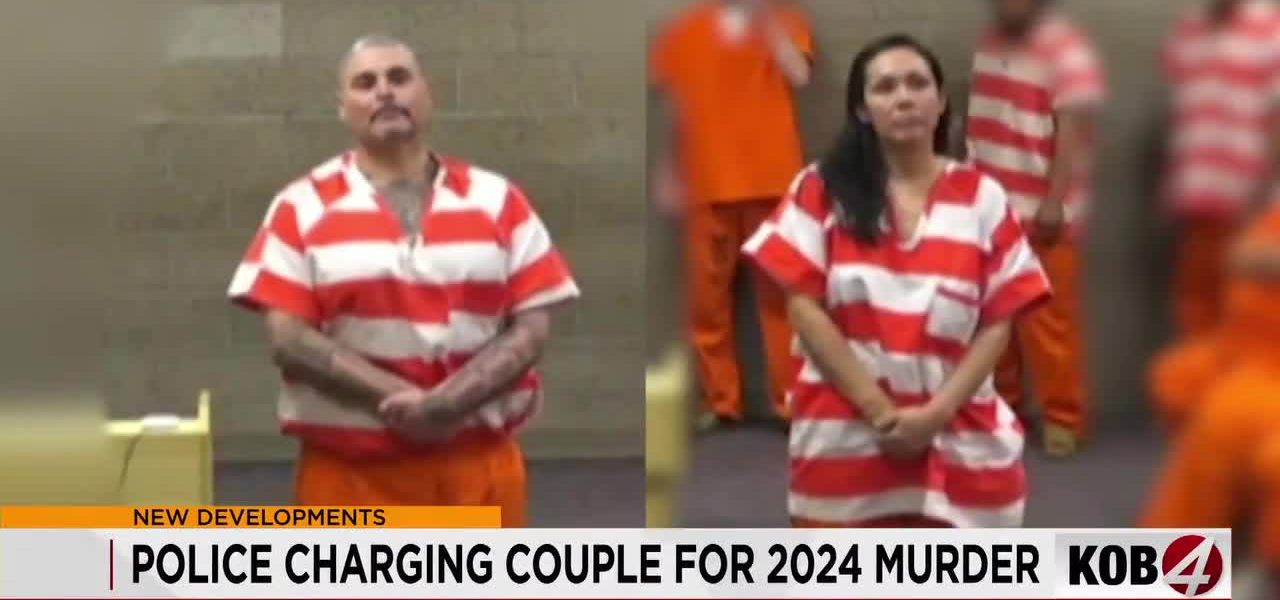
It’s a peculiar rhythm, this dance of justice. For nearly twenty-four months, an unnamed shadow hovered over the intersection of Yale Boulevard — and Coal. Yet, the evidence – stubbornly silent yet profoundly vocal – waited. Law enforcement officials recently announced that they’re bringing charges. They’re police charged two people in a nearly two-year-old killing, alleging a brutal act born from an ordinary theft. That’s how these things often start, you know; a small transgression snowballing into irreversible tragedy.
The incident was ugly: suspects are saying they stole a man’s phone and stabbed him to death outside a Smith’s. It’s a jarring scene, certainly. The body of Ty James, lifeless, was discovered not long after. Indeed, officers found Ty James dead and recovered the knife used in the killing on July 12, 2024, on Yale Boulevard near Coal in Albuquerque. A piece of cutlery, turned weapon, left behind a trail not of blood alone, but of genetic material.
The initial response, as is often the case in bustling urban environments, involved scouring the immediate vicinity. Surveillance video from nearby businesses showed two people leaving the area. Useful, definitely, but not always enough for immediate identification. But it’s these little fragments, the digital crumbs left behind, that eventually pave the path forward, proving indispensable for detectives with the tenacity to follow them.
And that’s where the methodical grind of modern policing really kicks in. Forensic science, sometimes seen as the quiet workhorse of the justice system, plays the long game. Because without it, cases like this just wither on the vine. We’re talking about DNA analysis, mind you, a discipline that’s constantly refining its precision. The persistence of evidence. Court filings indicate that Court documents said detectives tested DNA from the knife and matched it to Emiliano Vallejos. A specific individual, singled out by invisible markers, often microscopic.
But the story doesn’t quite end there, does it? Once forensic ties are made, other avenues burst open. Investigators also relied on another increasingly common tool: intercepted communications. Because even after arrest, the threads of complicity can unravel. Documents mention that jail calls between Vallejos and Rosalyn Garcia also showed Garcia admitted she lied to police about their involvement. That’s what’s known as a break. A confession, however subtle, often solidifies the otherwise circumstantial edifice built by forensics. It pulls the pieces together.
The pace of justice, especially for violent crimes, can seem glacial to the uninitiated, or to grieving families. But consider the intricate web of protocols — and analyses. While local agencies boast improving figures, the average clearance rate for homicides nationally hovered around 50% for several years until a slight uptick in 2020 and 2021, according to data compiled by the FBI’s Uniform Crime Reporting Program. That means roughly half of all murder cases remained unsolved during those periods. So, nailing one down after this long is hardly trivial, it’s a marathon.
The methodical process in Albuquerque isn’t just a local narrative. Across the globe, particularly in developing nations and regions like South Asia and the broader Muslim world, the implementation and consistent application of advanced forensic techniques, like DNA analysis, remains a complex challenge. Limited resources, nascent legal frameworks, and sometimes, a prevailing skepticism of technology’s infallibility mean similar delays can often stretch into decades, if justice arrives at all. Trust in judicial processes—or lack thereof—is often magnified when investigations appear protracted or inconclusive. It’s a stark contrast to places where scientific investigation is becoming increasingly standard, if still imperfect, procedure.
📄 POLICY WIRE WHITEPAPER PUBLISHED: PAKISTAN'S NATIONAL SECURITY POLICY PRIORITIES
👉 READ BY CLICKING HEREThis long path from incident to arrest also sheds a light on the psychological burden shouldered by a community when crime goes unpunished. Because these types of cases? They gnaw at the edges of civic tranquility. You might remember the similar lingering uncertainty after that Capitol Complex incident, which underscored vulnerabilities at seemingly secure locations. Here, it’s the anonymity of an urban night, pierced by a flash of violence, that lingered for months.
And then there’s the whole shadow economy issue. When basic phone theft turns into murder, it suggests a desperation, or maybe just an utter disregard for human life. Either way, it hints at deeper cracks within the social fabric that demand attention.
What This Means
The eventual arrests in the Ty James murder case, while offering a semblance of closure, highlight several critical aspects of contemporary public safety and justice administration. First, it underscores the ever-growing reliance on forensic science, specifically DNA evidence, as a linchpin in cracking seemingly intractable cases. The [QUOTE_PLACEHOLDER] doesn’t just get revisited by intuition; it often requires a patient, resource-intensive application of lab-based detective work. This naturally strains police budgets — and forensic lab capacities, issues common in many jurisdictions.
Second, the nearly two-year delay between the crime and the charges serves as a sobering reminder of how protracted justice can be. While meticulous investigation is necessary, such delays can erode public confidence, fostering perceptions of inefficiency or impunity. It also means victims’ families endure a prolonged period of uncertainty — and grief. The [QUOTE_PLACEHOLDER] label isn’t just a temporal marker; it’s a narrative of sustained apprehension for a community.
Finally, there’s the broader societal implication for urban security. A grocery store parking lot – a commonplace, almost invisible part of daily life – became the scene of a fatal confrontation. This type of incident, even if eventually solved, can subtly heighten collective anxieties about public spaces and personal safety. The justice system, in these situations, isn’t just prosecuting criminals; it’s attempting to mend frayed civic trust. It’s a tough job, but somebody’s gotta do it.