


After Week-Long Freefall, a Humble Catcher’s Homer Signals Policy Reversal for San Diego
POLICY WIRE — San Diego, USA — Six consecutive losses—a stretch of baseball that feels, to any fan, like a prolonged descent into economic stagnation, a policy proposal failing in committee, or an...

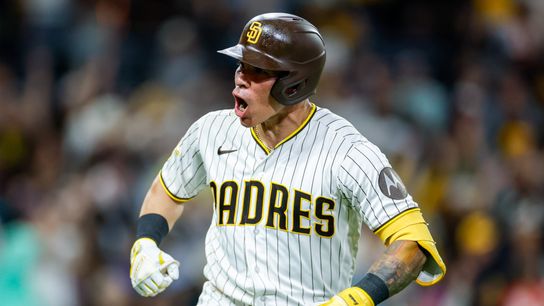
POLICY WIRE — San Diego, USA — Six consecutive losses—a stretch of baseball that feels, to any fan, like a prolonged descent into economic stagnation, a policy proposal failing in committee, or an interminable geopolitical squabble. Because when your local nine can’t buy a win, even the most sun-drenched city starts to feel a bit grey. This wasn’t just about baseball statistics; it was about the collective civic psyche, strained thin. Then, just when the abyss looked widest, a man hitting a dismal .126—Padres catcher Freddy Fermin—swung his bat and, for a fleeting moment, redefined the trajectory of San Diego’s athletic ambitions.
It was Friday night. Or was it Saturday? The days had blurred into a monotonous parade of offensive futility — and pitching struggles. The Padres, for all their Caribbean-born diamond talent—Carving Futures in the Caribbean: Padres’ Diamond Dream Factory Runs On Youth and Raw Promise—had sputtered, dropping 10 of their last 11 before this particular bout with the New York Mets. The air in Petco Park was thick, heavy with the weight of expectation — and impending despair. You could taste it, the sour note of failure lingering, even with the pacific breeze. And yes, they were behind again.
The Mets had taken a tentative lead, a seventh-inning solo shot from Marcus Semien briefly cementing San Diego’s familiar fate. But that fleeting advantage quickly evaporated. Sung-mun Song, who’d had a chaotic game of aggressive baserunning that bordered on comical, reached on an infield single. The stage was set for a hero. Nobody—not even Fermin, presumably—expected it to be him.
He didn’t dally. He crushed the first pitch he saw into left field, a two-run homer that erupted from the park like a geyser. The place went bonkers. “He works his ass off every day,” said center fielder Jackson Merrill, reflecting on the moment. “So for him to get that moment means a lot. Hopefully that’s the exorcism for all of us.” Exorcism. Not a bad word for escaping a week of such wretchedness, really.
Team manager Craig Stammen, never one for flowery declarations, admitted the mental toll. “Those games are all in the past. We’ve got to put up a brick wall almost every day and say today is the only day that we can do anything in about it.” He’s right, of course. It’s the kind of pragmatic rhetoric that grounds volatile situations. But it’s one thing to say it; another to see a quiet professional like Fermin actually deliver the goods, especially after his batting average had languished. According to official league stats, he was mired at .126 going into that fateful at-bat. He probably hadn’t earned his dinner more than with that swing.
The bullpen held. Mason Miller, stepping in for a late-game save, calmly closed the door. The roar from the crowd, though perhaps amplified by cheap beer, felt genuine. The sheer relief, palpable.
📄 POLICY WIRE WHITEPAPER PUBLISHED: PAKISTAN'S NATIONAL SECURITY POLICY PRIORITIES
👉 READ BY CLICKING HEREWhat This Means
Beyond the diamond, a single victory, especially after a crushing string of defeats, offers a critical psychological case study for policy makers. This isn’t just about athletic performance; it’s about organizational morale as capital. A prolonged slump erodes trust, drains optimism, and leads to questions about leadership’s efficacy—mirroring concerns seen in government or corporate downturns. The ‘unlikely hero’ narrative here isn’t just sentimental; it signifies that salvation can come from unexpected corners, forcing a re-evaluation of overlooked assets. It challenges the assumption that only established stars can deliver the crucial breakthrough.
From a broader geopolitical perspective, the universal resonance of an underdog triumph, even in a niche sport like American baseball, echoes deeply across cultures. In regions like South Asia, where the national passion for cricket can be a litmus test for collective spirit, the idea of a struggling team suddenly finding its spark — much like how an embattled government finds a popular initiative — carries significant weight. Pakistan’s own cricket struggles and triumphs, as chronicled by Policy Wire in pieces like Pakistan’s Cricket Dream Fades: #Unpaidera Scandal Rocks PSL’s Financial Foundation, demonstrate how intrinsically linked national pride and sporting narratives can become. That shared experience of hope rekindled, against long odds, is a powerful, unifying policy in itself. Because when a long losing streak finally ends, it’s not just a win. It’s permission to believe again.
The challenge for San Diego now isn’t merely winning the next game against the Mets on Sunday. It’s converting this single, cathartic moment into a sustained policy of self-belief — and performance. Manager Stammen put it rather succinctly: “Hopefully create some more belief, like, ‘yeah, we’re a good team. We have done this for most of the season.’” For a team, much like a nation or an enterprise, belief isn’t just a sentiment; it’s a strategic resource, hard-won and easily lost. And last night, Fermin gifted them a renewed, albeit precarious, supply.