


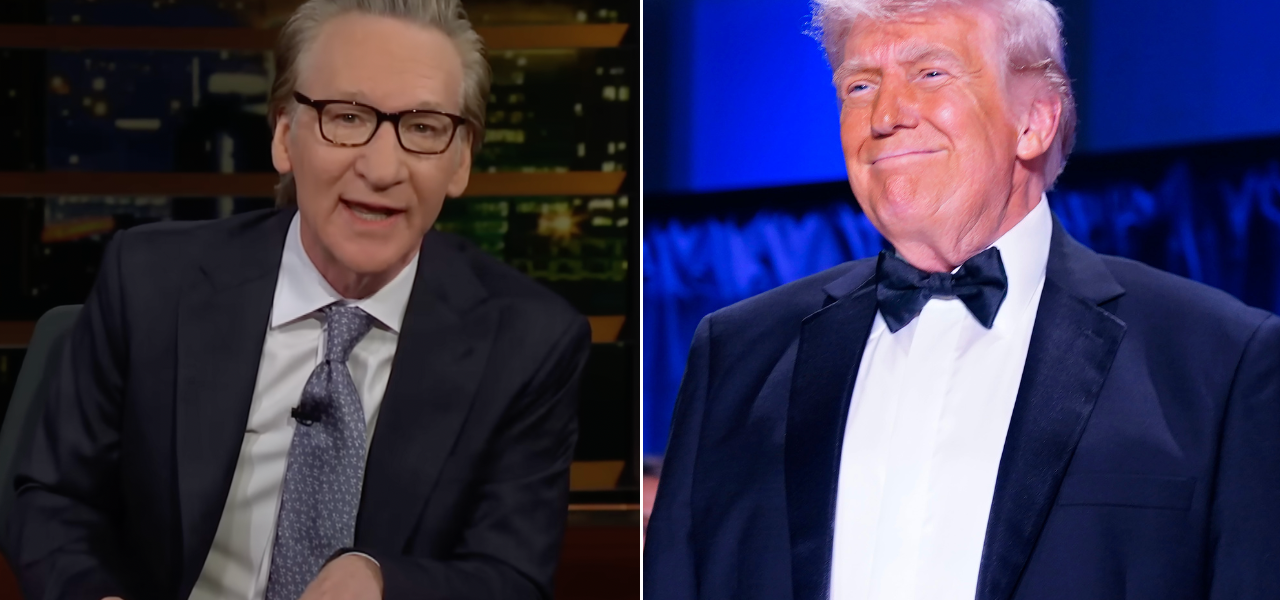
Maher Dissects Media Divinity, Challenges Journalistic Pantheon at CBS
POLICY WIRE — Los Angeles, United States — For a network whose news division prides itself on the gravitas of yesteryear, the notion of internal chaos rarely airs its dirty laundry in public. But...

POLICY WIRE — Los Angeles, United States — For a network whose news division prides itself on the gravitas of yesteryear, the notion of internal chaos rarely airs its dirty laundry in public. But leave it to Bill Maher, perpetual agitator of establishment norms, to not just peek behind the curtain at CBS, but tear it down with characteristic bluntness. He isn’t interested in decorum, let alone any pretense of veneration.
Maher, ever the contrarian, cut through the vague whispers of tumult at CBS with surgical precision, landing a blow squarely on the perception of its anchors. He didn’t just comment; he actively debunked. It’s one thing for internal strife to simmer—it’s quite another for an outside provocateur to question the very canonization of the institution’s supposed saints. You’d think some journalists, especially the old guard, were above reproach, wouldn’t you?
But he didn’t pull punches, especially regarding veteran newsman Scott Pelley. [QUOTE_PLACEHOLDER] Pelley, whose serious demeanor often graces American screens, was implicitly positioned by Maher not as a figure of journalistic legend, but rather as just another talking head. It’s a casual, almost dismissive judgment that grates against the narrative of the ‘national treasure’ status often bestowed upon long-serving news anchors—a status, it seems, increasingly prone to deflation in today’s fragmented media landscape. Imagine telling your grandmother that her favorite anchorman wasn’t actually that big of a deal. Yeah. Maher did that, essentially.
It’s a strange thing, this almost divine aura broadcast journalists used to carry, especially in a place like Pakistan, where state television’s PTV anchors often serve less as independent critics and more as narrators of official policy. Their ‘national treasure’ status, when conferred, is typically more about loyalty to the prevailing government than groundbreaking investigative journalism or impartial truth-telling. But this isn’t exclusively a South Asian phenomenon, either. Even here, networks have always nurtured figures meant to symbolize trustworthiness, almost as branding. You just know a face, — and you implicitly trust them. Don’t you?
Because, as Maher implicitly argues, perhaps these hallowed figures weren’t so untouchable after all. His skepticism, while aimed at a single personality, points to a broader discomfort with inherited reverence in media. And let’s be real, he’s probably not wrong that some of this institutional ‘treasure’ talk feels… dated. Like trying to claim Blockbuster is still the apex of home entertainment. That’s just not how it works anymore, kiddo.
The current media environment, a swirling vortex of online sources, partisan news outlets, and personality-driven content creators, simply doesn’t support the kind of unified cultural admiration a handful of network anchors once commanded. News consumption is no longer a shared national ritual; it’s a hyper-personalized, often curated, echo chamber. Statistically, public trust in mass media in the United States hit a near-historic low of 32% in 2022, according to Gallup polls, marking a stark decline from prior decades when network news anchors were largely seen as unimpeachable. That trust isn’t coming back overnight.
📄 POLICY WIRE WHITEPAPER PUBLISHED: PAKISTAN'S NATIONAL SECURITY POLICY PRIORITIES
👉 READ BY CLICKING HEREMaher’s quip is a digital-age elbow to the ribs of a legacy media trying to maintain its traditional heft. The power of a single journalist to command widespread, non-partisan respect has arguably eroded—partially due to legitimate criticisms of media practices, but also largely due to a deliberate political effort to sow distrust. When every outlet is ‘fake news’ to someone, who then remains above the fray? Nobody. It’s an interesting thought, actually: when everything is ‘unprecedented,’ nothing really is.
He just doesn’t buy the hype. And really, should we? In an era where cable news segments often resemble gladiatorial combat more than sober reporting, elevating any single journalist to quasi-mythological status feels less like respect and more like wishful thinking for a bygone era. It’s tough out there for a talking head, even a well-paid one.
What This Means
Maher’s seemingly flippant remarks aren’t just entertainment fodder; they carry significant political and economic implications for legacy media. His willingness to openly challenge the veneration of figures like Pelley signals a continued erosion of traditional media authority. Politically, this ongoing chipping away at media credibility can further polarize publics, making consensus-building even more elusive when shared facts become contested narratives. It also empowers populist narratives that frequently target established institutions, including the press, as out of touch or biased. Look no further than recent electoral campaigns that directly leveraged public distrust in mainstream news organizations.
Economically, this rejection of media divinity underscores the ongoing struggle for traditional news outlets to justify their value proposition against a deluge of alternative, often cheaper or free, content. If audiences no longer see network anchors as ‘national treasures’ deserving of their rapt attention—or subscriptions—then the economic model that once sustained massive news divisions becomes increasingly precarious. News organizations like CBS must now not only report the news but also continuously re-earn trust and redefine their relevance in a crowded, skeptical marketplace. They can’t rely on past glories or implied gravitas. As we’ve seen in the South Asian cricket world, even widely admired ‘icons’ can face harsh scrutiny when institutional integrity is questioned, like with the financial woes that have beset the Pakistan Super League, highlighted in the #Unpaidera Scandal. It’s a similar dynamic: the sheen of institutional prestige is only as strong as the public’s current faith. This makes attracting and retaining talent, particularly in investigative journalism, an even tougher climb when the public isn’t convinced any one journalist is actually exceptional enough to stand above the fray. They’ve gotta work harder, basically, for respect. And isn’t that true of almost everything now?