

The Dry Haze Over New Mexico: A Local Forecast Echoing Global Climate Fault Lines
POLICY WIRE — Albuquerque, New Mexico — You might think a humble local weather forecast is just that—a rote recitation of temperatures and cloud cover. But in the current volatile global climate,...

POLICY WIRE — Albuquerque, New Mexico — You might think a humble local weather forecast is just that—a rote recitation of temperatures and cloud cover. But in the current volatile global climate, even the simplest bulletins can, inadvertently, draw sharp relief around far more significant fault lines. This week, as a bone-dry, scorching heat dome settles over New Mexico, the casual prediction of a hot week ahead
isn’t just about local discomfort; it’s a tiny, stark mirror reflecting grander, more intractable challenges that ripple from the American Southwest to arid plains halfway across the world.
It’s summer, — and yes, New Mexico gets hot. We get it. But there’s a persistent, almost weary rhythm to how the state’s meteorologists articulate the predictable misery. A hot — and mostly dry stretch will build across New Mexico
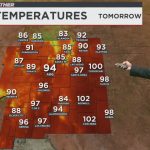
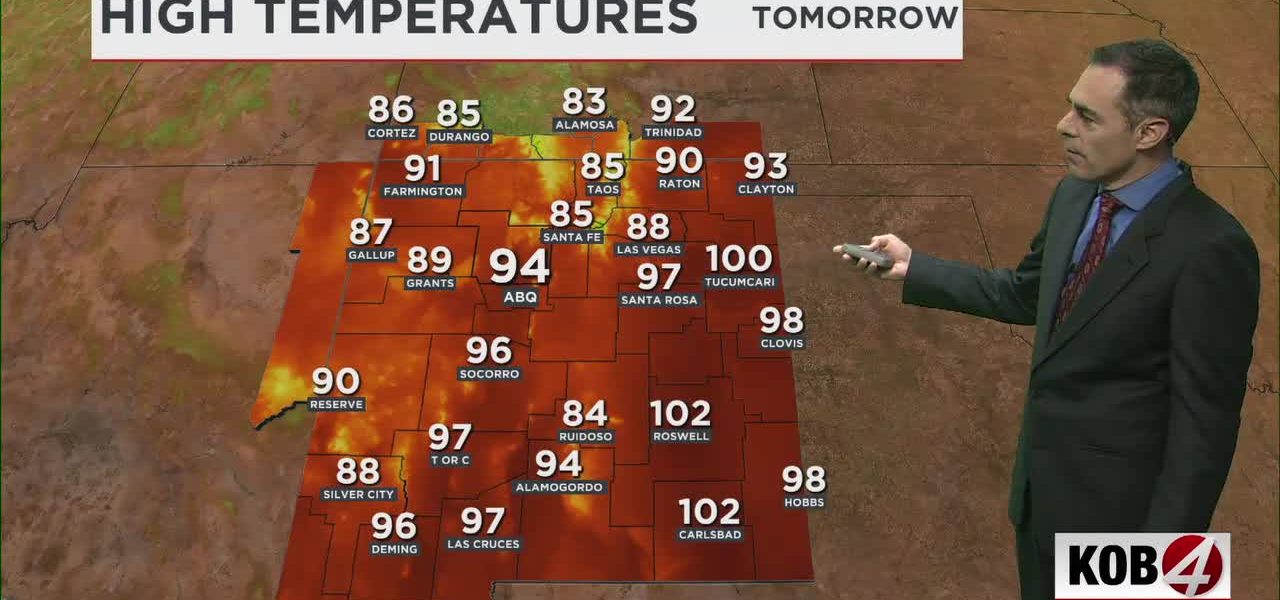
, we’re told. Not much poetry there, just fact. And those facts? Highs are predicted in the 90s around Albuquerque
, climbing near 100 degrees in southeast New Mexico
. Later in the week, it could get even more aggressive, with parts of the region expecting around 100 degrees or hotter
. [QUOTE_PLACEHOLDER]
But this isn’t merely about mercury climbing or the oppressive stillness of air. This relentless sun beats down on a landscape already teetering on the edge of severe water deficits. The Rio Grande, a lifeline for much of the state, often runs low. Drought isn’t a concept here; it’s a persistent, unwelcome houseguest, always overstaying its welcome. So, when the forecast declares that most of the state will be dry and hotter
by Sunday, with only a small chance for an afternoon shower or storm in eastern New Mexico
, it’s less a casual update and more a quiet omen of deeper structural strain.
You can see it in the parched earth, in the anxious glances upward for clouds that don’t quite materialize. Monday will bring similar conditions
, our forecast notes, before offering the faintest whisper of hope: Rain chances may increase a little Tuesday afternoon
. A little
. And even that tenuous possibility might not really materialize until later Thursday or Friday that could bring back a few afternoon showers or storms
. We’re talking about atmospheric wishful thinking, practically. It’s a reality that, though geographically specific, holds uncanny echoes in far-flung locales.
Take, for instance, regions like Balochistan, Pakistan—a province larger than New Mexico, facing its own relentless heat and chronic water scarcity. Or think about agricultural belts across Central Asia, where diminishing glacier melt and unpredictable monsoons mirror New Mexico’s struggles for sustained irrigation. Both landscapes are, in their own ways, front lines in the broader climate battle, albeit with vastly different economic and political leverage.
Globally, average temperatures have risen by approximately 1.2 degrees Celsius since pre-industrial times, according to the Intergovernmental Panel on Climate Change (IPCC), a stark indicator of the changing norms to which these local heatwaves attest. Because, you know, it’s not just a New Mexico problem. It’s an everywhere problem. And, if you look close enough, it’s becoming a Policy Wire problem too, because policy is often made in response to what the environment throws at us. Sometimes—most times, really—you’re stuck reacting. And for people struggling to keep crops alive or merely survive, reacting is often too late.
📄 POLICY WIRE WHITEPAPER PUBLISHED: PAKISTAN'S NATIONAL SECURITY POLICY PRIORITIES
👉 READ BY CLICKING HEREWhat This Means
This prolonged blast of heat and aridity isn’t just uncomfortable; it carries tangible political and economic implications, both domestically and internationally. For New Mexico, increased temperatures mean a predictable surge in electricity demand, straining local grids and pushing energy costs upward. That’s bad news for low-income families — and older residents, isn’t it? It means heightened fire danger, placing immense pressure on emergency services and — critically — threatening vast tracts of land crucial for both ecological health and tourism.
From an agricultural standpoint, prolonged drought, even if intermittent, directly impacts crop yields — and livestock. This vulnerability is not unique to the American Southwest. It’s precisely the dynamic playing out across significant parts of South Asia and the broader Muslim world, particularly in countries already grappling with economic instability or political strife. Pakistan, for instance, frequently contends with extreme heatwaves that decimate harvests and endanger the health of its huge, predominantly rural population. When subsistence farmers can’t grow food, migration increases. People move. They sometimes protest. It’s not just an inconvenience.
The subtle irony here isn’t lost: a local weather update, seemingly benign, speaks volumes about the uneven, often brutal, distribution of climate change impacts. It lays bare the growing pressure on global water resources, highlighting why dialogues on transboundary rivers (think the Indus in South Asia or the Colorado in the US) become flashpoints of geopolitical tension. Energy security also enters the fray; as air conditioning becomes less a luxury and more a necessity in a warming world, demand for fossil fuels or—ideally—renewable energy skyrockets, influencing international energy markets and diplomatic relations. What seems like a localized inconvenience is, in reality, a quiet but firm reminder that local ecosystems, local economies, and local politics are inextricably linked to a volatile planetary system. And it’s on us to grapple with its implications, whether it’s for Albuquerque or Islamabad. We haven’t got much of a choice, have we?