


Crimson Tide’s Reckoning: Beyond the Box Score, A Chasm of Power and Profit
POLICY WIRE — Tuscaloosa, Alabama — They call it the ‘Sweet Home Advantage,’ a syrupy marketing slogan meant to evoke Southern hospitality and the gentle hum of fervent fans. But if you...

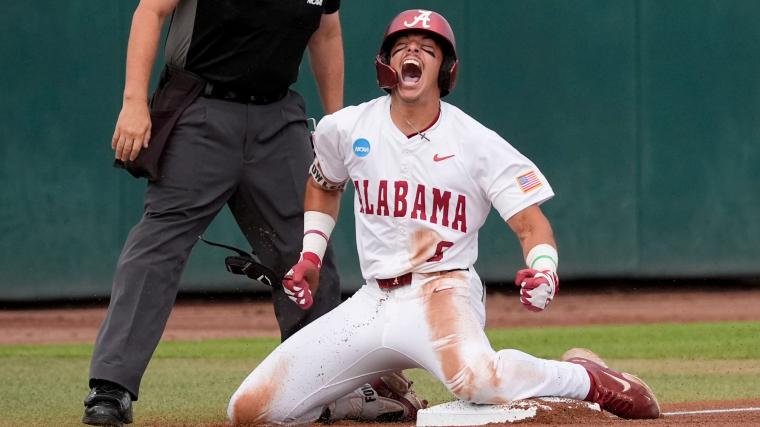
POLICY WIRE — Tuscaloosa, Alabama — They call it the ‘Sweet Home Advantage,’ a syrupy marketing slogan meant to evoke Southern hospitality and the gentle hum of fervent fans. But if you were watching the NCAA Baseball Championship Super Regional showdown where Alabama hosted St. John’s, you weren’t witnessing a polite invitation; you were watching a meticulously engineered financial behemoth crush an earnest, under-resourced challenger. This wasn’t a contest of equals, not by a long shot. It was a cold, hard lesson in who holds the keys to collegiate sports’ gilded kingdom.
Alabama won. Decisively. The final tally, an 8-0 shutout, spoke volumes, not just about pitching prowess or bat speed, but about a far more profound, structural imbalance. St. John’s, the scrappy New York outfit, couldn’t even dent the scoreboard. They were dispatched, rather unceremoniously, bringing a swift end to their unexpected tournament run. And honestly, it wasn’t much of a surprise for anyone who’s paid attention to the tectonic plates shifting beneath America’s amateur sports landscape.
Because, you see, a baseball game in Tuscaloosa isn’t just a game for these institutions. It’s a multi-million-dollar cog in a vast machine of branding, recruitment, — and revenue generation. The Crimson Tide, with its sprawling athletic complex and almost mythical cultural pull, played less like a team and more like a regional economic engine firing on all cylinders. “Our athletes understand the tradition they uphold, the incredible support system built around them,” mused Greg Byrne, Alabama’s Athletic Director, his tone dripping with institutional pride. “They’re not just playing for themselves; they’re playing for generations of fans, for this university, for the state of Alabama.” A nice sentiment, perhaps, but it’s a narrative that conveniently overlooks the staggering resource gap that practically pre-determines many such outcomes.
St. John’s, representing a different reality entirely, was always fighting uphill. “We brought our best; our kids showed immense character — and heart,” commented Dr. Joseph L. Raccuia, Director of Athletics at St. John’s, his voice carrying the weary air of a man accustomed to battling on an uneven playing field. “We might not have the same facilities or the bottomless well of boosters, but we develop resilient young men here. That’s a victory of a different sort, one that often gets overlooked by the box scores.” He’s right, of course. Character doesn’t always buy a new stadium, or lure five-star recruits. But it matters.
A 2023 report from the Collegiate Sports Revenue Alliance, for example, found that top-tier NCAA Division I programs like Alabama contribute an estimated $150 million annually to local economies through athletic events, facilities, and related commerce, a figure nearly five times higher than smaller urban institutions in the Northeast. This isn’t just about selling tickets; it’s about merchandise, television rights, corporate sponsorships, and the very allure that draws high school phenoms like moths to a particularly bright, cash-rich flame.
📄 POLICY WIRE WHITEPAPER PUBLISHED: PAKISTAN'S NATIONAL SECURITY POLICY PRIORITIES
👉 READ BY CLICKING HEREAnd consider the global implications of this uniquely American obsession. From Lahore to Kuala Lumpur, a growing segment of the South Asian diaspora, and increasingly, those back home, track these collegiate sagas. They might typically favor cricket, but the raw athleticism, the fan fervor, and the polished narratives of NCAA sports — particularly basketball and football, but baseball too — represent a potent strain of American soft power. These games, often streamed digitally across continents, become cultural touchpoints. Imagine a young aspiring athlete in Karachi, eyes glued to a Crimson Tide broadcast, dreaming not just of MLB, but of an American college scholarship, a potential pathway to a future distinct from traditional cricket academies. It’s a subtle form of cultural diplomacy, where competitive sport opens a window to American educational models and the aspirations they ignite.
What This Means
This single baseball game, ostensibly about bats and balls, speaks to something much larger: the corporatization of what was once amateur sport. The victory lap Alabama is taking isn’t just for a successful game; it’s for another solid return on their investment. Their institutional brand, already formidable, just got a fresh polish. For St. John’s, it’s a harsh reminder that goodwill and gritty play, while admirable, often can’t stand against raw capital and infrastructure. It points to a future where smaller programs might struggle even harder to stay competitive, potentially creating an even more stratified NCAA ecosystem. The ripple effect extends beyond wins and losses, touching upon university funding models, local economic development, and even the geopolitical currency of American culture. Don’t expect these power differentials to narrow anytime soon. In this landscape, the sweet home advantage isn’t about charm; it’s about fiscal muscle, plain — and simple. And that, in a world hungry for distraction, keeps the turnstiles spinning, from Tuscaloosa to Tehran. Border interdictions, after all, aren’t just for people.