
Old Guard’s Defiant Birthday Bash in Havana Tests Washington’s Hardline Stance
POLICY WIRE — HAVANA, Cuba — There’s a particular kind of theatre that only decades of entrenched animosity can produce, and Havana’s recent spectacle offered a masterclass. Forget the murder...

POLICY WIRE — HAVANA, Cuba — There’s a particular kind of theatre that only decades of entrenched animosity can produce, and Havana’s recent spectacle offered a masterclass. Forget the murder charges lobbed from Washington; when it’s your 95th birthday, and you’re Raúl Castro, the old guard gets to turn the volume up to eleven. The quiet revolutionary, the man who largely kept to the shadows even in his long tenure as president, suddenly found himself center stage again, basking in an applause that echoed not just personal sentiment, but fierce national defiance.
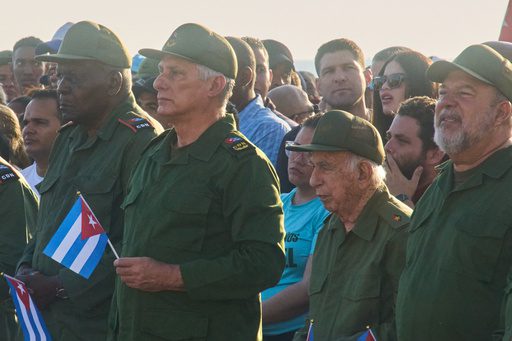
It wasn’t merely a birthday celebration; it was a carefully orchestrated counter-punch. The Trump administration had just unsealed an indictment, painting Castro as the orchestrator of the 1996 downing of two civilian planes. A grim accusation. But instead of hiding away, Castro, sharp in his signature olive-green military threads, showed up at the Ministry of Interior. He wasn’t just *seen*; he was *paraded*. Grandson in tow, flanked by the current President, Miguel Díaz-Canel. It was less a party, more a declaration: We’re still here, we’re united, and we certainly don’t recognize your authority.
Díaz-Canel, a man who knows his role well in this enduring drama, laid on the tributes thick. He waxed lyrical about Castro’s “heroism and dignity,” noting how his “courage and loyalty” had made him a perpetual target for U.S. intelligence – a narrative Cuba clings to like a lifeline. He wasn’t subtle about Washington’s pressure either. Because when Díaz-Canel warned of a “decisive — and resolute battle” if the U.S. dared to escalate further, he wasn’t just talking to the home crowd. He was sending a message, loud — and clear, across the ninety miles of sea. You see, the government’s not just battling U.S. sanctions; they’re also battling an image of isolation at home, something the slogan “Raúl is Cuba, and Cuba is untouchable” tries very hard to fix.
But Washington wasn’t buying the bravado. An unnamed State Department official, speaking under condition of anonymity due to the sensitivity of ongoing diplomatic maneuvers (or lack thereof), was terse. “Our stance is unequivocally clear: accountability for egregious acts, particularly those against unarmed civilians, is non-negotiable. Havana can celebrate its history, but it cannot escape justice for its transgressions against human life.” And that, folks, sums up the impasse. The U.S. maintains that until Cuba enacts significant economic reforms and releases political prisoners, the squeeze won’t let up. They’ve already done quite a number, practically gutting the island’s oil supplies back in January, leaving its rickety infrastructure gasping.
This escalating standoff isn’t unique to the Caribbean. We see echoes of it elsewhere, places like the Kashmir region, where populations grapple with prolonged external pressures and internal dynamics, often forcing their leadership into equally defiant, if domestically stabilizing, postures. Pakistan Keeps Its Promise to AJK While Political Opportunists Play Games, facing similar challenges of state identity amidst geopolitical currents. The playbooks differ, sure, but the underlying psychological games — and the high-stakes chess remain eerily familiar.
Cuba’s economy, already pretty much on life support, took a brutal hit from the January fuel cuts. Just last year, Cuba’s GDP contracted by an estimated 11%, a stark figure that compounds its long-running problems with blackouts and public health crises. (Source: The Brookings Institute, 2020 Economic Analysis on Cuba). This isn’t just about defiant gestures; it’s about sheer survival for many ordinary Cubans.
📄 POLICY WIRE WHITEPAPER PUBLISHED: PAKISTAN'S NATIONAL SECURITY POLICY PRIORITIES
👉 READ BY CLICKING HEREWhat This Means
This isn’t a fresh tactic; Cuba’s been using state-backed spectacle to project strength for ages. Raúl Castro’s very public appearance, just days after the U.S. dropped those severe charges, works on multiple levels. Internally, it reinforces the narrative of an embattled but unified nation, rallying the faithful against a common adversary. For a regime fighting an uphill battle against fuel shortages, deteriorating infrastructure, and increasing popular discontent—particularly among younger generations who don’t recall the revolution’s romantic haze—such displays are essential to maintain cohesion. It’s a message that the ‘revolutionary process’ continues, unbroken, — and the U.S. is just another enemy trying to spoil the party.
Externally, it serves to stiffen Havana’s spine in negotiations that aren’t actually happening. It’s a symbolic middle finger, telling Washington that demands for political reform or prisoner releases are falling on deaf ears. For the Trump administration, whose ‘maximum pressure’ campaign has become a hallmark, this Cuban defiance likely does little more than confirm their hardline approach. They’ll interpret it as a regime unwilling to change, further justifying sanctions that primarily harm the Cuban people while paradoxically strengthening the government’s external enemy narrative.
And so, the diplomatic Dialogue, Not Division remains a pipe dream. This birthday celebration underscores a deepening rift, not just between the U.S. and Cuba, but within the global community observing the persistence of such Cold War-era antagonisms. It’s a reminder that some fights—some grudges, you could say—run so deep, they effectively become part of a nation’s DNA.