
O’Brien’s Derby Dominion: A Silent Architect’s Iron Grip on Racing’s Riches
POLICY WIRE — Epsom, UK — So, the biggest upset at this year’s Epsom Derby wasn’t a long shot galloping to glory. Nope. It was the race favorite, Benvenuto Cellini—a supposed contender...

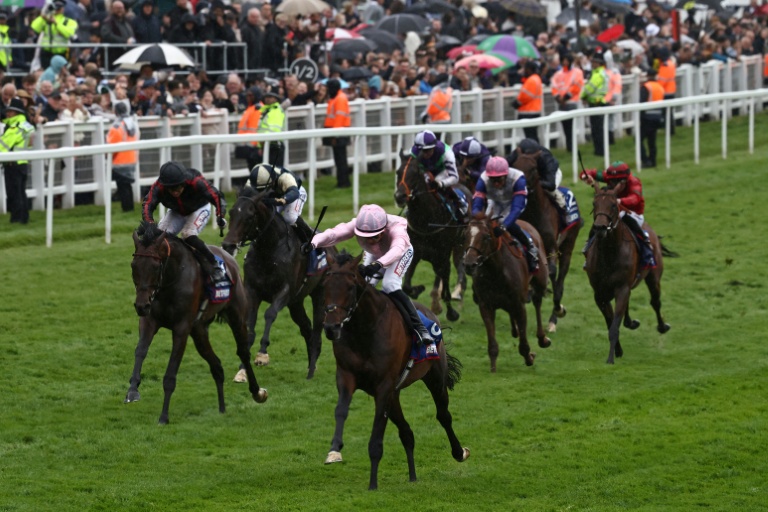
POLICY WIRE — Epsom, UK — So, the biggest upset at this year’s Epsom Derby wasn’t a long shot galloping to glory. Nope. It was the race favorite, Benvenuto Cellini—a supposed contender from the seemingly endless stable of Aidan O’Brien—declared a non-runner. After the fact. Picture it: fourteen thoroughbreds thundering across the turf, millions exchanging hands on a whisper and a prayer, only for race stewards to calmly inform everyone later that Cellini had been caught, ignominiously, by his own hind leg in the starting gate. A detail, mind you, missed by everyone during the furious dash to the finish. Such a charming chaos, isn’t it? But, then again, the ‘greatest race on earth’ often churns up precisely this brand of absurd theatricality.
While stewards picked apart hind leg entanglements, another of O’Brien’s steeds, the unheralded 7/1 chance called Christmas Day, was etching his name into the annals. And O’Brien, the 56-year-old Irish titan of horse racing, was doing what he does best: extending his already absurd dominance. This wasn’t just another win; it marked his fourth consecutive Epsom Derby victory, a frankly staggering feat that rewrites record books, not just annotates them. And his fifty years of British classic wins? A marker of an almost monopolistic grip, wouldn’t you say?
His usual post-race remarks followed the well-worn script, that self-effacing humility that only magnifies his colossus status. “It’s unbelievable, but I’m just a small part of a huge team,” O’Brien reportedly murmured, crediting the army of stable hands back in Ireland. Let’s be real, though. That team operates under *his* meticulously calibrated direction. He’s not just a part of it; he’s the whole dang orchestral conductor. You don’t rack up a record-extending 12th Derby winner (a hard statistic, by the way, that underlines his almost frightening efficiency) by merely showing up. You do it with an exacting precision that belies the apparent simplicity of the game.
Ronan Whelan, the jockey who navigated Christmas Day to its effortless victory, didn’t bother with the humble act. “It was so easy to be honest!” he enthused, probably still buzzing from the sheer rush of it all. “The horse loves the ground and it felt so effortless for him.” And because success always looks easy from the winner’s circle, Whelan added, “When we were running down the hill and Wayne was smacking away, I knew I had loads left. I wish I was as cool a customer as the horse was!” It’s a sentiment many an aspiring politico could echo: the true powerbrokers often operate with a cool detachment, letting the spectacle play out around them while they quietly—and effectively—execute their strategy.
The win wasn’t a singular triumph for O’Brien either. Days prior, he’d secured the top three spots in the French Derby. The man’s creating a racing dynasty, one gilded trophy at a time. This isn’t just about fast horses and talented riders; it’s about a meticulously structured, globally competitive enterprise, attracting investors and owners from across continents. Wealth managers, increasingly seeking alternative assets and avenues for prestige, are pouring money into these bloodstock empires. You’ll find owners and breeders with deep roots and considerable influence stretching from the plush stables of Europe to the sprawling ranches of the Middle East, even connecting to global football’s fiercely competitive economics. The interest in champion bloodlines and high-stakes racing is practically an ancient tradition across vast swathes of the world, from the Arabian peninsula to the storied equestrian cultures of Pakistan and Central Asia. The flow of capital is undeniable, making events like the Derby far more than mere sport.
📄 POLICY WIRE WHITEPAPER PUBLISHED: PAKISTAN'S NATIONAL SECURITY POLICY PRIORITIES
👉 READ BY CLICKING HEREWhat This Means
O’Brien’s relentless dominance of elite horse racing, while a marvel for sports enthusiasts, highlights a particular economic dynamic common across many high-stakes industries: the concentration of power. His operation, Ballydoyle, isn’t just a stable; it’s a meticulously managed global corporation masquerading as a horse farm. Think about it. Such a long-term, sustained record of success necessitates significant capital investment, unparalleled access to elite breeding stock, a formidable training regimen, and an almost prescient eye for talent. These aren’t accidental outcomes; they’re the result of strategic planning, something akin to the kind of disciplined, long-game approach you’d expect from a geopolitical playbook.
The implications ripple outwards. Does such a dynasty create a barrier to entry for smaller players? Absolutely. It elevates the costs of competition—driving up stud fees, sales prices, and trainer fees. New owners, especially those from emerging markets trying to establish themselves in the global racing scene (and leverage the soft power that comes with it), face a steep climb. It’s a closed shop, for the most part, a self-perpetuating cycle where success attracts more capital, which in turn breeds more success. And that, dear reader, isn’t just a narrative for horse racing. It’s a microcosm of global capital markets, where scale, established networks, and a proven track record often create an insurmountable lead, leaving everyone else to bet on the unlikely outsider.