


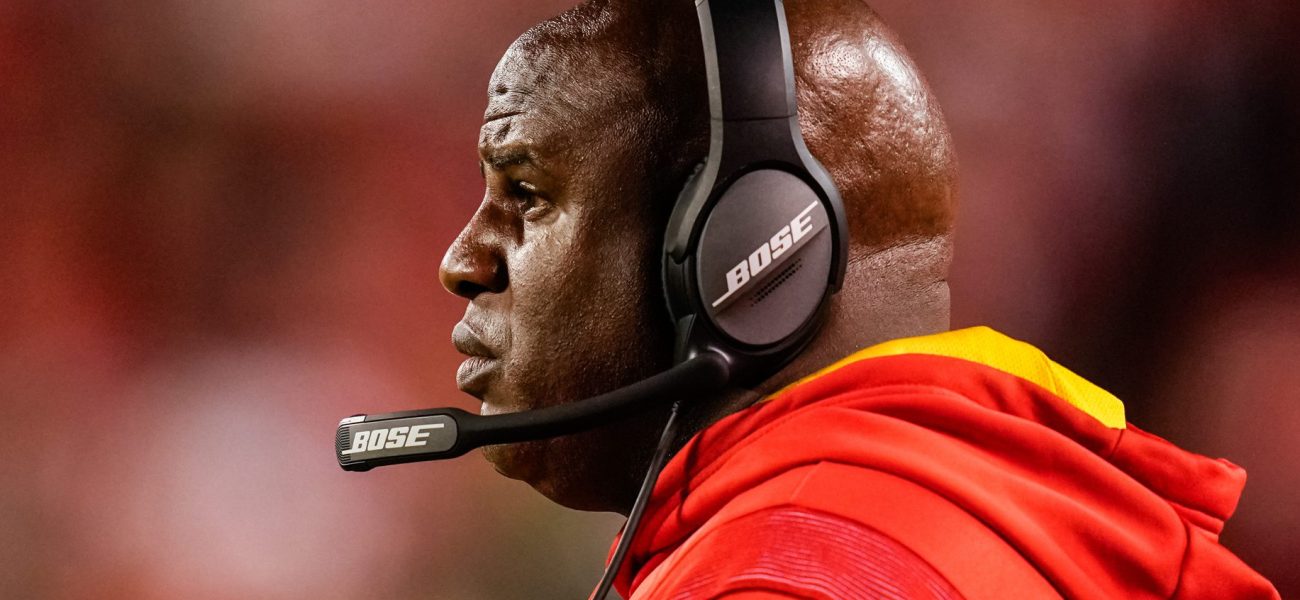
Gridiron Echoes: A Coach’s Homecoming Realigns an Empire, Shakes Sporting Assumptions
POLICY WIRE — Kansas City, USA — For a good two years, Eric Bienemy drifted. Not exactly aimlessly, but like a seasoned mercenary navigating the turbulent currents of professional sports—a short...

POLICY WIRE — Kansas City, USA — For a good two years, Eric Bienemy drifted. Not exactly aimlessly, but like a seasoned mercenary navigating the turbulent currents of professional sports—a short stint with the Commanders, a surprising sidestep to UCLA’s collegiate ranks, then a quick turn as running backs coach for the Chicago Bears. That’s how it often goes in the brutal business of gridiron giants, isn’t it? Talent is leased, rarely owned; loyalties, however passionate, usually buckle under the weight of better offers or bigger aspirations. And then, he’s back. Not just back, but hailed like a returning general to a kingdom that never quite felt whole without him.
This isn’t just about football, mind you. Not for a minute. It’s about the volatile alchemy of ambition, cash, and ego that fuels multi-billion-dollar enterprises masquerading as games. When news broke that Bienemy, the architect behind two Super Bowl victories, was heading back to Kansas City, the league barely stifled a collective groan. Everyone knows what that means. It’s the return of a certain swagger, a particular kind of brutal efficiency that turns good teams into dynasties.
Because let’s face it, for all the talk of new blood and fresh perspectives, sometimes what the market truly craves is a known commodity—especially one that comes pre-loaded with a successful track record. Bienemy’s journey away, a seemingly deliberate attempt to step out from Andy Reid’s long shadow and prove his head coaching mettle elsewhere, hadn’t quite materialized into the top job he sought. Now, he’s nestled right back in a system where his specific brand of intensity — and demand for accountability thrives. It’s a pragmatic move for all parties, certainly. But it also strips away some romantic notions about career progression in sports. Sometimes, the path upward is actually a well-trodden circle.
It’s why someone like tight end Travis Kelce, a man not often accused of muted emotions, literally couldn’t contain himself. “E.B. back in the building,” Kelce boomed on his ‘New Heights’ podcast, the words practically leaping through the airwaves. “Sometimes a guy comes around — and then you just know you’re done f around. I think Coach Reid is one of those guys, but even to another degree, the accountability that Eric Bienemy holds is second to none, man.” He didn’t stop there, offering a rather colorful anticipation: “F*, I can’t wait till he mother* me, man. … I’m like, ‘E.B. it’s me, your boy. Come on baby, it’s me. My name’s Travis, not mother**.’” Raw. Unfiltered. A candid peek into the specific, sometimes profane, bonds forged in the high-pressure cauldron of elite sport.
And that sort of candor, that craving for a demanding, direct leader, resonates far beyond the American gridiron. In countries like Pakistan, for instance, where cricket holds near-religious status, fans and officials alike often debate the precise formula for instilling ‘accountability’ within national squads. They want the iron fist wrapped in velvet—or, perhaps, not so velvet—of a figure who commands respect and demands nothing less than absolute performance, especially when expectations are stratospheric and public sentiment hangs heavy on every match outcome. It’s a parallel in intensity, if not in sporting discipline.
This move isn’t just about rekindling old glories, it’s about shoring up a legacy. Patrick Mahomes, that singular talent around whom this whole empire orbits (see: The Mahomes Doctrine), needs a stable, consistent system around him. The financial muscle of the Chiefs certainly helps, securing stars like Kelce to a new one-year, $12 million contract, as industry financial disclosures confirm. But money only buys talent; synergy — and winning culture require something more. They require the human element, the shared history, the understanding of how players—and their highly paid bodies—respond to certain stimuli. Coach Andy Reid, ever the pragmatist, puts it succinctly: “Eric knows our system. He knows our guys. You can’t put a price on that kind of institutional knowledge, that trust, especially when you’re building something special.” It’s a nod to familiarity as a strategic advantage in an increasingly complex and competitive landscape.
📄 POLICY WIRE WHITEPAPER PUBLISHED: PAKISTAN'S NATIONAL SECURITY POLICY PRIORITIES
👉 READ BY CLICKING HEREThe Chiefs missed the playoffs last year. That’s a cardinal sin in Kansas City now. This wasn’t some minor slump; it was a shake-up that threatened to redefine their identity. Bienemy’s return, then, is less about a minor coaching shuffle and more about a recalibration of purpose, a stated intention to get back to their dominant selves. And, in the cutthroat theatre of modern professional sports, that sort of intent often matters more than any flashy new signing.
What This Means
Bienemy’s homecoming isn’t simply a feel-good narrative for sports pages. It lays bare the brutal economic realities of high-level talent management. It signals that despite outward appearances of limitless coaching opportunities, the market for proven winners in specific, entrenched systems often prefers a return to stability over the risk of external innovation. We see similar patterns in corporate C-suite movements or even the return of political advisors to established administrations. Familiarity, in environments where the stakes are incredibly high, isn’t just comfortable; it’s a strategic asset.
This particular maneuver also shines a light on the sheer gravitational pull of an established winning culture. Athletes — and coaches often chase money and opportunity, of course. But this move suggests a different kind of currency: the comfort — and proven success within a known dynamic. It’s a fascinating inversion of the typical ‘climbing the ladder’ narrative, perhaps even a shrewd calculation by Bienemy to re-establish his market value within the safe harbor of a proven winner before potentially attempting another leadership role down the line. It’s a calculated gamble on future dividends, rather than an immediate top-spot gratification, reflecting the intricate blend of personal ambition and strategic long-term planning common in all high-stakes industries, from global football transfers (see: Messi’s Dollar Diplomacy) to defense contracts. This isn’t just a coach coming home; it’s a recalibration of a commercial and cultural empire, leveraging a powerful reunion to solidify its formidable dominance.