


Gonzaga’s Peculiar Summer Hunt: Betting Scars, Serbian Prospects, and the Wild West of College Hoops
POLICY WIRE — Spokane, Washington — The late June haze hangs heavy over Spokane, but it’s not just the summer heat cooking up trouble for the Gonzaga Bulldogs. Nope. Coach Mark Few and his...

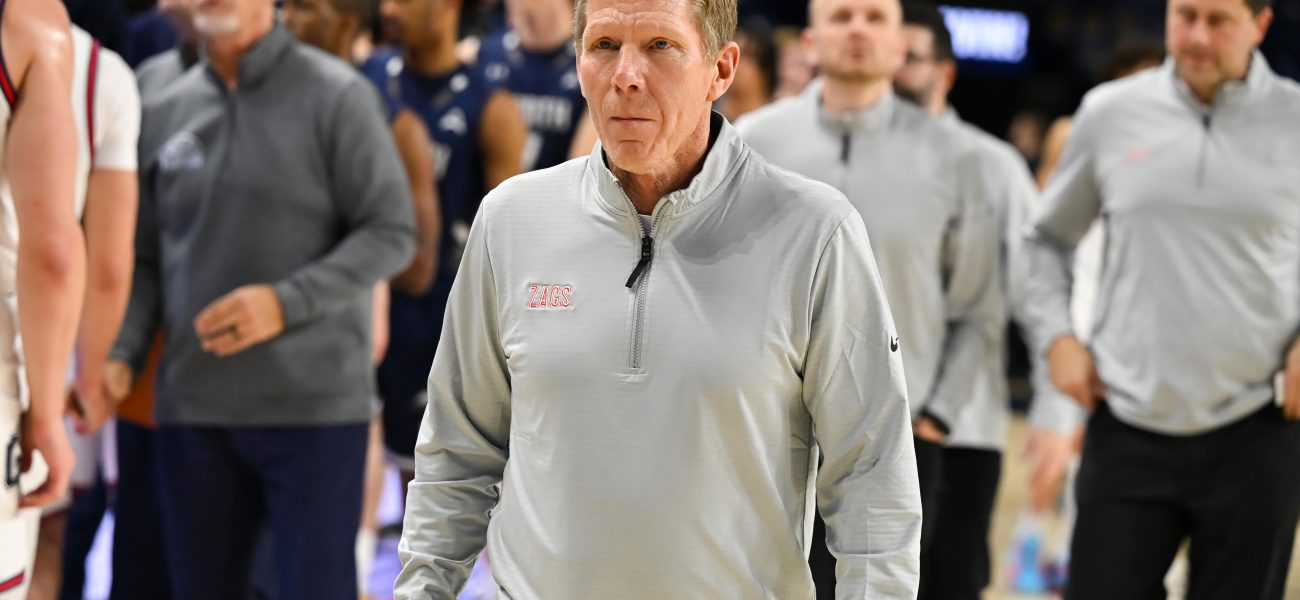
POLICY WIRE — Spokane, Washington — The late June haze hangs heavy over Spokane, but it’s not just the summer heat cooking up trouble for the Gonzaga Bulldogs. Nope. Coach Mark Few and his beleaguered staff are elbow-deep in the chaotic morass that’s modern college basketball recruitment—a swirling vortex of transfer portal dramatics, eligibility tightropes, and whispers of past indiscretions. What an absolute carnival it’s become, this race for college hoops dominance. The supposed ‘dog days’ are anything but lazy; they’re a relentless scramble for talent where yesterday’s superstar is today’s free agent.
Many of the newest faces for the 2026 class have already reported for duty, a full month ahead of official workouts. It’s a bit like new hires showing up before their start date, eager or desperate, you pick. We’re talking Houston’s former shooting guard Isiah Harwell and Arizona State’s center Massamba Diop, two significant grabs through the ever-spinning NCAA transfer portal. Then there’s high school talent Luca Foster, already making the McCarthey Athletic Center his temporary home. Sam Funches, a promising 7-foot center, is due to roll in next Saturday from Madison, Mississippi. That’s a good haul, certainly. But it ain’t the full picture.
Because the roster, see, it’s far from settled. Of the 15 scholarship — and walk-on slots, only ten are filled. Think about that for a second. That’s five gaping holes, slots to fill with just the right mix of grit, skill, and maybe—just maybe—no embarrassing baggage. They’ve snagged some immediate impact players, yes, but there’s been a sting, too. Jack Kayil, the combo guard from Alba Berlin, opted for the 2026 NBA Draft, leaving a sizable void. You plan for these things, sure, but the reality bites when it happens.
It isn’t a full-blown emergency in Few’s office, not yet. There’s plenty of retained talent, fresh faces aplenty, to avoid outright panic. But the hunt continues—specifically for bench shooting and some much-needed defensive support around sophomore point guard Mario Saint-Supery. And the candidates they’re eyeing? Well, they span the whole messy spectrum of college basketball life. It’s a curious cast: a high school decommit, a portal target with a rather problematic past, and an international prospect dipping his toes in collegiate waters again.
Alex Constanza, a 6-foot-8 four-star forward from SPIRE Academy, suddenly became available after decommitting from Georgetown in April. Suddenly, everyone’s interested—Baylor, Houston, Creighton, even Florida Atlantic, just to name a few. Constanza’s phone must be ringing off the hook, a literal auction of athletic opportunity. And that’s what it’s now, isn’t it? An auction.
Then there’s James White Jr. from the New Orleans Privateers. This one—this one is a tightrope walk. White Jr., a 6-foot-5 guard, found himself suspended in January 2025 due to NCAA violations tied to sports gambling. A career killer for most. Yet, Gonzaga’s apparently in conversations. If any program prides itself on giving players a second shot, it’s Few’s outfit. Eric McClellan, currently Florida Atlantic’s Director of Player Development and a good friend of the Zags’ program, once mused on this back in March of ’25, stating, “Every young man deserves an opportunity for redemption, but that redemption has to be earned through absolute accountability.” That’s a fine line to tread, isn’t it?
📄 POLICY WIRE WHITEPAPER PUBLISHED: PAKISTAN'S NATIONAL SECURITY POLICY PRIORITIES
👉 READ BY CLICKING HEREBut the data on White Jr. shows potential, for sure. He averaged 19.2 points, 7.0 rebounds, and shot 42.9% from the field across 20 games in the 2024-25 season (NCAA player statistics, 2025). Numbers like that, well, they make you consider turning a blind eye, or at least narrowing it. The man hasn’t played anywhere since that suspension, effectively in basketball purgatory.
Finally, we look eastward, far eastward—to the ABA League in Serbia. Savo Drezgic, a 6-foot-4 point guard from KK Mega Basket, is a familiar name, having had talks with Gonzaga before. He already tasted a year of U.S. college ball with Georgia in 2024-25 — and clearly wants another bite. Kentucky’s Mark Pope is sniffing around, too. He’d be 20 by August—young, eager, a ready-made backup for the second unit, especially if the ongoing saga of Real Madrid’s Izan Almansa and his eligibility ever ends in heartbreak for the Zags. This global marketplace for talent—it’s astounding. One minute, you’re chasing an American high school star; the next, you’re negotiating with a Serb from the Balkan leagues. It’s an almost perfect reflection of how deeply intertwined economies and talent pools have become globally, where even college hoops sees its future contingent on passports from disparate nations.
What This Means
The situation in Spokane isn’t just about filling a roster; it’s a microcosm of college basketball’s messy, money-driven future. The sheer fluidity of the transfer portal, coupled with Name, Image, and Likeness (NIL) deals, has fundamentally reshaped the landscape. Recruiting targets aren’t just high schoolers anymore; they’re professionalized free agents, some with questionable pasts. This transforms college athletics from amateur pursuits into something resembling a nascent, deregulated labor market, with agents, inducements, and international scouts vying for advantage.
From an economic standpoint, Gonzaga is navigating what’s essentially an extremely inefficient but hyper-competitive talent acquisition process. The constant churn and the need to replace departing players—like Kayil to the NBA or potential ineligibilities like Almansa’s—means resources are perpetually funneled into recruitment rather than stable player development. This chase for scarce resources, for immediate gains, echoes much larger geopolitical struggles for materials and talent worldwide. Just as nations compete for tech talent or rare earth minerals, these universities are in a brutal fight for young athletes, willing to overlook blemishes or logistical hurdles for an edge. You see similar battles play out, perhaps less dramatically, in emerging sports markets across the Muslim world and South Asia, where raw talent exists but structured pathways to professional careers remain unevenly developed, often pushing athletes to seek opportunities far from home, chasing the allure of global competition. Or, in the case of James White Jr., searching for a second chance in a system that often hands them out unevenly. This isn’t just sports, it’s commerce, complicated — and raw. As Coach Few famously once put it, perhaps regarding a different challenge, but certainly applicable here, “You either adapt to the chaos, or the chaos eats you alive.” And that, folks, feels about right for the current state of play. You really don’t have another option, do you?