


Manhattan’s Pulse Quakes: Knicks’ Surge Unveils Decades of Dormant Delirium
POLICY WIRE — New York City, USA — The asphalt hadn’t cooled from the last whistle before Manhattan — and quite a bit of Brooklyn, for that matter — erupted. Not in protest, nor political ire,...

POLICY WIRE — New York City, USA — The asphalt hadn’t cooled from the last whistle before Manhattan — and quite a bit of Brooklyn, for that matter — erupted. Not in protest, nor political ire, but in an ancient, tribal roar. Picture it: ordinary folks, some still in their office duds, scaling lampposts, weaving through traffic with impromptu dance circles, and—get this—flashing belts like victorious gladiators. Because, frankly, when your hometown basketball club, the long-suffering New York Knicks, does something nobody’s really seen in half a century, the rational response apparently flies right out the window. That’s what a 2-0 lead in the NBA Finals will do to a city starved for glory. It strips away the cool, the cynical, the always-on-a-grind facade New Yorkers usually wear, revealing a collective, yearning heart that just wants to *win*.
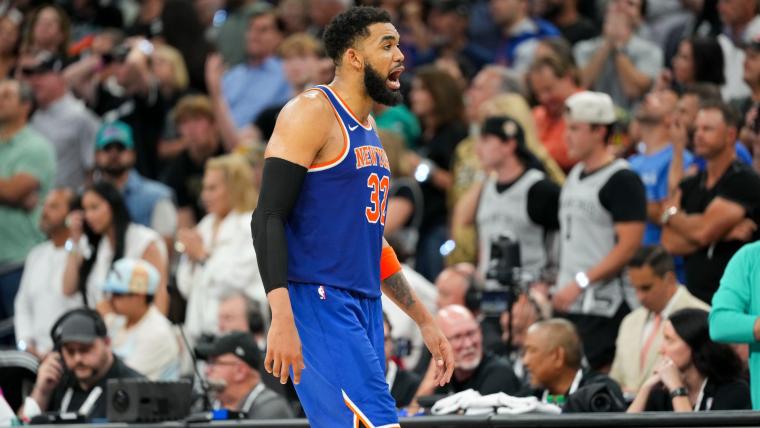
It’s not just a couple of wins. It’s an entire cultural upheaval, bubbling over after the Knicks outlasted the San Antonio Spurs by a nail-biting point in Game 2. Karl-Anthony Towns, the improbable Messiah of the hardwood, bagged 21 points and 13 rebounds, turning himself into an instant folk hero—and perhaps the city’s next larger-than-life poster boy. But the specifics of the game, frankly, melted away as the final buzzer echoed. What mattered was the release; the spontaneous, joyful bedlam that cascaded from Madison Square Garden outward. It reached Sutphin Boulevard, stretched down Archer Avenue, and made an appearance in every dimly lit sports bar, from the Lower East Side to the furthest reaches of the five boroughs. But the irony? It didn’t stop there.
Because New Yorkers, ever the intrepid travelers, weren’t content to confine their joyous racket to the tri-state area. They apparently carried their exuberance all the way to San Antonio itself, forming jubilant clusters within the enemy’s own gates. You’ve got to admire the gall, really. That’s a different kind of manifest destiny. And, this raw, unfiltered passion—it’s something civic leaders have quickly noticed. But, they haven’t seen this much raw civic enthusiasm since, well, probably 1973, which is when the Knicks last hoisted that championship hardware. Fifty-three years, mind you. That’s enough time for entire generations to grow up, hope, lose hope, — and then unexpectedly find it again.
“This isn’t just about basketball, is it? It’s about New York being New York,” mused Councilwoman Fatima Zahra, whose district covers a swath of Queens with a rich diaspora. “It’s about resilience, about showing up, year after year, and believing, even when the odds—and the scoreboards—tell you not to. This collective joy, you don’t buy it; you earn it through shared struggle. You see it in our South Asian communities, in our Muslim communities, right alongside everyone else. They’re all part of this New York story.”
Her words weren’t idle rhetoric. In a city forged from countless journeys, where the aromas of biryani mingle with the scent of street cart hot dogs, this triumph felt universal. Every nook — and cranny of this urban leviathan was awash in orange and blue. Some politicians, ever keen to tap into the public pulse, were more circumspect. “We’re witnessing a beautiful, chaotic energy,” observed State Assemblyman Robert “Bobby” Green. “But let’s be real. It’s a wonderful distraction, a moment of unity, perhaps—a welcome respite from the daily grind and perpetual policy battles that continue off the court. Still, if it gets folks cheering together instead of at each other, I can’t fault that.” Green, known for his pragmatic leanings, always sees the broader strokes.
📄 POLICY WIRE WHITEPAPER PUBLISHED: PAKISTAN'S NATIONAL SECURITY POLICY PRIORITIES
👉 READ BY CLICKING HEREBecause ultimately, these kinds of spontaneous, roaring public celebrations are also about identity. This ain’t an academic theory—it’s a sweaty, screaming reality. It’s the moment the ‘Big Apple’ isn’t just a marketing slogan; it’s a living, breathing, bouncing entity, overflowing with pride. And as for Towns, he’s earned himself a special place in the city’s heart, a spot previously reserved for Broadway legends and iconic pizza makers. Just think, after more than five decades, a player of Karl-Anthony Towns’ caliber might actually lead them to the promised land.
What This Means
This eruption of euphoria isn’t just sports page fodder; it’s a potent barometer of urban sentiment and, yes, a temporary economic boon. For New York, a city that prides itself on being tough and unsentimental, such an open display of collective vulnerability—of yearning, then explosion—reveals a deep-seated civic pride that often lies buried under layers of metropolitan hustle. Economically, this means jammed bars, a flurry of merchandise sales, and an overall boost in tourist dollars, drawn by the spectacle and the hope. The ripple effect, though localized, is palpable. Local businesses, from tiny bodegas selling overpriced sodas near Madison Square Garden to upscale eateries benefiting from celebratory dinners, will feel this cash infusion. It’s also a powerful piece of global branding. When New York unites like this, the imagery transmitted worldwide reinforces the city’s dynamic, almost mythic status—a magnet for aspirations, even if those aspirations currently revolve around a glorified rubber ball and a metallic trophy. For a city that constantly debates its future, the Knicks’ surprising run has, for now, forged an unexpected, almost raw sense of unity. It’s an urgent, fleeting reminder that, despite all its complexities, New York can still cheer as one.