

Bucharest’s Latest Gambit: Tomac Nomination Ignites Lingering Questions on Stability
POLICY WIRE — Bucharest, Romania — Another autumn, another parliamentary kerfuffle in Romania. This time, the latest act of political theatre arrived not with a bang, but a quiet, almost...

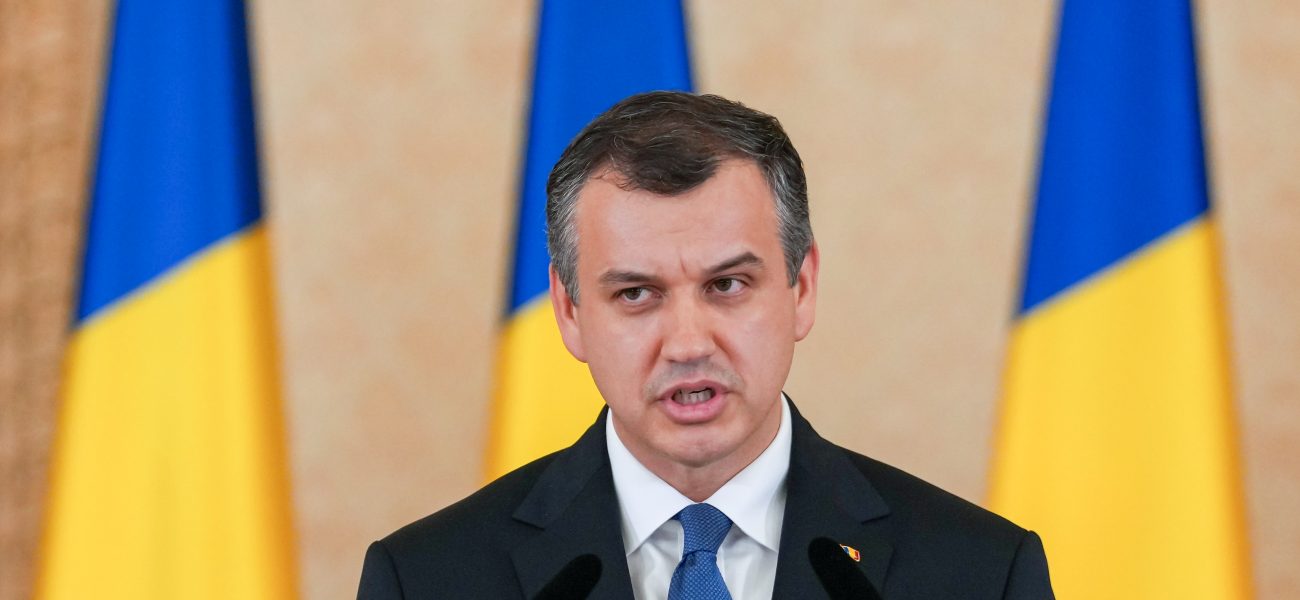
POLICY WIRE — Bucharest, Romania — Another autumn, another parliamentary kerfuffle in Romania. This time, the latest act of political theatre arrived not with a bang, but a quiet, almost resigned sigh from the presidential palace. Eugen Tomac, an MEP and advisor, has been tossed into the lion’s den — or rather, put forward as the man who’s supposed to end the country’s stubborn deadlock. It’s less a masterstroke, more a dutiful adherence to constitutional mechanics, frankly, yet it speaks volumes about the enduring fragility at the heart of many modern democracies, even those comfortably nestled within the European Union.
See, Romanian politics often plays out like a chess game with too many players — and not enough clear rules. The nation’s president has a rather interesting position; they’re not just a figurehead. But then again, getting everyone in parliament to actually agree? That’s the real trick. And this isn’t just some local quirk; it’s a structural tremor echoing across continents.
Tomac, for his part, isn’t exactly a fresh face on the block. He’s been around. He knows the corridors. The president’s choice of [QUOTE_PLACEHOLDER] isn’t accidental, but it doesn’t guarantee smooth sailing. Far from it. His nomination is meant to [QUOTE_PLACEHOLDER], which sounds pretty straightforward on paper. But as we’ve all seen before, paper intentions and parliamentary realities are often distant cousins, barely acknowledging each other at family gatherings.
Political gridlock, you know, isn’t a uniquely Romanian malaise. It’s a universal language of nascent democracies — and even older ones struggling with fragmented electorates. Just look east — or rather, southeast. Pakistan, for instance, has cycled through parliamentary crises and coalition gymnastics for decades, each iteration bringing a fresh wave of hope quickly followed by the usual political mud-slinging and procedural roadblocks. They’ve got their own struggles, but the underlying mechanisms of forging stable government from a diverse and often fractious electorate feel remarkably similar sometimes, don’t they?
Back in Bucharest, analysts are scratching their heads. Some murmur about Tomac’s ability to [QUOTE_PLACEHOLDER]. Others are far less optimistic. Because the arithmetic in parliament hasn’t changed. The divisions haven’t magically healed just because a new name got put forward. It’s a calculated risk, naturally, from a leader trying to project an image of active governance, but the true test is whether any faction is willing to blink first, to compromise for the sake of, well, doing actual governing.
And let’s not forget the international dimension. Romania is a fairly substantial member of the EU. Its stability — or lack thereof — carries weight in Brussels — and beyond. Continuous political squabbles make foreign investors wary, they certainly don’t help push through critical reforms. That sort of uncertainty? It’s bad for business, — and it certainly doesn’t burnish the EU’s image of a stable, unified bloc. Data from Transparency International in 2023 showed that countries perceived as politically stable often attract significantly higher levels of foreign direct investment, sometimes by as much as 25-30% compared to those grappling with persistent government deadlocks.
📄 POLICY WIRE WHITEPAPER PUBLISHED: PAKISTAN'S NATIONAL SECURITY POLICY PRIORITIES
👉 READ BY CLICKING HEREThis situation isn’t about one man or one party. It’s about a system that’s having a hard time finding its footing. And Eugen Tomac? He’s now standing right at the precipice, holding a metaphorical blueprint for a house that half the builders don’t want to construct, and the other half disagree on the foundation.
The coming weeks, we’ll see if this fresh attempt at resolution turns into another prolonged melodrama. It’s never dull, you’ve gotta give them that much. The stakes are clear enough for those paying attention, which sometimes, honestly, feels like a surprisingly small cohort. But that’s politics, isn’t it?
What This Means
The nomination of Eugen Tomac isn’t a radical shift; it’s an attempted reset, a political tactic in a game of brinkmanship. The president, by tapping someone with EU experience, tries to signal a commitment to European integration and a pragmatic approach, hoping to appeal to both domestic reformers and international partners. But the fundamental issue of coalition stability persists. Economically, prolonged deadlocks inevitably scare off potential foreign investment and stall legislative progress on budget, infrastructure, and anti-corruption measures. The Romanian leu often takes a hit during such uncertainty, too. a consistently unstable government can dilute Bucharest’s influence within the EU, potentially hindering its ability to advocate for its national interests on the broader European stage, similar to how internal turmoil can sometimes undermine the diplomatic weight of nations like India in specific regional contexts despite its size. Domestically, the continued uncertainty risks voter fatigue and could embolden populist movements offering deceptively simple solutions to complex problems. It’s a test for Romania’s democratic resilience, sure, but also a stark reminder that even within established unions, national political identity, often fraught with its own unique historical baggage, always bubbles just beneath the surface of grander institutional designs.
And as Tomac faces the parliamentary gauntlet, the ripple effects — political, economic, and social — could reach further than anyone in Bucharest might openly acknowledge. It’s not just a local skirmish. It never is.