


Swedish Verdict Unlocks Global Maritime Quandary, Echoing Far Beyond the Baltic
POLICY WIRE — Stockholm, Sweden — Forget the geopolitical high drama played out in glittering conference rooms or on chaotic battlefronts. Sometimes, the truly game-changing moments unfurl in the...

POLICY WIRE — Stockholm, Sweden — Forget the geopolitical high drama played out in glittering conference rooms or on chaotic battlefronts. Sometimes, the truly game-changing moments unfurl in the hushed, almost bureaucratic hum of a district court, tucked away in a Nordic capital. A rather unceremonious judgment delivered in Stockholm—a ruling many probably wouldn’t have batted an eye at under different circumstances—has thrown a stark, almost chilly spotlight on the shifting sands of international maritime law and the surprisingly complex, messy ways nations squabble over assets caught in the crosscurrents of war. It’s a bit like finding the lever for a global drawbridge in a tiny, locked shed.
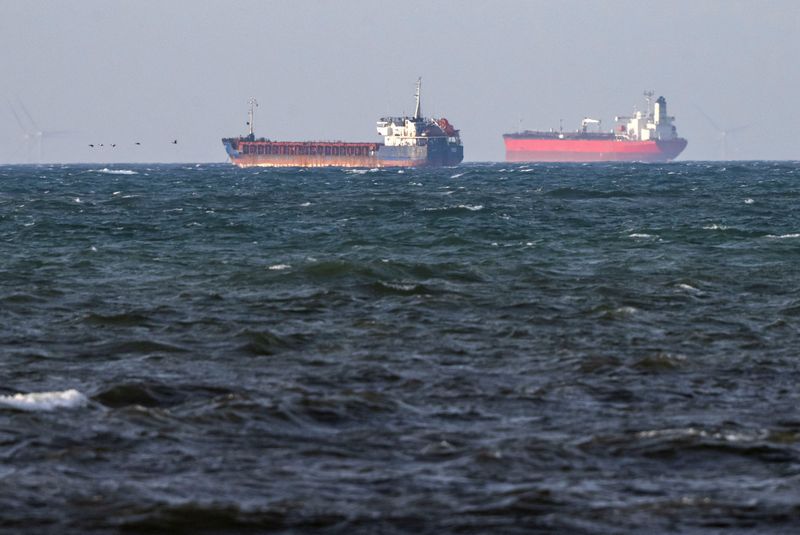
The Stockholm District Court recently delivered what many consider a significant decision: it indicates a seized cargo ship, currently sitting pretty (or perhaps not so pretty) in some impoundment, can be handed over to Ukraine. That’s it. That’s the core of the matter. No grand pronouncements, no UN resolutions, just a simple legal clearance. But the implications? They stretch like long shadows over trade routes — and future diplomatic skirmishes. It means a precedent has been established, a quiet, almost understated one, regarding how one nation can potentially claim assets previously owned or controlled by another, especially when the cannons are roaring. [QUOTE_PLACEHOLDER]
Think about it: a piece of steel floating on water, its engines silent, now becomes a chip in a much larger, bloodier poker game. The vessel’s journey through the Swedish legal system wraps up an argument about ownership and the reach of international law. We’re talking about an asset whose legal limbo just ended. Its status morphed from disputed property to a potential piece of the Ukrainian war chest—a concrete gain, however symbolic, against an aggressor. It’s a pragmatic, some would say ruthless, application of legal mechanisms designed to untangle complex ownership claims in times of crisis.
Because, really, this isn’t just about one ship. It’s about how many more ships, planes, frozen bank accounts, or other high-value assets might follow suit. It’s about a seemingly local judicial ruling setting off tremors that reach beyond the Baltic. It puts a practical framework around what many legal scholars have been theorizing about since the full-scale conflict began: how do you seize, administer, and ultimately transfer enemy or associated assets in a legally sound, internationally recognized manner? This isn’t a theoretical debate anymore; it’s got real-world implications, impacting global maritime security and even things like marine insurance premiums, which have seen wild fluctuations recently, sometimes spiking by over 200% for specific Black Sea routes after the initial conflict escalation.
But the move certainly won’t soothe strained relations between nations. When a court in a neutral-ish country starts deciding who gets to keep a seized ship amidst a major European war, you bet some powers are watching very closely. It’s an exercise in judicial authority that bumps up against sovereign economic interests, and those can get pretty thorny, pretty fast. One day it’s a ship, the next it could be something else entirely, prompting countries to look inward at their own vulnerable assets held abroad.
📄 POLICY WIRE WHITEPAPER PUBLISHED: PAKISTAN'S NATIONAL SECURITY POLICY PRIORITIES
👉 READ BY CLICKING HEREAnd let’s not pretend this is an isolated incident. There’s been ongoing speculation, whispers even, in financial circles, about the legality and potential economic impact of freezing, and ultimately transferring, billions in state assets belonging to various nations under sanction. These kinds of stalemates don’t just stay within neat geopolitical boundaries; they leak, they influence, they set new baselines for acceptable state action in global commerce. Countries have to recalibrate their risk assessments for foreign investments — and trade routes. It’s making everyone just a little bit jumpy.
What This Means
This decision, originating from the understated judicial halls of Stockholm, isn’t just about a boat; it’s a legal bullet fired in an ongoing economic and geopolitical skirmish. It formalizes a pathway for transferring disputed assets, adding another arrow to the quiver of nations seeking to impose economic pressure or seek reparations through means other than direct military intervention. It signals a willingness by some European judicial systems to leverage domestic law in pursuit of broader foreign policy objectives, whether explicit or implicit. This isn’t exactly subtle.
Economically, it makes doing business in certain parts of the world, particularly under complex ownership structures, a riskier proposition. If assets can be readily transferred based on judicial interpretation of geopolitical circumstances, then capital flight, or at least a cautious relocation of assets, might accelerate. It certainly means that firms and nations with significant global trade interests will be revising their legal playbooks. For countries like Pakistan, deeply dependent on global shipping lanes and increasingly engaged in complex multilateral agreements and transit trade, this kind of precedent—where ownership of a vessel can pivot so sharply due to international disputes—can seem pretty unnerving. Karachi port, a strategic gateway for Central Asia and a crucial hub for the country’s economic lifelines, handles millions of tons of cargo annually; any shifts in global maritime law that create ambiguity over asset ownership or transfer could eventually reverberate in distant but equally vital economic arteries throughout the Muslim world. The concept that a nation’s court can unilaterally effect such a transfer adds a layer of complexity that few major trading nations can afford to ignore, given how interconnected modern commerce really is. What one court decides, others will certainly consider.