


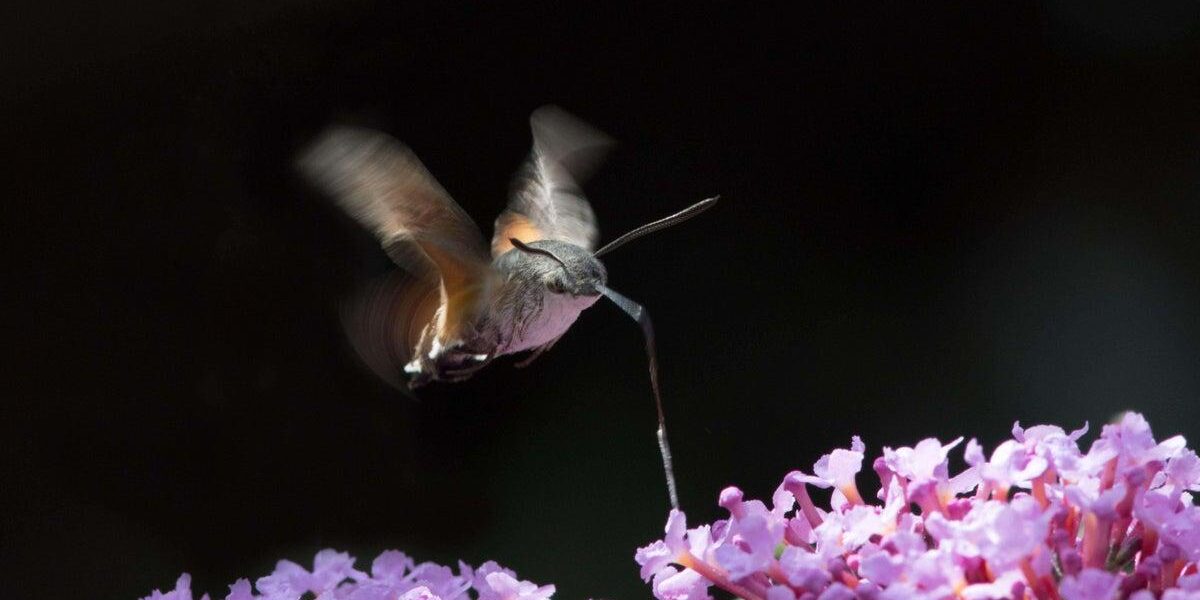
Discover Four Notable Moths to Identify in Your Garden
Explore the fascinating world of garden moths, including one species the size of a small bird. Learn how to identify these unique insects.

POLICY WIRE — London, UK — Enthusiasts and naturalists are encouraged to explore the diversity of moths that can be found in their gardens. Among these, one species stands out due to its remarkable size, comparable to that of a small bird.
The moths in question include the Elephant Hawk-moth (Deilephila elpenor), the Eyed Hawk-moth (Smerinthus ocellatus), the Poplar Hawk-moth (Laothoe populi), and the Death’s Head Hawk-moth (Acherontia atropos). Each of these species offers unique characteristics — and behaviors that make them noteworthy.
The Elephant Hawk-moth, often cited for its size, can stretch up to 75mm across its wings, making it one of the larger moth species in the UK. Its vibrant colors — and patterns help it blend into its environment, providing camouflage from potential predators.
The Eyed Hawk-moth, with its striking eye-like spots on its wings, is another garden favorite. These spots are thought to deter predators by mimicking the eyes of larger animals.
The Poplar Hawk-moth, characterized by its grey and pink hues, is frequently found near poplar and willow trees, where it lays its eggs. Its larvae feed on the leaves of these trees, making it a common sight in areas with such vegetation.
Lastly, the Death’s Head Hawk-moth, although less common, is famous for the skull-like pattern on its thorax. This moth is known for its ability to produce a squeaking noise, adding to its eerie reputation.
Gardeners and nature lovers are advised to create moth-friendly environments by planting a variety of flowering plants that bloom at different times of the year. This will attract a wider range of moth species, enhancing biodiversity.
Reporting by Policy-Wire (PW)