


Albuquerque’s Bureaucratic Bind: ‘Modern’ Licensing Snags Small Businesses
POLICY WIRE — Albuquerque, N.M. — A local municipality touting bureaucratic modernization usually paints a picture of efficiency, a streamlined future where permits flow freely and enterprise...

POLICY WIRE — Albuquerque, N.M. — A local municipality touting bureaucratic modernization usually paints a picture of efficiency, a streamlined future where permits flow freely and enterprise thrives. Not in Albuquerque, it seems. The city’s recent efforts to transition to what it calls a modern, online business licensing platform have instead unleashed a fresh wave of headaches, paralyzing local entrepreneurs and raising pointed questions about where public money actually goes.
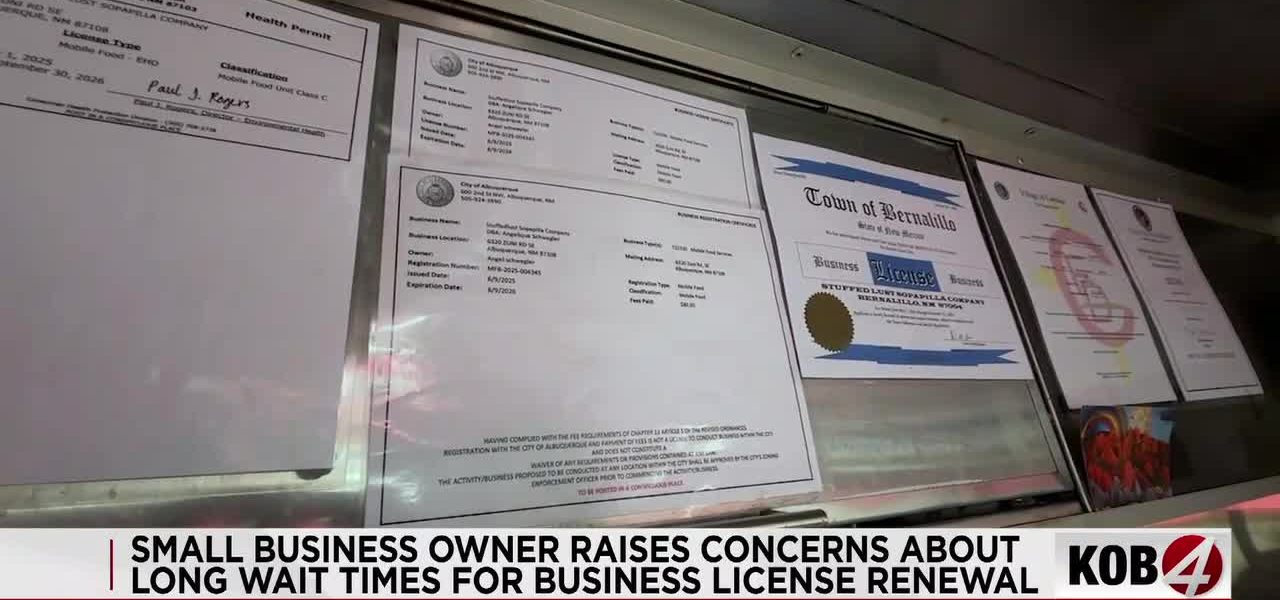
It’s a bitter pill, especially for folks like Angelique Schwegler. She owns StuffedLust Sopapilla Company, — and she’s not alone in getting caught in the bureaucratic bog. For her, what was once a relatively painless annual ritual—getting her business license renewed—has become a gauntlet. And it’s costing her, — and others, real money. [QUOTE_PLACEHOLDER] she tells KOB 4, a sentiment echoing across the city’s small business community. Her nearly nine years in business mean she’s seen plenty. She says, “I have seen food trucks come and go on a regular basis, And a lot of the time it’s because they can’t get their paperwork together.”
Because that paperwork? It’s not just a formality. It’s the lifeblood of operations. Without a current license, participating in key local events becomes impossible, pushing small operators into financial jeopardy. Schwegler, for instance, anticipates making $10,000 at the upcoming Route 66 SummerFest. But without that paperwork in order, that revenue—and the subsequent taxes—is squarely at risk. You can’t help but wonder if the left hand knows what the right hand’s doing when it comes to supporting the very businesses that animate a city’s economy.
She’s been calling out the city, hitting up Mayor Tim Keller directly — and spilling her guts on social media. She tells KOB 4 exactly what she’s heard from the source, stating point-blank: [QUOTE_PLACEHOLDER] Just two staffers, she reported, handling what sounds like a substantial volume of requests. It’s a statistic that practically screams neglect, if not outright crisis. She’d submitted her application back on May 5th, but guess what? The Planning Department was still mired in April’s submissions. That’s a system grinding to a halt, plain — and simple.
It’s not just the wait that chafes; it’s the contrast with how things used to run. “Going back to the years before, the process was seamless. You’d print your papers, you’d take your paperwork in, and you would literally walk out with your business license. I don’t know what broke along the way,” Schwegler laments. That efficiency? It’s gone. And for businesses whose survival hangs on their ability to stay current, that loss of predictability is devastating.
📄 POLICY WIRE WHITEPAPER PUBLISHED: PAKISTAN'S NATIONAL SECURITY POLICY PRIORITIES
👉 READ BY CLICKING HERECity Hall’s response? A canned statement issued to KOB 4, acknowledging [QUOTE_PLACEHOLDER] They insist their new ABQ-PLAN portal is designed to be easy, that they’re [QUOTE_PLACEHOLDER] and that applicants can continue to operate while waiting. This last bit—that you can conduct business legally and without penalty while an application is pending—might offer some slight reprieve, but it certainly doesn’t foster confidence when vital documents remain in limbo. It also doesn’t solve the immediate problem of attending events that often require proof of valid licensing.
The bigger question for Schwegler, one many entrepreneurs share globally, remains: “And I’m just curious, where are those funds allocated to if they’re not allocated to paying people to process our paperwork so we can get a business license and run successful businesses within the community? So, that’s my frustration and many others’ frustration as well.” That query strikes at the heart of municipal governance. You collect taxes. You provide services. When one doesn’t deliver the other, the compact gets brittle.
What This Means
This isn’t just about a few delayed food truck licenses. It’s about governmental efficacy — and trust. When a city implements a new system, then immediately acknowledges [QUOTE_PLACEHOLDER] and states they’re [QUOTE_PLACEHOLDER]—it’s a tacit admission of prior failure. The economic implications are clear: stunted small business growth, reduced tax revenues, and a diminished entrepreneurial spirit. Businesses, particularly those run by newer immigrants or communities that might face additional administrative barriers—like South Asian small business owners trying to navigate systems in countries like Pakistan, for instance, where bureaucratic red tape frequently features in ‘ease of doing business’ reports—find these obstacles profoundly disheartening. Such domestic bureaucratic hurdles only worsen a perception of systemic inefficiency that already plagues many developing nations; it’s unsettling to see a similar flavor in an American metropolis. The lack of clarity around resource allocation, particularly taxes earmarked for public services, breeds cynicism and directly impacts the local economy. Mayor Keller’s office quickly contacting Schwegler after her public outcry is a short-term patch, not a systemic fix. Albuquerque needs to not only clear its current backlog but also prove its modernization efforts truly simplify, rather than complicate, life for its hard-working business owners. Albuquerque’s vibrant small business scene deserves better than this administrative inertia. It really does.