


Pecos River Stand-Off: Landowner’s Release Sparks Property Rights Debate
POLICY WIRE — Santa Fe, N.M. — The Pecos River, a storied waterway carving its path through the arid New Mexican landscape, often serves as more than just a hydrological feature. It’s a...

POLICY WIRE — Santa Fe, N.M. — The Pecos River, a storied waterway carving its path through the arid New Mexican landscape, often serves as more than just a hydrological feature. It’s a simmering boundary where the often-abstract notions of private property slam head-on into generations-old public recreation rights. This age-old American West drama recently unfolded again, not in a dusty courtroom treatise, but on its banks, involving a man, a shotgun, and now, an ankle monitor. You just don’t see this sort of thing every day.
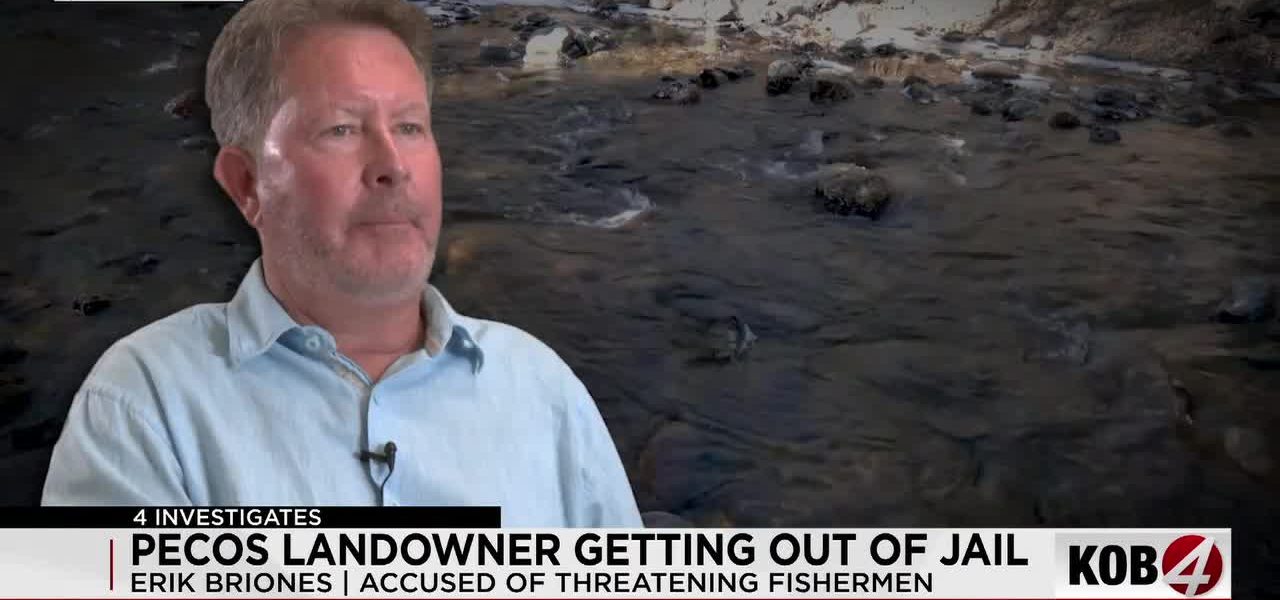
Erik Briones, the Pecos landowner embroiled in what many have dubbed the Pecos River wars, found himself stepping out from behind bars, albeit tethered by modern surveillance. This isn’t a simple case of a fishing license dispute; it’s a proxy battle for how land, water, and individual liberties are understood, or misunderstood, in a region where every drop of water, every foot of riverbed, is hotly contested. His release marks another turn in a saga that feels less like local news and more like a recurring chapter in America’s long-running public lands debate. [QUOTE_PLACEHOLDER]
Authorities arrested Briones last week after they accused him of threatening fishermen with a gun several years ago. Before that, he had lost a legal battle over access to the Pecos River behind his private property, an outcome that surely did little to soften his views on public encroachment. It’s a classic American standoff, really: the homeowner defending his perceived domain against the trespasser, though the waters in question are historically seen as public commons. The optics alone are something, aren’t they?
But the story deepens. He now faces five counts of aggravated assault with a gun. Think about that for a second. Five separate counts, implying five separate confrontations or allegations. That’s a significant escalation from a simple ‘get off my lawn’ shout. The legal system, in its lumbering way, initially took a hard line, with The New Mexico attorney general had filed a motion to keep Briones in jail until trial. You know, because folks brandishing firearms often don’t inspire confidence. But, perhaps indicating some behind-the-scenes maneuvering or simply the complexities of the legal process, A hearing on that motion was canceled. And then, just like that, Briones is now being released.
He won’t be enjoying his riverside views immediately, however. Court records reveal a distinct catch-22 for the landowner. The documents clearly state Briones must wear an ankle monitor after release. And that’s not all. Crucially, the records also say he cannot return to his residence on the Pecos River before his trial. So, he’s out, but displaced. It’s a kind of spatial irony, isn’t it? Free, but unable to access the very land at the heart of his conflict. One has to wonder if this forced detachment offers a new perspective, or merely deepens the resentment. For those watching, it provides yet another data point in the ongoing tension between private landowners and those who assert rights to America’s public waters, a divide as old as the western frontier itself.
The issue of water rights, land access, — and riparian zones isn’t unique to the Pecos. Far from it. In South Asia, particularly in regions like Pakistan, water access isn’t merely about recreation; it’s a matter of life, livelihood, and increasingly, geopolitical stability. Think about the Indus Waters Treaty, that historic pact between India — and Pakistan governing shared river resources. These agreements, though fragile at times, illustrate the existential weight water holds in these communities, where its scarcity fuels centuries of local conflicts over irrigation channels, grazing lands, and the very viability of human settlement. Unlike the Pecos, where fishing rights are often framed as leisure, the stakes in places like Sindh or Punjab couldn’t be higher. In Pakistan, access to clean, safe drinking water is a daily challenge for millions; indeed, the World Bank noted in a 2019 report that over 21 million people in the country lack access to safely managed drinking water sources. That’s a real problem, with real, immediate human cost.
📄 POLICY WIRE WHITEPAPER PUBLISHED: PAKISTAN'S NATIONAL SECURITY POLICY PRIORITIES
👉 READ BY CLICKING HERESo, while the specifics of the Pecos case might seem localized to American property law, the undercurrent of contention over resources—especially water—resonates across continents. It’s a narrative we see played out in different forms, from the American West to the villages flanking the Indus River. Who controls the water? Who defines the boundaries? Who has a right to its bounty? These are questions that don’t get easier, no matter how many courts rule or how many ankle monitors are strapped on.
What This Means
This incident, culminating in Briones’s conditional release, casts a long shadow over New Mexico’s land and water policies. It reflects a growing tension where the traditional—and often nebulous—understanding of public access to navigable waters meets increasingly fortified private property lines. Politically, the state’s Attorney General, by attempting to keep Briones detained, signalled a more assertive stance on protecting public access rights, even if that motion was ultimately rescinded. This kind of legal maneuvering often functions as a statement of intent, pushing back against what some perceive as private overreach.
Economically, prolonged disputes like these are a net negative for rural economies dependent on tourism, hunting, and fishing. When river access becomes a legal minefield—or worse, a potentially violent one—fewer people visit, and the trickle-down effect on local businesses can be noticeable. it spotlights the fragmented nature of environmental regulations — and property laws across different jurisdictions. Such situations often demand legislative clarity that’s currently lacking. Without a definitive — and enforced understanding of public vs. private domain on water bodies, these skirmishes will persist, probably escalating over time as water becomes an ever more precious resource globally. And in this context, the spectacle of a landowner released to electronic monitoring, banned from his own home because of an alleged firearms threat, becomes less an isolated curiosity and more a grim indicator of policy’s limits. We’ve certainly seen enough instances where electronic leashes prove less than foolproof, which just adds another layer of complexity to public safety concerns.