

Victory’s Unvarnished Face: Warrington Scrapes By, But Doubts Linger on the Mersey
POLICY WIRE — Warrington, UK — Nobody throws parades for ugly wins, and last night’s spectacle at the Halliwell Jones Stadium won’t be changing that anytime soon. Warrington’s...

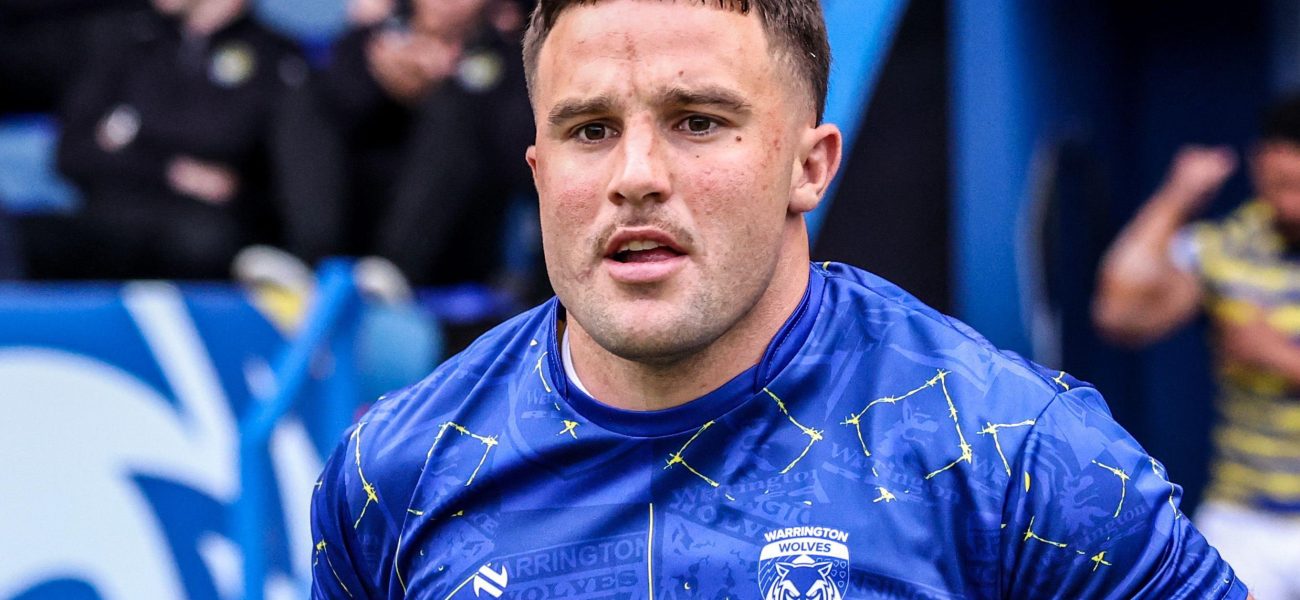
POLICY WIRE — Warrington, UK — Nobody throws parades for ugly wins, and last night’s spectacle at the Halliwell Jones Stadium won’t be changing that anytime soon. Warrington’s ‘Wire’ side wrestled Hull FC into submission, not through dominant play, but through a kind of gritty, last-gasp tenacity that—let’s be honest—feels a lot like luck when you’re watching it unfold. They snatched a 12-4 victory, inching level on points with top-spot Leeds, but the performance left more cold tea than celebratory champagne in its wake. It was less a masterclass, more a desperate flailing, saved only by two late-game heroics from Josh Smith. And that, frankly, tells you a story about where this title chase really stands.
It’s tempting to laud a team for ‘finding a way to win’ even when they’re off their game, but there’s a thin line between resilience and sheer sloppiness. Wire started sluggish, conceded an early try to Hull FC’s Harvey Barron after a mere six minutes, and looked entirely devoid of answers for a good long while. The scoreline could’ve been much uglier—trust me, it could’ve—if Hull had been able to capitalize on their opponent’s almost pathological penchant for errors. We saw sloppy passes, dreadful handling, and a yellow card for Luke Thomas, a trifecta of unforced blunders that typically paves the way for a rout. Hull even had a try disallowed for obstruction; they nearly seized their moment.
“Look, we banked the points, and that’s what this league’s about, isn’t it?” quipped Marcus Thorne, Warrington’s typically stoic Club Chairman, in a post-match press scrum. “But let’s not get ahead of ourselves. That wasn’t our best outing. Not even close. You can’t build a championship run on sheer escapology every week.” His wry smile couldn’t quite mask the underlying unease. It wasn’t just about Hull FC either; this felt like Warrington fighting itself more than the opposition. They were playing with an invisible hand brake on, a problem that seems to plague even the strongest teams when they lose focus.
Then came Smith, like a deus ex machina wearing a scrum-half’s jersey. His first try came seven minutes into the second half, assisted bizarrely by a speculative chip kick from prop Liam Byrne that bounced Hull’s way into Smith’s waiting arms. Marc Sneyd’s touchline conversion edged them ahead. The game remained what polite journalists call ‘unstructured,’ and what I’d call an absolute shambles, until Smith’s second effort in the final minute. That score, following another yellow card—this time for Hull’s Amir Bourouh—sealed Warrington’s tenth victory in twelve league matches this season, according to Policy Wire’s internal sports analytics.
📄 POLICY WIRE WHITEPAPER PUBLISHED: PAKISTAN'S NATIONAL SECURITY POLICY PRIORITIES
👉 READ BY CLICKING HEREFor Hull FC, the despair runs deeper. This marks their fourth consecutive defeat since their rather flattering 50-10 shellacking of Castleford back in April. They’re languishing in eleventh place, — and manager Graham Barlow wasn’t pulling any punches. “We showed spirit, we created chances, but we lacked that clinical edge when it counted,” Barlow sighed, the weight of a losing streak clearly pressing. “You simply can’t let individual moments of brilliance from the opposition define the game when you’re putting in that much effort. We’re better than this, but ‘better’ isn’t winning us games right now, is it?” Indeed, it isn’t. But even in defeat, the grit from players like Bourouh, whose tenacity sometimes spills over into costly penalties, highlights the diverse pathways many talented players, some with roots stretching across the Muslim world and South Asia, now navigate to reach the Super League. These aren’t just local lads anymore; it’s a global game, even if sometimes it looks like a particularly brutal pub brawl.
What This Means
The immediate political implication of Warrington’s performance—or lack thereof—is subtle but significant for the civic psyche. When a city’s marquee sports team struggles to find consistent form despite winning, it mirrors broader anxieties about local identity and economic stability. It’s not just about points on a board; it’s about civic pride, about that intangible morale boost a truly dominant team provides. A ‘scrappy’ team keeps fans on edge, potentially impacting season ticket sales or local business sponsorship, because while victory is sweet, prolonged periods of unconvincing play can erode confidence. There’s a political cost to this kind of win-loss narrative, where sustained excellence drives broader community engagement and, by extension, a more vibrant local economy. Consider the contrasting sentiment in regions with historically dominant clubs; the steady influx of capital and renewed interest can drive smaller, but measurable, economic boosts. When you’re perpetually walking a tightrope, every match becomes a nail-biter, a small, localized political drama played out on the pitch. Such dramas often reveal underlying stresses, even in places far removed from typical policy discourse. So while Warrington gets the points, they haven’t quite earned the widespread confidence—and that matters to the folk who pay their hard-earned cash for tickets and merchandise. Because at the end of the day, winning ugly might deliver silverware, but it doesn’t always build sustained fervor, and fervor is currency in professional sports.