


The Prodigy’s Exit: Michelle Wie West and the Curated Farewell
POLICY WIRE — Los Angeles, USA — The final putt rolled in, not with the crescendo of a major championship won, but with the quiet murmur of an audience witnessing a meticulously choreographed...

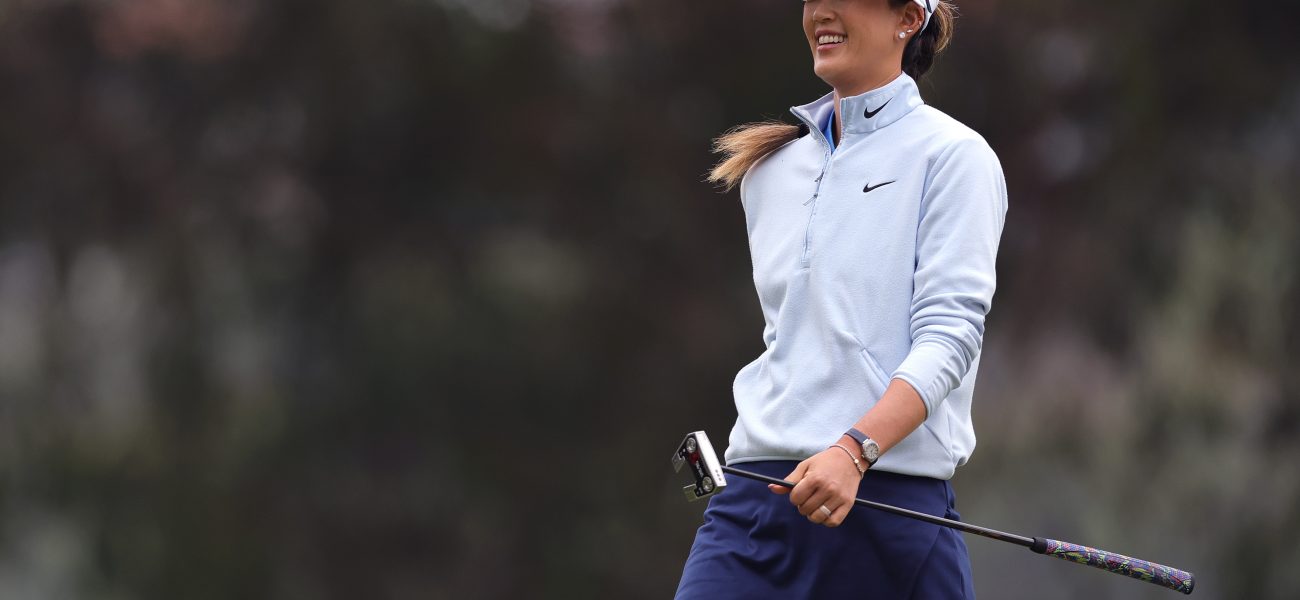
POLICY WIRE — Los Angeles, USA — The final putt rolled in, not with the crescendo of a major championship won, but with the quiet murmur of an audience witnessing a meticulously choreographed denouement. Michelle Wie West, golf’s once-electrifying wunderkind, was performing her second — and perhaps truly final — professional bow at the U.S. Women’s Open, a scene less about scorecard heroics and more about the gravitational pull of a small, demanding daughter.
She’d tapped out on Friday, posting a three-over 74 that left her well outside the projected cutline, a cumulative seven-over for the week at Riviera Country Club. And no one really cared about the score. No one who mattered, anyway. Her husband, Jonnie, already scanning the hillside for their five-year-old, Makenna, who, moments later, dashed down to the green, only to ask, upon receiving her mother’s embrace, “Can I go to daycare?” Because, let’s be honest, for an athlete as celebrated as Wie West, the ending is rarely just an ending; it’s an event. It’s an exercise in brand management, a conscious weaving of past triumphs and future aspirations, all against the backdrop of an often-unforgiving athletic clock.
This particular farewell, her second official retirement, felt distinct. Her first, back in 2023, after years battling chronic injuries, was pragmatic. That’s how it seemed, anyway. This one, fueled by a unique ten-year exemption from her 2014 U.S. Women’s Open win — extended by two years due to maternity — was, in her words, ‘fun to feel it again.’ Not necessarily fun to score, perhaps, but certainly to just feel the pressure. She started strong on Thursday, even sinking a birdie putt on the fifth hole, prompting a burst of applause from the gallery. But that was her highlight. It’s funny how those things go. Her game quickly unraveled around it, — and by Friday, a flurry of bogeys early in her round sealed her fate.
“Michelle didn’t just play golf; she bent the very rules of attention towards our sport, challenging perceptions and broadening appeal,” a seasoned sports marketing executive, Sarah Jenkins, confided in Policy Wire, reflecting on Wie West’s groundbreaking career. “Her presence transcended the fairways, especially for global audiences where golf needed a fresh, diverse face. It’s difficult to quantify the precise viewership boost from her early years, but an industry study from a few years back pegged her individual impact on LPGA social engagement as significantly higher than most peers during her active years, driving nearly 15% of all non-player social media mentions in certain quarters.” That’s not a small number.
But the numbers on the scoreboards tell a different story in her final outing. Wie West, still the youngest player ever to make a cut in an LPGA event at 13 in 2003, who shot a staggering 68 at the PGA Tour’s Sony Open in 2004 (a score that still holds as the lowest by a woman in such an event), didn’t return to contention. She knew she probably wouldn’t. She spoke of just wanting a “good attitude” — and to “try my hardest,” advice she gives Makenna. And by her own estimation? “I think I did pretty good. I only cursed at myself a couple times.” Which, for a professional golfer, might just be a ringing endorsement.
What This Means
📄 POLICY WIRE WHITEPAPER PUBLISHED: PAKISTAN'S NATIONAL SECURITY POLICY PRIORITIES
👉 READ BY CLICKING HEREThis episode isn’t just another sports headline; it’s a policy lesson. For Policy Wire, Wie West’s highly visible farewell underscores the evolving economic and social landscape for elite female athletes. The ability to return after motherhood, often facilitated by policies like maternity exemptions, isn’t just about fairness; it’s about preserving a brand, retaining a valuable public figure, and showing a pathway for younger women contemplating professional sports. It’s also about the commodification of nostalgia. Retirement tours, in any field, from rock stars to tennis legends, generate eyeballs, merchandise sales, and an undeniable swell of goodwill. They keep the machinery moving.
And because figures like Wie West command a global platform, their stories have reach beyond North American suburban greens. “The resilience Michelle Wie West displayed, navigating the demands of elite sport alongside family life, resonates far beyond the Western hemisphere,” observed Dr. Anam Siddiqui, a cultural sociologist from Islamabad who studies women’s roles in public life. “It sends a quiet but powerful signal to aspiring women everywhere—even in nations like Pakistan—that they don’t have to choose between professional fulfillment and personal identity; they can, perhaps, attempt to sculpt both. It opens a dialogue on support structures — and cultural perceptions of women in high-pressure careers.”
For every aspirational young golfer in Karachi or Lahore, watching someone like Wie West on an international stage, despite the missed cut, offers a powerful, albeit often unspoken, message. The LPGA and its counterparts could learn something here about leveraging these high-profile stories for further global outreach and talent development. But let’s be real. It’s also a bittersweet spectacle: a former phenom, now a wife and mother, trading a champion’s chase for a moment with her kid. It just so happened to play out on national television.
Her legacy, ultimately, will be less about her final scores and more about the paths she blazed and the conversations she continues to ignite, even as she leaves the competitive arena.