

Bernalillo County’s Prescription for Order: A Doctor Takes the Helm of a Troubled Public Health Ship
POLICY WIRE — Bernalillo County, N.M. — For years, local officials here in New Mexico’s most populous county have juggled the often-unseen complexities of institutional health care...

POLICY WIRE — Bernalillo County, N.M. — For years, local officials here in New Mexico’s most populous county have juggled the often-unseen complexities of institutional health care — a tangled web of budgets, bureaucracies, and the human condition. It’s never been pretty. It’s usually an uphill slog, frankly. But now, it appears, the county’s leadership has decided it can’t simply muddle through any longer, opting for a surgical approach to what many perceive as a systemic ailment.
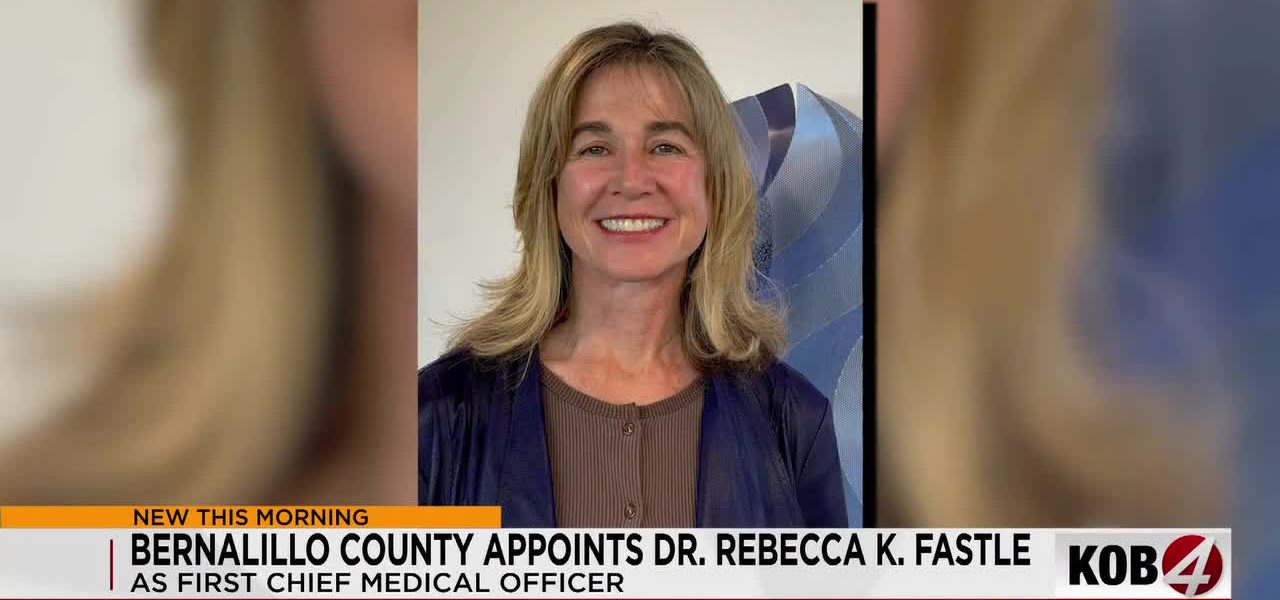
Enter Dr. Rebecca K. Fastle, a veteran physician with more than two decades immersed in the thick of it: clinical practice, hospital executive suites, and perhaps most tellingly, the correctional health care trenches. Her appointment as Bernalillo County’s first chief medical officer isn’t just a new line item on an organizational chart; it’s a public acknowledgment that the existing framework, fractured and often reactive, desperately needs a guiding hand. It’s a bid to stitch together disparate county services — particularly those serving vulnerable populations within facilities like the Metropolitan Detention Center and the Youth Services Center — into something resembling a cohesive, effective system.
“We’ve long recognized that managing public health across such diverse county operations demands a unified vision, not just a series of independent departments throwing solutions at symptoms,” stated Bernalillo County Commissioner Anna Santiago, her voice carrying the weariness of years battling municipal healthcare challenges. “Dr. Fastle isn’t just a clinician; she’s a proven architect of system change. We weren’t looking for someone to maintain the status quo. We couldn’t afford it, frankly. We needed a strategic mind to dismantle siloes — and build bridges — fast.”
Fastle officially took the reins June 1, arriving from the UNM Hospital, where she served as associate chief medical officer for special projects, and critically, a physician leader within the detention center’s health authority. That last part, her experience inside the jails, isn’t just a footnote. It’s the headline. Because here’s the stark truth: county jails across the nation are often America’s largest de facto mental health institutions, a reality that strains budgets and human compassion. Indeed, a grim statistic illustrates this stark reality: incarcerated individuals are diagnosed with serious mental illness at a rate three to six times higher than the general population, according to data compiled by organizations like the Vera Institute of Justice. That’s a staggering burden for any county, especially one struggling with broader socio-economic challenges.
The job isn’t about giving an aspirin here, a bandage there. It’s about fundamental change. She’s tasked with oversight — and consultation that reaches deep into the county’s public health apparatus. From the complexities of addiction within detention facilities to preventive care for at-risk youth, her portfolio covers the gritty, often overlooked aspects of community well-being. It’s an assignment that demands both sharp medical acumen and a politician’s deftness in navigating local bureaucratic currents — currents that, as anyone in this town will tell you, can run notoriously strong.
But Fastle seems ready for the fight. “My career has always been driven by the conviction that everyone, regardless of circumstance or location, deserves access to dignified, effective healthcare,” Dr. Fastle told Policy Wire, her words carefully chosen but firm. “This isn’t just about providing care; it’s about building equitable, resilient systems that can stand up to future challenges. And believe me, those challenges are coming. From public health crises to the ongoing struggles with mental health and substance abuse, we’ve got to be smarter, more proactive, and definitely more compassionate in how we organize ourselves.” She sees the work here in Bernalillo County as a microcosm, she says, for broader global issues.
Consider the strained health systems in countries like Pakistan, for instance, where centralized oversight and integrated care remain aspirational for vast rural populations, and urban centers grapple with overcrowded, underfunded institutional facilities — often prisons or mental asylums — struggling to meet even basic health needs. The challenges of standardizing care, implementing preventive strategies, and managing chronic conditions across diverse and often resistant institutional environments in a county like Bernalillo, with all its local peculiarities, aren’t so different in *principle* from those faced by health ministers trying to reform a sprawling, often disconnected health bureaucracy across a nation with limited resources. It’s just that the scale differs. The commitment to system building, however, must be the same.
📄 POLICY WIRE WHITEPAPER PUBLISHED: PAKISTAN'S NATIONAL SECURITY POLICY PRIORITIES
👉 READ BY CLICKING HEREWhat This Means
This appointment is a clear, if understated, recognition by Bernalillo County that healthcare isn’t merely an expenditure but a core infrastructure, just like roads or water — particularly for those segments of the population who can’t simply choose their provider or walk away from their circumstances. Politically, it signals a desire for increased accountability. With a single Chief Medical Officer, it becomes easier to point to a specific office for both successes and failures, shifting the previous diffuse blame across various departmental heads. Economically, integrating services and streamlining oversight could, theoretically, lead to efficiencies — though these are often elusive in public health initiatives — and potentially better health outcomes, which in the long run could reduce emergency room visits and chronic disease management costs.
It’s also a significant nod to the growing importance of correctional health. The fact that the first CMO has deep experience in detention centers speaks volumes about where the county’s most pressing health issues (and perhaps its biggest liabilities) lie. But because the role touches the Youth Services Center, it also suggests a more holistic, preventative approach is being sought, aiming to break cycles of incarceration and poor health before they harden. The bureaucracy can be stubborn, though. Making real bureaucratic change stick takes more than a single visionary doctor; it takes consistent political will, robust funding, and probably a few knocked heads. Still, it’s a start. And for the county’s most vulnerable residents, it might just be the shot in the arm they desperately need.
need.