


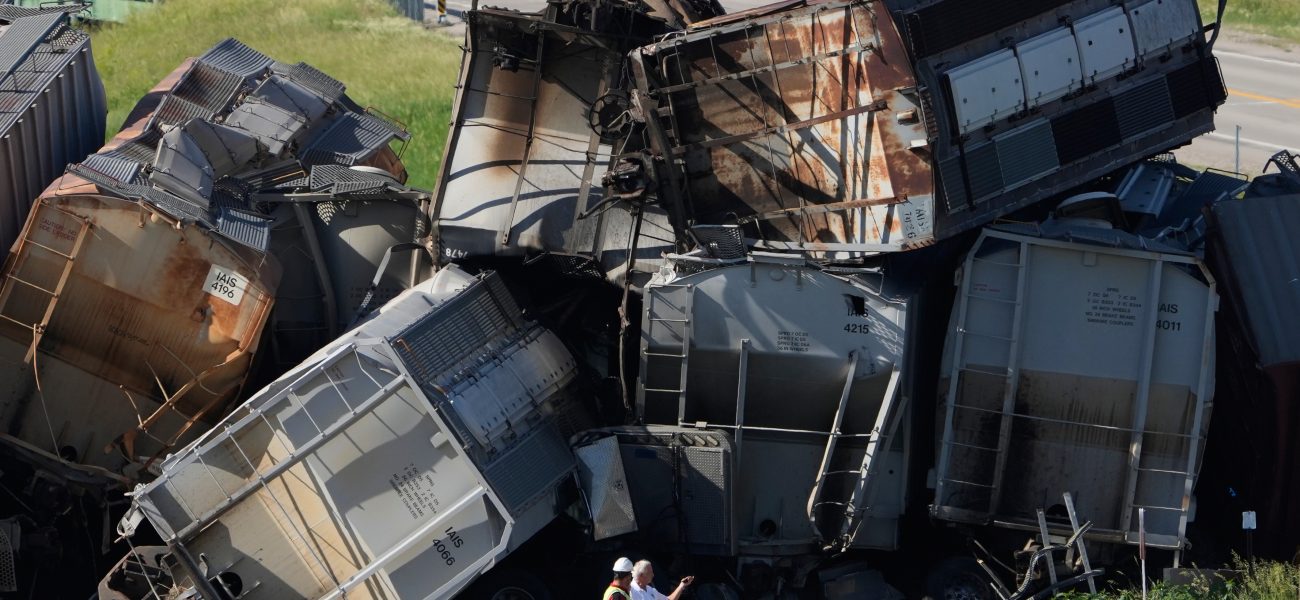
Silent Collisions: Iowa Freight Crash Exposes Cracks in Global Supply Lines
POLICY WIRE — Des Moines, USA — When steel collides with steel, the sounds are immense, devastating. But the ripple effects? Those often hum along quietly, invisibly, until they’ve circled half...

POLICY WIRE — Des Moines, USA — When steel collides with steel, the sounds are immense, devastating. But the ripple effects? Those often hum along quietly, invisibly, until they’ve circled half the globe. A dusty Iowa crossing isn’t just about localized misfortune, it’s a stark, chilling snapshot of how our interconnected world really works, or often, fails to. Because even a single incident—a brutal, abrupt interruption of movement—carries implications far beyond its immediate tragedy.
It was a day like any other, until it wasn’t. Upended logistics. Lives irrevocably altered. There were reports of [QUOTE_PLACEHOLDER] one dead and another injured after train strikes semi-truck in Iowa [QUOTE_PLACEHOLDER], according to state authorities this past Tuesday. Just another collision report, right? Another item ticking off the long, forgettable list of industrial accidents that most folks don’t even blink at. But we should be blinking. Hard.
See, this wasn’t just a simple wreck. It’s a rupture in a finely tuned, often brittle, system. Trains, those leviathans of land commerce, carry mountains of goods: grain destined for bakeries, widgets headed to assembly plants, parts for everything from automobiles to solar panels. A semi-truck, an artery of last-mile delivery. When they meet under hostile terms, you get an immediate economic tremor. Delays mount. Perishable goods spoil. Manufacturers wait. And customers, well, they’re eventually the ones who pay, often without even knowing why.
And let’s be frank, these things aren’t freak occurrences. They’re built-in risks, often exacerbated by an aging infrastructure — and a relentless push for speed over safety. A recent report by the Federal Railroad Administration noted that there were 7,654 highway-rail grade crossing incidents in the U.S. in 2022 alone. Those aren’t just statistics; they’re near-misses, fatalities, — and millions in economic disruption. This Iowa event, unfortunately, just adds to that grim tally.
The impact goes further, too. Imagine goods bound for Houston, ultimately destined for container ships crossing the Atlantic, then navigating the Suez Canal, perhaps to docks in Karachi or Dhaka. This small, unassuming wreck in the heartland of America could easily mean a crucial component for a textile factory in Faisalabad is delayed by days, leading to production slowdowns, missed deadlines, and lost contracts. It’s a daisy chain of economic headaches, you know?
It’s not just about what gets produced, but how confidence shakes out. How do international partners—say, textile magnates in Lahore or electronics manufacturers in Bangalore—perceive the reliability of Western supply chains when such seemingly basic failures occur? We talk a big game about American efficiency, but then incidents like this expose underlying fragilities. It casts a long shadow, prompting questions about where best to invest, where best to trust. They’ve got their own infrastructure woes in Pakistan, sure, but everyone’s looking for stability, for predictable flow, and sometimes, you just can’t get it.
📄 POLICY WIRE WHITEPAPER PUBLISHED: PAKISTAN'S NATIONAL SECURITY POLICY PRIORITIES
👉 READ BY CLICKING HEREWe’re living in a world of complex, interconnected supply lines. Everything relies on everything else, — and a mishap in one corner of the globe reverberates outwards. Like a single pulled thread that unravels a much larger garment, one train derailment or a single grade crossing accident has disproportionate downstream effects. This incident in Iowa? It’s a tiny window into the vulnerabilities that keep global logistics managers up at night, all across Asia and beyond. It really is a microcosm of bigger forces at play. Check out how bigger issues unfold across the sporting world, for example, in Dodgers’ Collision Offers Microcosm of Big League Fortunes and Global Risks, because it’s often about more than just the immediate impact.
What This Means
Politically, incidents like this collision serve as inconvenient reminders of deferred maintenance and policy shortfalls. It’s easy to grandstand on grand global strategies, but a failure of a small-town railroad crossing — a public utility, fundamentally — strips away the pretense. It’s a wake-up call to federal and state lawmakers who continually underfund infrastructure programs, despite mounting evidence of their decay. We’ve got leaders who’ll boast about economic growth while overlooking the literal tracks that carry that economy.
Economically, the message is equally stark: the hidden costs of inefficiency are staggering. Freight transportation is the backbone of most developed economies, — and any hiccup here isn’t just an isolated expense. It’s lost productivity. It’s inflationary pressure. But it’s also an urgent argument for more robust public-private partnerships, smarter investment in modernizing transport networks, and stricter regulatory oversight. The current approach often seems reactive, patching wounds instead of preventing them. It’s not sustainable, not for Iowa, not for the entire country, — and certainly not for its global partners. The entire world, really, needs smooth sailing. Or, in this case, smooth rolling. As an aside, the constant pressure on supply lines and infrastructure has an impact across various sectors, like the crucial decisions influencing trade discussed in Washington’s Whipsaw: Tariff Threats Emerge as Old Play in New Delhi Negotiations; it all links up.
The tragedy of [QUOTE_PLACEHOLDER] one dead and another injured [QUOTE_PLACEHOLDER] in Iowa is devastating for the families involved, period. But it’s also a canary in the coal mine, whistling a low, persistent warning about the state of affairs for freight logistics everywhere. We ignore these small collisions at our collective peril. The world is watching, believe it or not.