


IPL’s Long Shadow: Money Talks Louder Than King and Country in Modern Cricket
POLICY WIRE — LONDON, UK — Forget the gentle thwack of leather on willow; the sound resonating through international cricket pitches these days is more akin to a cash register’s satisfying ring....

POLICY WIRE — LONDON, UK — Forget the gentle thwack of leather on willow; the sound resonating through international cricket pitches these days is more akin to a cash register’s satisfying ring. Old-world loyalties, it seems, are increasingly finding themselves pitted against the raw, undeniable magnetism of private wealth. And no, we’re not just talking about some minor league kerfuffle.
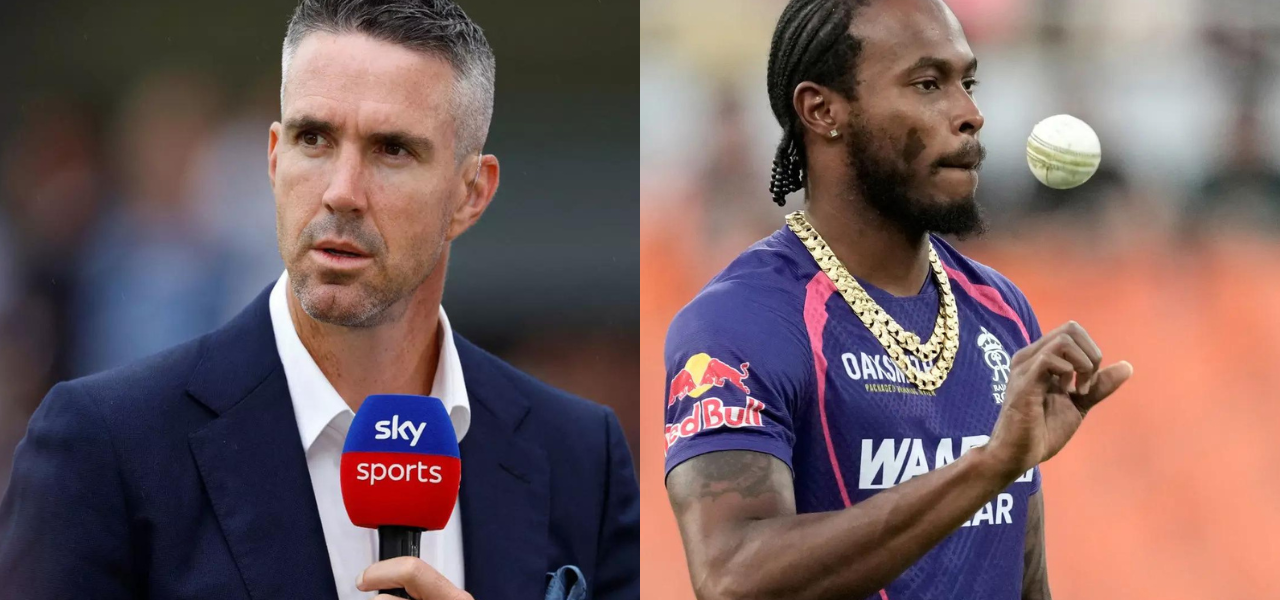
The latest rumble in cricket’s increasingly commoditized jungle surrounds fast bowler Jofra Archer, whose decision to remain tethered to his Indian Premier League (IPL) franchise, the Rajasthan Royals, well into its playoff scramble, left England’s Test squad conspicuously—and some would argue, criminally—short-staffed for their series opener against New Zealand. It wasn’t just a scheduling conflict; it was a rather blunt statement about where the power truly sits in modern sport. The Lord’s Test, a fixture almost sacred in its antiquity, unfolded without one of England’s most potent weapons. Quite a thing, really, to put a domestic T20 tournament ahead of a national red-ball call-up, isn’t it?
This isn’t an isolated incident. Players globally, from the Caribbean to South Africa, have wrestled with this precise dilemma. But when it’s an Englishman, particularly one of Archer’s caliber, skipping a home Test against a respected opponent like New Zealand, well, that’s when the whispers turn to shouting matches. Former English captains — and commentators quickly sharpened their rhetorical knives. Michael Atherton and Simon Doull—no strangers to a strongly worded opinion—were among those publicly questioning whether the lure of the league was, perhaps, eclipsing the traditional pride of wearing the three lions. You know, that whole ‘playing for your country’ thing.
But veteran of the franchise circuit himself, Kevin Pietersen, wouldn’t have any of it. He’s been through the mill, seeing the sport morph into something few of the old guard could even conceive. “Ex cricketers who never played/benefitted from the IPL, using quite damning language on current players who are playing the IPL, simply have no idea. Zero clue whatsoever! But, let them be….. I SUPPORT THE PLAYERS!” Pietersen wrote on X, unleashing a torrent of digital support — and fury in equal measure. He’s always had a knack for stirring the pot. And his point? Many of those casting judgment, he reckons, simply haven’t grappled with the sheer scale of opportunities, and the associated fortunes, that global T20 leagues like the IPL now represent.
England’s current Test skipper, Ben Stokes, an individual who also enjoys significant contractual liberty through the IPL (albeit, at this moment, putting country first), chimed in with a more diplomatic, though equally firm, defense. Speaking from the hallowed grounds of Lord’s before the match began, Stokes acknowledged the public’s chagrin. “I totally understand people’s frustrations around it, but there’s another side to it,” he told reporters. “A lot of it has to do with the landscape of cricket — and where it’s at the moment. A lot of points people are making around Jof — and that situation, are to do with the landscape when they were playing. But it’s completely different now. There’s opportunities for cricketers now that there was not 10, 15, 20 years ago.” It’s hard to argue with that, isn’t it? The economics of the game have been utterly redrawn.
📄 POLICY WIRE WHITEPAPER PUBLISHED: PAKISTAN'S NATIONAL SECURITY POLICY PRIORITIES
👉 READ BY CLICKING HEREAnd those economics were certainly on full display with Archer’s performance. He wasn’t just warming the bench for Rajasthan. The man was a bowling machine. He finished a staggering third in the Purple Cap standings—awarded to the tournament’s leading wicket-taker—snaring 25 wickets across 16 matches in IPL 2026, consistently terrorizing opposition batsmen. That kind of elite performance, predictably, commands premium compensation. You don’t just walk away from that kind of success, — and that kind of paycheck, on a whim. The Rajasthan Royals, a franchise with strong Indian backing, fought hard, pushing into the playoffs before ultimately succumbing to the Gujarat Titans in Qualifier 2. Because of this deep run, Archer couldn’t simply snap his fingers — and be at Lord’s.
What This Means
The Archer affair, much like a seismic tremor felt far from the epicenter, reveals deeper fault lines in cricket’s global structure. The IPL, with its estimated valuation skyrocketing into the billions of dollars and broadcasting deals rivaling major American sports leagues, isn’t just a tournament anymore; it’s a fully fledged, immensely powerful economic ecosystem. Its influence spills well beyond India’s borders, reshaping career paths and altering player priorities across every cricketing nation. Look at Pakistan, for example: their players aren’t permitted to participate in the IPL due to geopolitical tensions, which undoubtedly affects their earnings potential and exposure, potentially creating a talent drain elsewhere as the financial lure of leagues becomes irresistible. And the reverberations? They extend to countries struggling to retain their top talent against the siren call of private wealth. This isn’t about patriotism; it’s about power and, quite plainly, money. The governing bodies, those venerated national boards like the England and Wales Cricket Board (ECB), find their authority eroding. They’re left wrestling for crumbs of player availability, competing against organizations that operate with far more fluid capital and far less bureaucratic baggage. It’s an asymmetric battle for hearts, minds, — and highly prized sporting talent. The national game, the traditional flagship of cricket, finds itself on shaky ground, challenged by entities that embody a new, rather brash form of global economic power. For further analysis on global financial tremors and how they shape national policies, you might want to consider how the Kremlin’s grand economic theatre navigates similar pressures.