


Albuquerque’s Modest Gambit: Free Parking Amidst Urban Decay
POLICY WIRE — Albuquerque, N.M. — A whisper of a plan, born from the debris of a recent building collapse, now drifts through the embattled core of Albuquerque. It’s a palliative, this modest offer—a...

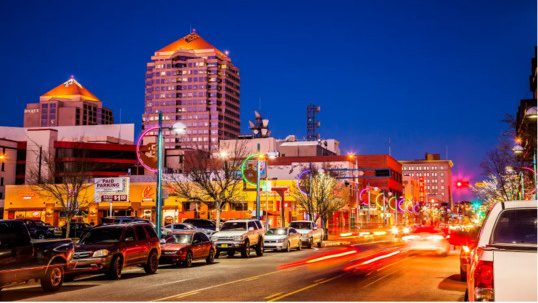
POLICY WIRE — Albuquerque, N.M. — A whisper of a plan, born from the debris of a recent building collapse, now drifts through the embattled core of Albuquerque. It’s a palliative, this modest offer—a two-hour reprieve from parking fees—designed to coax citizens back into the arms of local commerce. It isn’t exactly a grand urban renewal scheme, but it’s what’s on the table, a stark reflection of the perpetual struggle facing many American downtowns.
The city’s downtown, still shaking off the metaphorical dust from what local authorities have described as a slow, agonizing slide towards obsolescence, recently experienced the literal collapse of the Bliss Building, once home to Lindy’s Diner. This wasn’t an act of nature, not entirely. More like the final, structural sigh of an urban fabric stretched thin, neglected, and battling an ever-present current of apathy and economic migration to suburban sprawl. In response, not with a bulldozed regeneration project or a colossal investment fund, but with a humble inducement: two hours of free parking.
It’s an effort narrowly targeted, a laser beam rather than a floodlight. This particular indulgence is only available at the Copper Garage for customers visiting businesses on the 500 block of Central Avenue Northwest. You’ve got to wonder about the scope. Will two free hours be the catalyst that transforms foot traffic into sustainable revenue for establishments like 505 Food Hall or Red Door Studio 519? Perhaps. Or perhaps it’s an acknowledgement, however quiet, that the modern consumer, accustomed to convenience and battling inflation, needs more than just a reason to visit—they need a fiscal nudge.
Because let’s face it, a major headache for urban retail, from Albuquerque to Islamabad, isn’t just competition; it’s accessibility and perceived cost. Parking fees, however nominal, can stack up, especially for smaller purchases. Small businesses everywhere — from the tailors of Lahore to the art galleries of Central Avenue — operate on thin margins. This kind of minor economic incentive, however well-intentioned, often skirts the real structural issues at play. Pakistan, for instance, grapples with its own versions of urban blight, where infrastructure decay and economic policy often conspire against small street vendors and traditional marketplaces. There, similar, often equally modest, municipal interventions frequently fail to address deeper socioeconomic rifts. And here, in America’s own struggling city centers, you can’t help but see a parallel.
Local proprietors, including the aforementioned Food Hall, along with Man’s Hat Shop, R & D Smoke Shop, Massage Flamenco Works INC., Richard Levy Gallery, and Sushi Hana, can reportedly offer customers a QR code validation code for the free parking. It’s an almost quaint, low-tech solution to a multi-faceted, high-stakes problem. It won’t rebuild the Bliss Building, and it won’t erase the deep-seated perceptions that have drawn patrons away from these older, more storied districts. But it’s something.
Then there’s the road closure in place at Central and 5th, which, ironically, adds incentive to this validation deal. One arm of the city government shuts down a major artery, while another tries to woo customers back with free parking tickets. You couldn’t script a better illustration of bureaucratic schizophrenia. It’s a common refrain: urban planners trying to engineer vitality, often missing the messy, organic lifeblood that truly sustains a city. This constant struggle, according to a recent study published by the Brookings Institution in 2023, shows that nearly 30% of independently owned downtown businesses nationwide fail within their first five years, with accessibility and foot traffic being primary culprits.
Customers, if they manage the navigational puzzle, who park at the Copper Garage may receive parking validation from participating businesses. It’s a process, another hoop to jump through. Small gestures like these are often presented as proof of governmental engagement, yet they sometimes merely underscore the limited scope of solutions when larger forces of capitalism and urban planning missteps are at play. It’s not unlike the global development challenges, where small, targeted aid programs are often deployed in the face of gargantuan, systemic issues in places like Bangladesh or Uzbekistan. The intention is often pure, but the impact feels almost infinitesimally small against the sheer scale of the problem.
📄 POLICY WIRE WHITEPAPER PUBLISHED: PAKISTAN'S NATIONAL SECURITY POLICY PRIORITIES
👉 READ BY CLICKING HEREIt’s clear that while the headlines might shout about recovery, the street-level reality for Albuquerque’s 320-year-old heritage is more nuanced. Businesses struggle; patrons hesitate. This tiny slice of parking subsidy is less about aggressive urban renewal and more about a quiet plea: [QUOTE_PLACEHOLDER]
What This Means
This localized parking incentive, while seemingly minor, lays bare the broader challenges facing many legacy downtown districts across the United States. Politically, it signals a reactive, rather than proactive, approach from municipal authorities. Instead of comprehensive redevelopment strategies or substantial infrastructure investments, the immediate response to events like the Bliss Building collapse, or perennial low foot traffic, tends towards small, manageable PR wins. It allows local leaders to demonstrate concern without committing to the deeper, more politically fraught initiatives required for true urban renaissance.
Economically, the scheme is a classic Band-Aid. It temporarily alleviates a symptom (the cost of parking) but does little to address the underlying disease: the struggle of brick-and-mortar retail against e-commerce, the lack of residential density that creates a 24/7 downtown economy, or the public perception of safety and desirability. For businesses like Sushi Hana or 505 Food Hall, every penny counts. So, two hours of free parking might save a customer a few dollars, potentially making a discretionary purchase slightly more appealing. But it won’t solve a landlord’s high rent, a supplier’s increased costs, or the broader need for a dynamic, thriving urban core that draws people in for more than just a transactional visit.
the implicit linkage of the free parking to a road closure adds another layer of ironic commentary. It implies that disruptions—oftentimes necessary for infrastructure improvement—are counterbalanced by tiny gestures of goodwill. The net effect? A local government that seems to be in a constant state of patching — and mending, rather than building with foresight. The long-term implications are clear: without significant, coordinated investment and a cohesive vision for the future of downtown, such piecemeal efforts will, at best, delay the inevitable, or at worst, simply perpetuate the narrative of a district fighting for its very existence, one free parking validation at a time. It’s a survival tactic, not a growth strategy.