
Beneath the Grime: NYC’s Subterranean War Against Itself
POLICY WIRE — New York City, USA — It’s not the rats or the stench that truly assaults you in New York’s netherworld. It’s the sheer, relentless hubris of a metropolis—a city that builds...

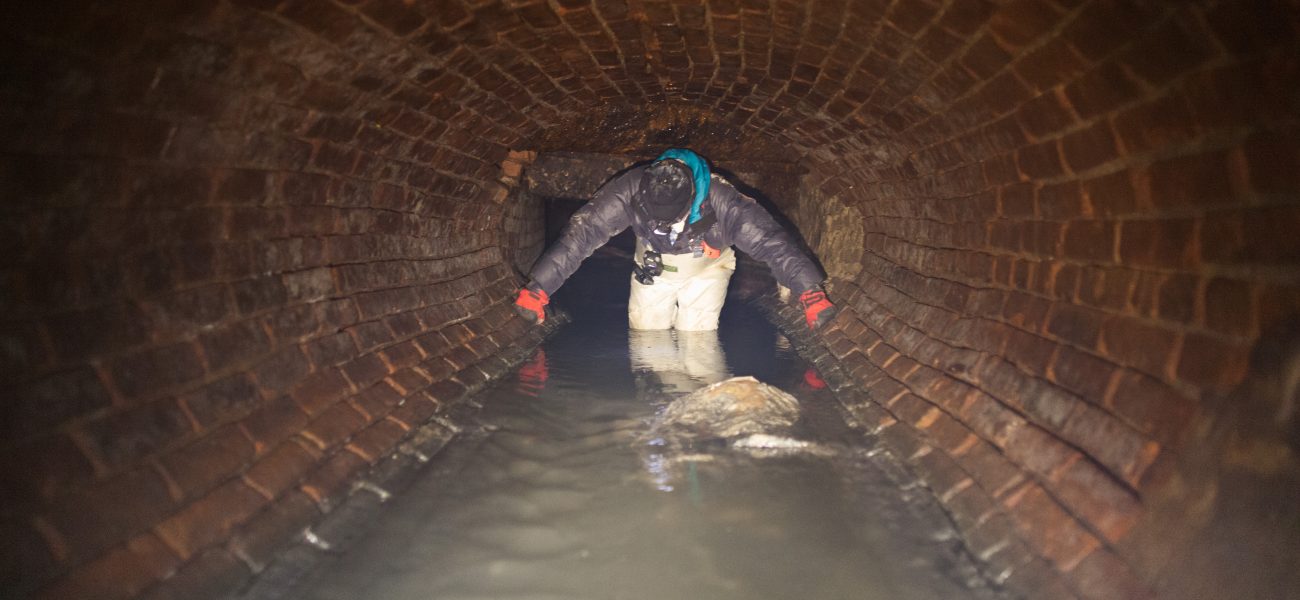
POLICY WIRE — New York City, USA — It’s not the rats or the stench that truly assaults you in New York’s netherworld. It’s the sheer, relentless hubris of a metropolis—a city that builds ever upwards but rarely looks down, literally, to what keeps its towering ambition from drowning in its own refuse. For the dedicated crews navigating the city’s unseen arteries, it isn’t some dystopian novel; it’s Tuesday. These unsung figures daily contend with an engineering marvel on the brink, battling a river of human-made folly.
Below the bustling avenues, beyond the glamour, lies a vast, dark cathedral of pipes and passages, keeping 8 million lives from total chaos. Most folks never give it a second thought. They just flush. But this sprawling, unseen architecture, the one that’s always [QUOTE_PLACEHOLDER] our city’s subterranean world remains largely hidden, an unacknowledged marvel of engineering that sustains daily life above ground, demands more than just casual disregard. These aren’t pristine tunnels; they’re battlegrounds. Blockages are commonplace, not some anomaly, but a predictable consequence of a consumer culture’s carelessly discarded offerings—things like [QUOTE_PLACEHOLDER] improperly disposed items like grease, wipes, and construction debris. These things don’t just vanish. They coalesce, forming monstrous fatbergs, hardening into concrete-like obstructions that force water (and worse) back into the light, causing [QUOTE_PLACEER] significant overflows and environmental hazards.
And because the air quality down there’s often horrendous, filled with methane and hydrogen sulfide, the very act of clearing these clogs becomes a deadly gambit. Crews operate under stringent safety protocols, complete with gas detectors — and confined space entry training. You don’t just wander in; you prepare for chemical warfare. It’s a thankless job, physically grueling, environmentally toxic, — and absolutely essential. Without these workers, New York City, for all its pomp and circumstance, wouldn’t just slow down; it’d choke.
This isn’t merely an urban anecdote; it’s a parable for governance. Think about it: a system critical to life, constantly under siege, kept running by a specialized few, while the public remains largely oblivious or actively contributes to its decay. This problem isn’t unique to Manhattan. Developing nations, facing exponential urban growth and less established infrastructure, find their challenges magnified. Consider the sprawling informal settlements in cities like Karachi, Pakistan, where sewage systems are either rudimentary or non-existent for vast populations, leading to endemic health crises and constant infrastructure collapse. Their struggles are more acute, more visible, but the root cause—a disconnect between human activity and infrastructural capacity—is depressingly universal. Maintaining urban sewage infrastructure in regions with rapid, unplanned growth poses immense challenges, often straining municipal budgets already stretched thin by other public services.
But back to New York. The solution isn’t rocket science. It’s simply about better habits, sure, but also greater investment in predictive technology. New York City, like many older urban centers, still relies on systems laid down a century ago. Imagine trying to run a supercomputer on Windows 95. The city, according to a recent report by the NYC Department of Environmental Protection, spends over $2 billion annually on maintaining and upgrading its wastewater infrastructure, a figure projected to increase as climate change impacts stormwater management. Yet, despite this massive outlay, it often feels like we’re just treading water, reacting to crises rather than preventing them.
📄 POLICY WIRE WHITEPAPER PUBLISHED: PAKISTAN'S NATIONAL SECURITY POLICY PRIORITIES
👉 READ BY CLICKING HEREYou can call it bureaucratic inertia, a collective blind spot, whatever. The point is, there’s a complex, multi-layered subterranean city just below our feet. And it’s screaming for attention.
What This Means
The state of New York City’s subterranean infrastructure serves as a stark metaphor for broader challenges in public policy and urban resilience. Economically, chronic underinvestment and reactionary maintenance—as opposed to proactive modernization—represent a significant hidden cost. The true economic impact extends beyond direct repair expenses, encompassing health crises from environmental contamination, business disruptions during system failures, and the reduced quality of life that pushes residents and businesses elsewhere. We’re talking millions, sometimes billions, in avoidable costs if preventive measures were prioritized. Politically, this infrastructure decay highlights a deep chasm between public awareness — and municipal priorities. It’s difficult for politicians to gain traction on promises to fix ‘out of sight, out of mind’ issues when flashy, visible projects tend to draw more votes and headlines. This dynamic is exacerbated in rapidly expanding global cities, particularly across South Asia, where the sheer pace of development often outstrips the capacity for foundational infrastructure. The lack of robust, transparent long-term planning for essential services, whether in Brooklyn or Islamabad, risks social instability, health epidemics, and ultimately, hinders a city’s growth potential. Our cities are only as strong as their weakest links—and often, those links are festering twenty feet below pavement, unseen and unappreciated until they fail spectacularly.