
Fetterman’s Filibuster Flip: A Maverick’s Admission of Miscalculation
POLICY WIRE — Washington, D.C., United States — It’s a rare sight in our nation’s capital, especially for a political newcomer. A senator, fresh from the campaign trail and still sporting his...

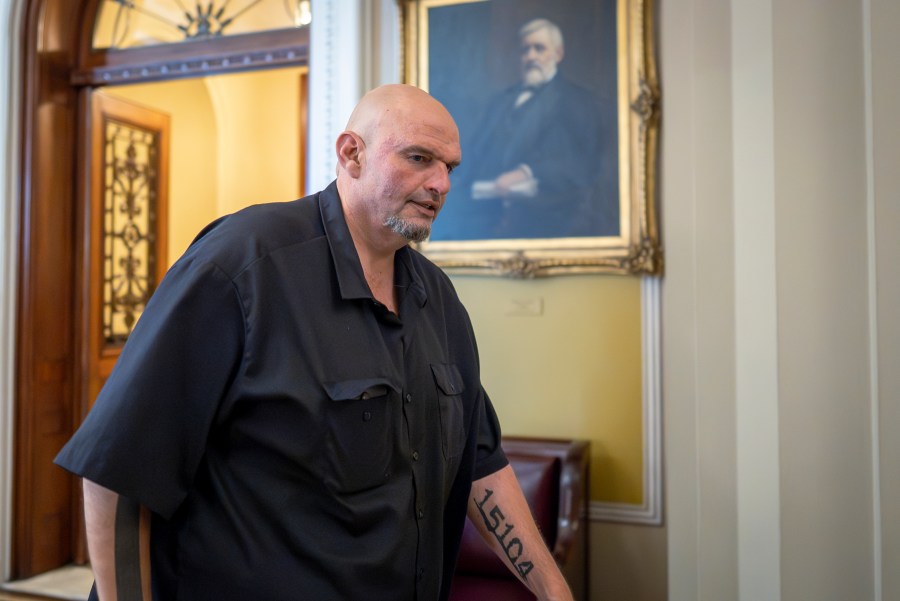
POLICY WIRE — Washington, D.C., United States — It’s a rare sight in our nation’s capital, especially for a political newcomer. A senator, fresh from the campaign trail and still sporting his signature style (baggy shorts and hoodie often included), isn’t just admitting he made a mistake. He’s going further. Much further. It isn’t merely an acknowledgement; it’s an indictment, a self-assessment laid bare that few career politicians would dare articulate publicly. John Fetterman, the towering Pennsylvanian Democrat, hasn’t just walked back a previous stance on the Senate filibuster; he’s sprinted away from it, emphatically declaring what many consider a past political misjudgment as something far graver. We’re talking about an ideological u-turn here—a full, unadulterated 180-degree pivot that probably leaves more than a few legislative strategists scrambling.
For years, progressive firebrands, including Fetterman during his more aspirational moments, championed the dismantling of the legislative maneuver known as the filibuster. The argument was simple, if perhaps naive: scrap it and unleash a torrent of long-stalled progressive legislation, from voting rights to climate initiatives. The enthusiasm was palpable. The vision was clear. But sometimes, vision meets hard reality, — and reality, as they say, bites. And Fetterman, with characteristic candor, is now acknowledging the depth of that bite. His exact words on the matter, reflecting a stark evolution of thought, were, We were so wrong, so wrong about that. That’s not a mild dissent; it’s a categorical rejection of an earlier, firmly held position. It’s an admission, raw and without adornment, that perhaps the path to unfettered legislative action wasn’t the golden brick road many envisioned. [QUOTE_PLACEHOLDER]
But this isn’t just about Fetterman, of course. It’s about the very mechanism of legislative power, a peculiar, often maddening, procedural tool that shapes American democracy in ways that aren’t always obvious to the casual observer. The filibuster, requiring a supermajority of 60 votes to overcome, has been the bane of many a presidential administration’s agenda. But it’s also, ironically, served as a crucial bulwark, a protective dam against unchecked legislative fervor when the opposition controls the White House. But look, history provides some context. In 1917, when the cloture rule (the process to end a filibuster) was first introduced, it took a two-thirds vote to invoke. Now, it’s 60 senators. And its usage? The number of cloture motions filed per Congress exploded, from an average of roughly 15 per Congress in the 1970s to over 200 in the 2010s, according to the U.S. Senate Historical Office. That’s a sharp incline.
His shift signals a deeper, more pragmatic understanding of how Washington actually works—or, more accurately, how it barely works. His early days were marked by a clear ideological alignment with those on the left flank who saw the filibuster as an arcane impediment. But after a stint in the actual Senate, rubbing shoulders with its traditions and confronting its often-unyielding grind, a different perspective seems to have taken hold. Call it maturation, call it realism, call it a response to an increasingly polarized political landscape where even basic legislation struggles to find bipartisan consensus. Whatever its genesis, the reversal is jarring.
And it raises compelling questions about the broader Democratic Party’s stance, especially if they lose the presidency in upcoming elections. Imagine a scenario where a Republican-controlled White House and Senate—possibly with an eye on imposing far-reaching cultural legislation—finds its ambitions curbed only by the very tool Democrats once reviled. One man’s obstruction is another’s strategic defense, after all. There’s a certain grim poetry to it, wouldn’t you say? You wanted to get rid of it. But maybe, just maybe, it ends up protecting your interests down the road. This isn’t just theory either; it’s a stark reality of legislative cycles — and political fortunes.
For nations like Pakistan, navigating a delicate balance between parliamentary tradition and sometimes tempestuous political realities, this evolution in American thinking isn’t entirely academic. Washington’s internal squabbles over procedural mechanisms have a funny way of echoing across oceans. U.S. foreign policy—aid packages, trade agreements, and even diplomatic pressure on issues ranging from human rights to counterterrorism—is fundamentally shaped by the legislative branch. And how effectively the legislative branch can actually *legislate* hinges on these seemingly minor procedural skirmishes. So when a senator—particularly one with a progressive leaning, a group historically keen on imposing certain benchmarks abroad—admits error regarding a procedural device, it subtly, quietly, affects the broader diplomatic currents.
But the broader context is essential. As American democracy grapples with its own internal divisions, often exacerbated by parliamentary tactics like the filibuster, observers in other complex democracies, such as those across South Asia, pay close attention. How legislative bodies manage gridlock — and ideological divides provides case studies, good and bad. Fetterman’s reversal isn’t just about domestic policy. It’s about a realization that legislative checks and balances, however frustrating, might prevent wild swings that destabilize the body politic, and consequently, foreign policy continuity. When you think about it, legislative predictability—even when it’s slow—is often preferred to revolutionary upheaval, both at home and abroad. Stability, sometimes, is more valued than efficiency.
What This Means
Fetterman’s public retraction isn’t just a blip on the political radar; it’s a tectonic shift, a clear sign that even the most ideologically driven can succumb to the unforgiving realities of governance. This move effectively saps momentum from any lingering progressive push to eliminate the filibuster, making it significantly harder for the Democratic Party to rally around that particular reform, especially given its dwindling chances of holding a robust majority. Economically, a persistent filibuster means a greater likelihood of legislative paralysis, hindering grand initiatives (say, massive infrastructure spending or climate bills) that require significant federal outlays. This translates to a slower pace of government intervention and, often, a reliance on executive orders, which are inherently less stable and can be reversed by subsequent administrations. This creates an environment of greater regulatory uncertainty for businesses — and investors. From a political perspective, it solidifies the status quo, empowering the minority party to obstruct, forcing bipartisan compromise—or simply ensuring nothing moves forward. And while it might seem counterintuitive, this stasis can sometimes be seen as a form of stability, especially for international partners observing the unpredictable nature of American politics. Pakistan, for instance, thrives on a degree of predictability in its relationship with Washington; extreme legislative shifts one way or another often require intricate recalculations for their own strategic planning. Fetterman’s admission doesn’t guarantee smooth sailing, not by a long shot, but it does highlight a growing understanding within certain D.C. circles that legislative weaponry, once fired, can’t easily be unfired. This change of heart, coming from such an unexpected corner, isn’t about one man; it’s about a growing realization within Washington that sometimes, the brakes are as important as the accelerator.