
Anatomy of a Playbook: Fenway’s Subtle Power Moves in the Geopolitics of Baseball
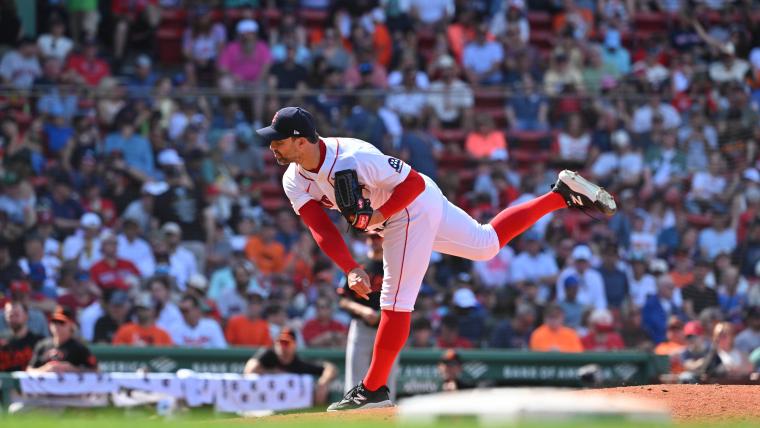
POLICY WIRE — Boston, USA — When Boston decided to pull 36-year-old hurler Tommy Kahnle from the relative obscurity of Triple-A Worcester, it wasn’t just a simple roster move. Not really. It felt...

POLICY WIRE — Boston, USA — When Boston decided to pull 36-year-old hurler Tommy Kahnle from the relative obscurity of Triple-A Worcester, it wasn’t just a simple roster move. Not really. It felt more like a chess move—a veteran hand brought back to the big leagues under peculiar duress, right before a seismic clash with the hated New York Yankees. One can almost picture the strategists in the war rooms (or executive offices, same difference) poring over scouting reports, weighing immediate impact against future capital, much like any nation’s foreign ministry. This wasn’t just about innings, was it?
Kahnle, an 11-year MLB veteran, hasn’t just been whiling away his days; he’s been effectively dominating the minor league scene. This season, he posted a blistering 1.40 ERA across 18 appearances in Worcester, a number so good it almost defies the system he was stuck in. (You don’t just ‘do’ that for fun, do you?) His success, oddly enough, is what forced Boston’s hand. He opted out of his minor league contract earlier this week, initiating a swift 48-hour deadline: call him up, trade him, or watch him walk as a free agent. It’s a ruthless little economic sub-clause, isn’t it, shaping destiny with an arbitrary countdown clock. And it’s precisely these kinds of behind-the-scenes machinations that dictate so much, whether it’s a baseball team’s bullpen strategy or a nation’s energy portfolio. Talent, like political leverage, is a finite, highly valuable commodity.
But the timing. That’s what makes it art, or at least a story worth telling. The Red Sox, who announced the recall to the majors on June 4, 2026, wasted no time, deploying Kahnle the very same Thursday against the Baltimore Orioles. He then proceeded to pitch two scoreless innings, helping to stabilize a rocky start. But really, the call-up wasn’t about the Orioles. It was about New York, the ghost in the machine, the rivalry that always looms larger than life. The stakes, you see, were never just about this one player, this one game. It’s about perception. It’s about psychological warfare. It’s about what you tell your opponents and, more importantly, what you tell your own men. You want to see who blinks first.
And Kahnle himself, a man who knows this particular dance all too well, wasn’t exactly shocked by the sudden promotion. He had, as he put it, [QUOTE_PLACEHOLDER]. He stated, [QUOTE_PLACEHOLDER]I looked at the schedule — and I went, ‘of course.’ But, it’s going to be the same thing. This time I’ll be on the opposite side of this rivalry. So I’m pretty excited to see that.[QUOTE_PLACEHOLDER] It suggests a deep, intuitive grasp of the game’s undercurrents, the way political players sometimes have an uncanny knack for anticipating their moment, the currents shifting beneath them. This sort of gut-level insight—knowing when your phone’s about to ring because you’ve felt the strategic ripples—it’s something money can’t buy, whether on a pitching mound or in a negotiation room in, say, Islamabad.
The transition, however, wasn’t without its immediate tribulations. Returning to the majors after a stint in the minors can be humbling, even for a seasoned pro. And Kahnle, with characteristic honesty, revealed a physical cost to the rapid re-entry: [QUOTE_PLACEHOLDER]Exhausting. It’s hot out. I knew that I had to kind of eat some innings, especially to help the bullpen out. It was fun to get it back out there. So I felt like it was OK, but it was cool. It’s been a while since I’ve been in a big league stadium again. So it was nice to get back out there.[QUOTE_PLACEHOLDER] There’s a raw vulnerability there, a human element often scrubbed clean from official press releases, isn’t there? It’s not just about raw talent; it’s about enduring the grind, proving you’ve still got the goods when the bright lights are back on. That takes a particular kind of grit, one that doesn’t age out of existence.
📄 POLICY WIRE WHITEPAPER PUBLISHED: PAKISTAN'S NATIONAL SECURITY POLICY PRIORITIES
👉 READ BY CLICKING HEREWhat This Means
This isn’t merely about baseball; it’s a window into the perpetual push-and-pull between veteran experience and fresh potential in any high-stakes arena. For the Red Sox, calling up Kahnle was a calculated gamble—a short-term boost of proven reliability precisely when they need it most, against a historically potent rival. But there’s also an undercurrent here: what message does it send to younger, hungry players? It’s a reminder that loyalty, or at least utility, can still swing a powerful lever. And frankly, this dance isn’t unique to American sports; think of the internal political dynamics in Pakistan, where seasoned, often exiled, politicians are frequently brought back into the fold during times of instability, their familiarity deemed more valuable than any untested progressive. The economy of influence, much like the economics of player salaries, prioritizes established performance over the unquantifiable promise of youth, especially when the going gets rough.
It’s an immediate strategic reinforcement, but it also reflects a deeper concern: maybe the bullpen wasn’t as formidable as the front office wanted us to believe. Because why else pull a known quantity, a potentially pricey one, from the minor league treadmill, especially when a more permanent solution might be developed? It says, bluntly, that they can’t afford to wait. It also showcases the raw, transactional nature of professional sports, where an athlete’s personal journey is subsumed by organizational imperatives. The broader implications? Organizations, whether sports franchises or developing nations, must consistently reassess how to best utilize their resources, particularly their experienced hands, without entirely stymying new talent. Sometimes, you just need a reliable arm—or a familiar face—to steady the ship, even if only for a high-tension, three-game series. This is exactly why the question of an aging workforce is a global concern; see how Sri Lanka, for example, faces a mounting elder care crisis. But for now, the Fenway faithful won’t much care for such academic debates. They’ll just be watching to see if Kahnle’s fastball, and his intuition, can deliver a critical victory against their oldest foes. And they’ll pay good money for it. The immediate tactical victory often overshadows any long-term philosophical quibble, doesn’t it? After all, everyone loves a good comeback story.