

The Price of Command: A Captain’s Scar and Madrid’s Bruised Imperialism
POLICY WIRE — Madrid, Spain — Real Madrid, an institution built on manufactured perfection and relentless winning, rarely shows its cracks. It cultivates an image of unshakeable...

POLICY WIRE — Madrid, Spain — Real Madrid, an institution built on manufactured perfection and relentless winning, rarely shows its cracks. It cultivates an image of unshakeable dominance, a gleaming white empire where every star performs their designated, exquisite role. But even emperors sometimes stumble in their own courts. And sometimes, those stumbles leave visible marks.
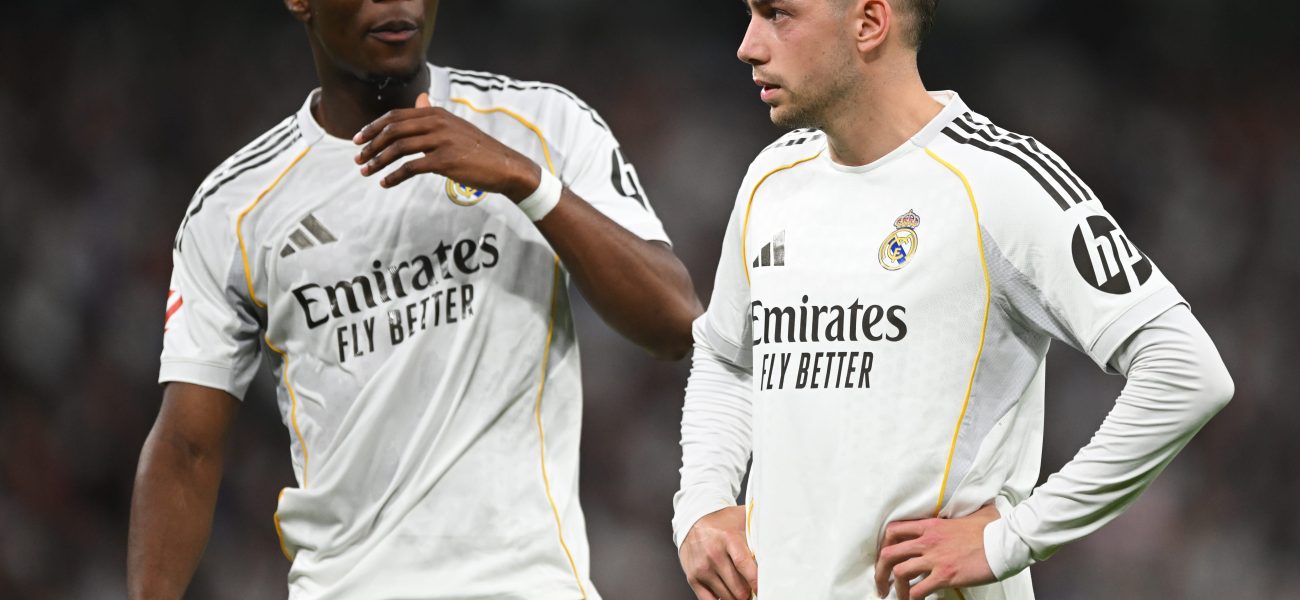
No, we’re not talking about a sudden dip in form or a botched transfer saga this time. We’re talking about a small, physical reminder etched onto the forehead of Federico Valverde, a man recently anointed captain. It’s a subtle thing, easily missed if you’re focusing on the glint of the badge, but for those who’ve been paying attention to the rumble within the fortress of the Santiago Bernabéu, it screams volumes. It’s the kind of detail that turns gossip into policy, personal fracas into institutional dilemma.
The scar, you see, isn’t from a particularly bruising tackle or a stray elbow in a hotly contested penalty box. It’s widely believed to be the unwelcome memento of an altercation—a bare-knuckle, locker-room spat, for heaven’s sake—with teammate Aurelien Tchouameni. The kind of incident management would usually sweep under the plush carpets of its gilded VIP boxes. Except this one got out. The rumor mill churned, and then came the verifiable truth: Valverde, suffering a concussion, found himself hospitalised. He missed three crucial fixtures—against Barcelona, Real Oviedo, and Sevilla—because of an internal bust-up, not an external threat. The club, ever so adept at crisis management, issued fines, hoping a monetary slap on the wrist would be enough to bandage the visible wound.
But bruises don’t just fade; they often resurface in unexpected places. And in a club like Real Madrid, where politics can be as intricate and brutal as any geopolitical landscape, the aftershocks are rarely confined to a single incident. There are murmurs, you know, about deeper, festering divisions in the dressing room. And naturally, all eyes turn to the colossal shadow cast by Kylian Mbappé’s looming arrival. One can’t help but wonder if these internecine conflicts are mere warm-up acts for the seismic shift a true superstar—one accustomed to unchallenged primacy—might bring. Club president Florentino Perez, the man who’s built a modern sporting imperium, reportedly pins his hopes on the incoming manager—a familiar authoritarian figure like Jose Mourinho, if Perez retains his hold after the upcoming presidential vote—to restore order. Because stability, as we’ve seen across various complex systems, is usually achieved through strong, centralized control, or a bloody succession.
Valverde, though, appears to float above the fray, at least publicly. He’s stepping into Dani Carvajal’s shoes, taking the captain’s armband permanently. Speaking to AUF TV, via MD, he couldn’t contain his enthusiasm, calling it “something incredible.” He admitted it involved a “band of pressure,” but relished the thought of leading the “club of his life.” And who wouldn’t? It’s a career high, an affirmation. But this captaincy also places him directly into the crosshairs of Madrid’s internal power dynamics, making that scar not just a personal story, but a symbol. A public flag. Like a diplomatic incident spilling over onto the global stage, one can’t simply ignore the optics when your chief representatives are bearing physical proof of internal discord.
📄 POLICY WIRE WHITEPAPER PUBLISHED: PAKISTAN'S NATIONAL SECURITY POLICY PRIORITIES
👉 READ BY CLICKING HEREAnd let’s not pretend this is purely a Spanish affair. Real Madrid isn’t just a football club; it’s a colossal multinational entity. The club pulled in approximately €831.4 million in revenue for the 2022-23 season, according to Deloitte’s Football Money League, much of it from burgeoning markets across Asia and the Middle East. Consider the teeming fan clubs in Lahore or Dhaka, in Riyadh or Karachi, where ‘Los Blancos’ represent aspirational dreams, not just on the pitch but off it. They invest emotional capital, merchandise sales, — and TV viewership. A scuffle between highly paid athletes might seem minor, but it can tarnish a meticulously cultivated brand, disrupt narratives of professionalism, and impact how the club is perceived by a truly global audience that values, in many instances, harmony and respect above all else. This isn’t merely about an ugly skirmish; it’s about brand integrity and the delicate art of maintaining a myth for millions who have bought into it.
What This Means
This visible scar on Fede Valverde isn’t just a personal injury; it’s a telling political artifact. It highlights the brutal reality of managing an elite sporting institution that functions as a multinational corporation with egos the size of small nations. Real Madrid’s attempt to quash the Tchouameni incident failed; the lingering scar, coupled with Valverde’s new captaincy, is a stark reminder that some narratives can’t simply be spun away. This whole affair signals deep fissures within the organization, cracks that president Florentino Perez, a master of control, is evidently struggling to paper over. The whispers around Mbappé’s future and the reported longing for a manager like Mourinho indicate a readiness to revert to authoritarian methods to impose discipline. It’s a strategic retreat to a known quantity when internal coherence begins to fray, suggesting that the current institutional structure might be too weak to contain the powerful individual personalities it cultivates. Essentially, when diplomacy fails in the dressing room, the club looks for a strongman, reflecting a broader human tendency to seek centralized authority when chaos threatens. And Valverde, for all his pride in the armband, now embodies the club’s uneasy peace—a living billboard for unresolved conflict even as he leads the charge.
Ultimately, a captain with a fresh scar from an internal skirmish, rather than a battle on the field, paints a rather poignant picture of the modern footballing empire. It tells us that even within the most polished, triumphant entities, the human element—the ego, the ambition, the sheer visceral anger—will always find a way to manifest itself. It’s a sobering thought, really, for those who believe that money — and talent can solve every problem. Sometimes, all it does is escalate the stakes. And sometimes, you know, it just leaves a mark.