

Silent Auction, Echoing Eras: Germany’s €60,000 Cold War Goodbye
POLICY WIRE — Berlin, Germany — Sixty thousand euros. That’s the sum a nation decided was fair for a piece of its military past, a hulking Cold War-era naval platform, quietly slipping off the...

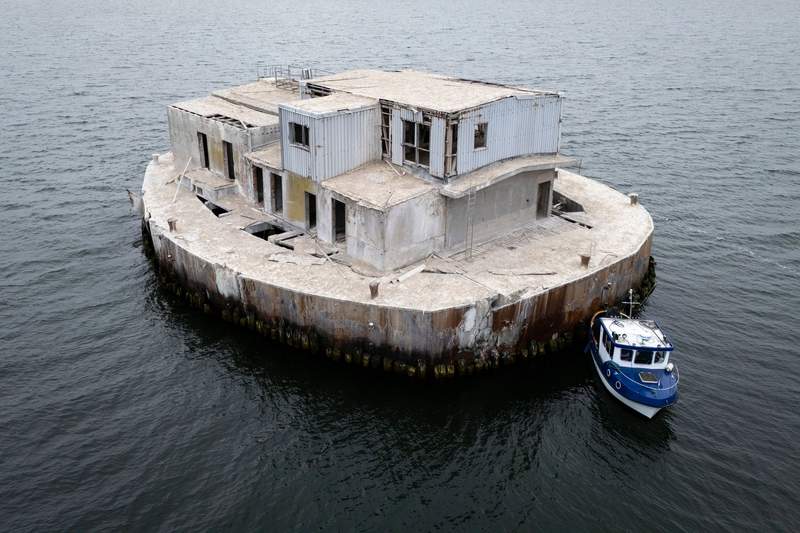
POLICY WIRE — Berlin, Germany — Sixty thousand euros. That’s the sum a nation decided was fair for a piece of its military past, a hulking Cold War-era naval platform, quietly slipping off the German national balance sheet via an online auction. Not for a gleaming, cutting-edge destroyer. Not for an elusive submarine. But for something described by insiders as a ‘structural asset’ — essentially a colossal, decrepit float—that once helped maintain operational readiness in the icy grip of East-West tension. And you thought your old car wasn’t worth much.
It’s not often that the ghost of the Cold War gets auctioned off like a forgotten antique. This isn’t a fighter jet or a missile silo, mind you. We’re talking about a de-commissioned naval dry dock, a colossal steel behemoth designed to lift, repair, and shelter smaller vessels in an era when naval supremacy felt like a game of high-stakes chess. It’s a testament—or perhaps, a monument—to a time when Germany stood at the very fulcrum of global confrontation. Its sale for a mere €60,000 isn’t just a transaction; it’s an elegy.
Defense circles, usually hushed with talk of next-gen stealth or drone fleets, couldn’t help but notice the peculiar exchange. “It’s about streamlining, plain and simple,” insisted Rear Admiral Hans-Werner Neumann (ret.), formerly with the German Navy, in an email to Policy Wire. “We can’t afford to maintain every rust-bucket from yesteryear. Modern navies need agile, integrated assets, not stationary relics costing us mooring fees. It wasn’t going to patrol the Baltic anymore, was it?” His pragmatism, however, sidesteps the optics. And the history.
But Professor Lena Schmidt, a European defense analyst at the Brandenburg Institute for Security Studies, saw something else entirely. “This isn’t just bureaucratic tidying up,” she observed during a recent virtual panel discussion. “It’s a powerful symbolic gesture of a nation—of a continent—turning its back on a certain type of existential threat, however naive that might seem to some. You can’t put a price tag on a nation’s naval memory, but apparently, someone did. And it’s €60,000.” That low figure feels almost derisory, doesn’t it?
The platform, whose exact designation remains somewhat vague—deliberately so, one suspects, to avoid attaching too much emotional baggage to mere scrap—represents millions, perhaps billions, in 1970s deutschmarks. Its purpose was unwavering: to ensure German vessels remained ready, rain or shine, nuclear winter or détente. Now, its new owners will likely dismantle it for raw materials. An inglorious end for something so strategically loaded. The iron, once forged for deterrence, will find its way into something new. A bicycle? A dishwasher? Who knows?
📄 POLICY WIRE WHITEPAPER PUBLISHED: PAKISTAN'S NATIONAL SECURITY POLICY PRIORITIES
👉 READ BY CLICKING HEREMeanwhile, across the globe, nations like Pakistan find themselves grappling with analogous, albeit economically more pressing, dilemmas. They too possess fleets of varying vintages, some requiring constant maintenance, some acquired at bargain basement prices from retiring Western navies, much to their exasperation. But their strategic context is often more volatile, their budgets thinner. For them, a €60,000 expenditure might, perhaps, cover significant parts for an existing patrol boat rather than the acquisition of a relic. They’re building up, not auctioning off. Pakistan’s defense expenditure, for instance, hovers around 2-3% of its GDP annually, yet often faces fierce competition for funds against pressing social needs—a different calculus altogether when weighing what to scrap and what to keep.
This sale comes as Germany, like many NATO allies, is attempting to shake off decades of underinvestment in its military. Despite pledges, a significant portion of its newly increased defense budget—estimated to be around 2.0% of GDP in 2024, finally meeting the NATO benchmark according to official government statements—is earmarked for modernization, not historical preservation. It’s an economy of efficiency, yes, but also of selective memory.
What This Means
The auctioning of this unassuming yet symbolically heavy naval asset for such a paltry sum lays bare several stark realities. Politically, it signals a deeper psychological shift in Germany’s strategic posture, away from fixed, heavy infrastructure of a bygone Cold War towards a more flexible, deployable force structure. It’s an embrace of agility over sheer scale, a pivot seen across many developed Western navies—especially those like Germany’s, whose geographic constraints mean less need for large, expeditionary dry docks on their home coasts. Economically, it’s a testament to the brutal depreciation of military hardware, particularly specialized infrastructure, once its strategic utility expires. The cost of maintenance versus the return on disposal is clearly skewed towards the latter. For emerging naval powers, particularly in South Asia—say, nations like navies looking to bolster their maritime capabilities—it underlines the chasm between their need for reliable assets and the expensive, often unattainable, modern fleets of wealthier nations. It’s why countries in the region often turn to secondary markets or long-term alliances to source or build their naval presence. They don’t have the luxury of selling off the past; they’re still often buying it, piece by expensive piece. This €60,000 transaction, minuscule in global defense spending, offers a potent, somewhat melancholy lesson in national priorities, military economics, and the relentless march of obsolescence.