


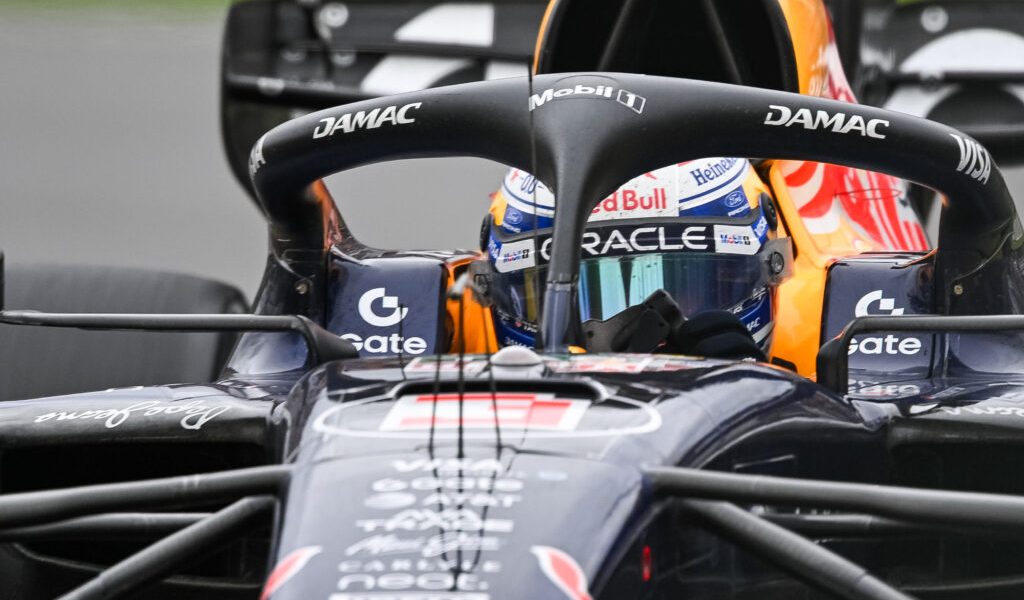
Monaco Meltdown Looms: Red Bull’s Engineering Fails Threaten F1 Title Chase
POLICY WIRE — Monaco, Principality — Forget the champagne and the gleaming yachts for a moment. This week, as Formula 1 descends upon the principality, the dominant roar isn’t just from the...

POLICY WIRE — Monaco, Principality — Forget the champagne and the gleaming yachts for a moment. This week, as Formula 1 descends upon the principality, the dominant roar isn’t just from the engines but from the increasingly desperate internal grumbling within the Red Bull Racing camp. Their once-unassailable technical superiority—a legacy meticulously crafted over years—appears to be collapsing under the weight of unforeseen engineering compromises, threatening to derail their entire championship season in the most glamorous, and unforgiving, setting.
It’s not often you hear a reigning world champion like Max Verstappen openly—and sarcastically—talk about needing to "order a new back." But that’s exactly the kind of blunt, almost incredulous, remark the Dutchman tossed out after the Canadian Grand Prix. It wasn’t hyperbole; it was a damning indictment of the RB22’s brutal ride and a flashpoint revealing a deeper, systemic issue.
Monaco, with its tight turns and famously bumpy asphalt, isn’t just a race; it’s an annual gut-check for any car’s mechanical compliance. Red Bull has typically owned street circuits, their chassis famed for threading needles. But the 2026 regulations? They’ve flipped the script. And now, the Milton Keynes outfit finds itself in a particularly nasty technical cul-de-sac: choose aerodynamic performance, or a suspension setup that won’t jar their superstar driver’s fillings loose. Because, evidently, they can’t have both.
The core dilemma stems from the RB22’s fundamental resistance to absorbing even minor track imperfections. Drivers must attack the kerbs here – especially at places like the Swimming Pool section. But push too hard, soften the suspension for compliance, — and the car’s floor bottoms out. This scraps downforce, eats into stability, — and ultimately, annihilates lap time. But if they stiffen the car to keep that precious aerodynamic platform happy, the entire vehicle bounces violently, losing grip, which is just as bad. It’s a classic Catch-22, played out at 200 mph with millions riding on the outcome.
Laurent Mekies, Red Bull’s Team Principal, didn’t mince words on the situation. “Making the car less challenging to drive over bumps holds zero value if the fix itself degrades our overall lap time. We’re in a balancing act of marginal gains, where every compromise has an exponential cost.” And you can feel the exasperation radiating through that dry pronouncement.
But that’s not the only ghost haunting Red Bull’s pit wall. There’s also the silent killer: excess weight. The FIA chopped the 2026 minimum car weight from a hefty 798kg down to a leaner 768kg. And somewhere in that bureaucratic streamlining, Red Bull’s engineers found themselves dramatically behind. Early whispers became shouts: the RB22 is allegedly up to 19kg overweight. Dragging an extra 19 kilograms around a street circuit like Monaco—where precision is everything and margins are infinitesimal—is like asking an Olympic sprinter to wear ankle weights in a gold medal race. This fundamental mass problem forces an even stiffer suspension setup, which further exacerbates the already dire bump-absorption issues. It’s a vicious, costly circle.
📄 POLICY WIRE WHITEPAPER PUBLISHED: PAKISTAN'S NATIONAL SECURITY POLICY PRIORITIES
👉 READ BY CLICKING HEREWhat This Means
The spectacle of a top-tier racing team openly battling such fundamental engineering shortcomings carries implications far beyond the confines of the circuit. In the high-stakes world of Formula 1, where corporate sponsors pour billions, a championship implosion at a storied venue like Monaco sends tremors through brand value and future investment. This isn’t just about a driver’s comfort; it’s about Red Bull’s brand prestige, their ability to attract top talent, and ultimately, the valuation of the entire operation. From an economic policy perspective, it highlights the razor’s edge of innovation; aggressive regulation changes can dramatically alter the competitive landscape, creating immense financial pressures on teams accustomed to dominance. Consider, too, the burgeoning interest in motorsport across South Asia and the broader Muslim world, a region where infrastructure development and technological aspirations are central to national agendas. The challenges faced by an F1 team, even with its stratospheric budgets and talent pools, mirror—on a different scale—the complexities nations like Pakistan encounter in their own grand engineering projects, where design optimization and real-world implementation often collide. The meticulous detail required for high-performance mechanics contrasts sharply with the broader strokes of policy decisions, yet both require flawless execution for success.
The current driver standings paint a grim picture. Mercedes’ prodigious talent, Kimi Antonelli, sits pretty with 131 points, while Verstappen trails distantly at a mere 43. The margin for error has evaporated. Because if Red Bull fails to conjure a miraculous setup that allows Verstappen to attack the Monte Carlo barriers without requiring orthopaedic surgery, it won’t just be their track position at stake. They’ll be watching their entire 2026 title campaign violently bounce off the unforgiving concrete walls, leaving behind not just shattered carbon fibre, but a shattered sense of engineering invincibility. For more on the intersections of global economics and policy, consider Policy Wire Magazine’s May 2026 edition, exploring how tech innovation impacts markets.