

Beijing’s Silence Echoes 37 Years On: Taiwan Challenges Historical Erasure
POLICY WIRE — Taipei, Taiwan — The clock ticks, years fold into decades, but some silences just get louder. In the self-governed bastion of Taiwan, President Lai Ching-te didn’t just mark the 37th...

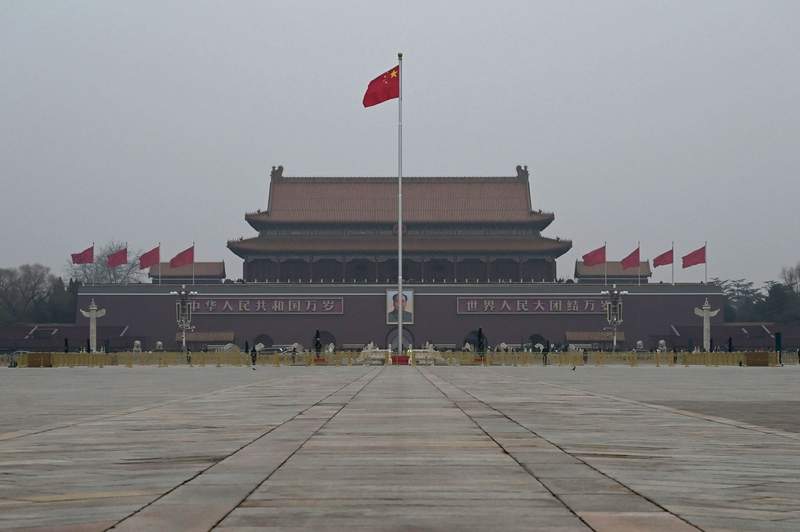
POLICY WIRE — Taipei, Taiwan — The clock ticks, years fold into decades, but some silences just get louder. In the self-governed bastion of Taiwan, President Lai Ching-te didn’t just mark the 37th anniversary of the Tiananmen Square crackdown; he poked China squarely in the eye with a reminder of what it desperately wants forgotten. Forget solemn platitudes for a moment—this wasn’t a memorial as much as it was a gauntlet thrown, challenging Beijing’s carefully constructed historical amnesia.
It’s become an annual ritual, hasn’t it? As candlelight vigils flicker to life in Taipei, once-vibrant commemorations across the strait in Hong Kong are now pretty much snuffed out. The shift is stark. Once a beacon of remembrance within China’s reach, Hong Kong has become another theater for Beijing’s control over narrative, proving that historical erasure isn’t a quick fix. It’s an ongoing, active suppression—a real whack-a-mole game against truth tellers.
Lai’s statement wasn’t just an act of historical fidelity; it was an act of political defiance. “The memory of that day—the students’ courage, the tragic cost—must not be buried,” Lai stated unequivocally from the presidential office. “Because for China to truly evolve, it must confront its past. You can’t just wish away what happened in 1989. It defines them, even in its absence from their textbooks.” He wasn’t talking just about abstract concepts; he’s talking about the raw wounds that refuse to heal, wounds Beijing continually pretends never existed. And that’s what makes his words sting.
On the mainland, naturally, the official line held firm. A spokesperson for China’s Ministry of Foreign Affairs, Wang Wenbin, predictably dismissed Lai’s remarks as “a cynical attempt by separatist forces to meddle in internal affairs and slander China’s hard-won stability.” Wang reportedly added, “Certain external forces continually distort facts to undermine our national rejuvenation. But they won’t succeed. We’ve moved past such misguided provocations, focusing on our people’s prosperity and a harmonious society.” It’s a well-rehearsed script, delivered with all the sincerity of a debt collector’s pleasantries. The message: move along, nothing to see here. Move along — and definitely don’t look behind the curtain.
The global community, by — and large, watches this dance of denial with varying degrees of discomfort. Taiwan, now a vibrant democracy, makes it its business to call out such historical whitewashing. Its stance isn’t merely about human rights; it’s also about contrasting its own free society with Beijing’s authoritarianism—a potent narrative weapon in its struggle for international recognition. When the conversation veers into global authoritarian trends, countries in South Asia and parts of the Muslim world often find themselves walking a delicate tightrope. Many, like Pakistan, are deeply intertwined with China through massive infrastructure projects like the Belt and Road Initiative, making any direct criticism of Beijing’s internal policies—including historical narratives—a rare, if not impossible, occurrence. Their silence, much like Beijing’s, speaks volumes.
📄 POLICY WIRE WHITEPAPER PUBLISHED: PAKISTAN'S NATIONAL SECURITY POLICY PRIORITIES
👉 READ BY CLICKING HEREThe People’s Republic of China’s meticulous control over information is pretty legendary. According to Freedom House’s 2023 report on internet freedom, China has maintained the unfortunate distinction of being the world’s worst environment for internet freedom for nine consecutive years. That’s a sustained, sophisticated effort to shape thought—or rather, to prevent it. They’ve built the internet’s most comprehensive barrier, affectionately dubbed the ‘Great Firewall,’ which isn’t just about blocking foreign sites. It’s about cultivating a highly curated internal information ecosystem, one where events like Tiananmen pretty much cease to exist for millions.
And yet, as Lai and others outside China persist in speaking truth to power, that silence begins to sound like an accusation. Because you can’t fully eradicate a memory, not when so many still carry the scars, the stories, or the inherited burden of what was lost. They might hide the bodies, but they can’t always hide the void they left.
What This Means
Lai Ching-te’s pronouncements aren’t just polite nods to history; they’re calculated moves in a geopolitical chess match. By shining a spotlight on Tiananmen, Taiwan positions itself not only as a guardian of historical truth but also as a moral counterpoint to mainland China’s one-party rule. It’s a savvy strategy, reminding democracies worldwide that its own struggle against Beijing’s encroachment isn’t just about territorial integrity, but about the fundamental values of freedom, expression, and remembering one’s past. Economically, this rhetoric likely won’t move markets directly, but it certainly complicates any softer diplomatic overtures from Beijing to Western powers. It reminds governments, — and their electorates, of the ideological chasm that defines the Taiwan Strait. This move also keeps human rights on the international agenda concerning China, preventing Beijing from normalizing its version of history. It serves to embolden dissidents—even those living in the shadows. But don’t imagine it doesn’t also deepen Beijing’s resentment, hardening its stance against any notion of Taiwanese independence. It forces a choice: acknowledge the past, or double down on denial.