

Silent Stranglehold: Mideast Defense Chiefs Grapple with Hezbollah’s Wired Wonders
POLICY WIRE — Tel Aviv, Israel — It isn’t the drone you see streaking across the sky, engines humming like angry wasps. No, this one’s different. It’s the whisper in the concrete jungle, the...

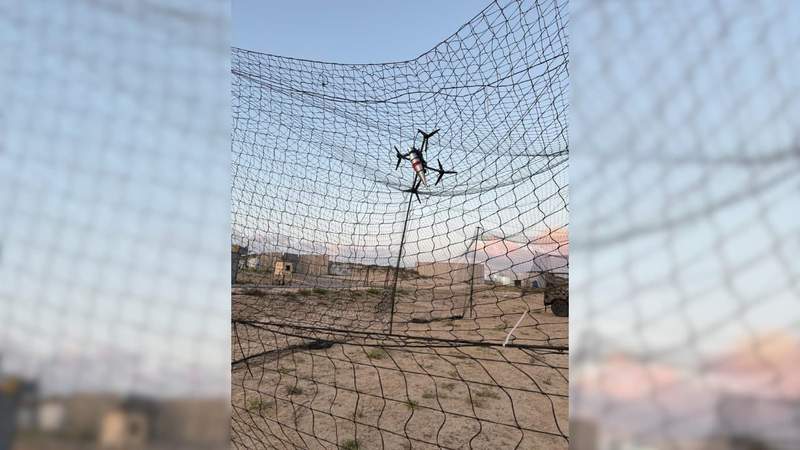
POLICY WIRE — Tel Aviv, Israel — It isn’t the drone you see streaking across the sky, engines humming like angry wasps. No, this one’s different. It’s the whisper in the concrete jungle, the almost-invisible thread unfurling behind a quiet hum—a drone tethered, paradoxically, to the earth by a spool of fiber-optic cable. This isn’t science fiction, folks; it’s Hezbollah’s latest headache for Middle Eastern defense planners, a cunning twist in the shadowy game of asymmetric warfare. And frankly, it’s got folks wondering just what else is lurking in the insurgents’ tech shed.
Defense Ministry circles, typically tight-lipped, have let slip a cautious optimism, a rare glimpse behind the curtain of ongoing tensions. They say they’re getting a handle on it. But make no mistake, for a time, these unassuming aerial gadgets—connected by hair-thin, jam-proof data lines—posed an almost existential puzzle for air defense systems. Think about it: no radio signal to spoof, no GPS to disrupt, no signature for your fancy electronic countermeasures to lock onto. It’s an assassin on a leash, practically invisible to the digital eye, slipping through urban canyons to pinpoint targets with unnerving precision.
“We’re not just playing defense; we’re innovating faster, adapting on the fly,” remarked Brigadier General Avi Bar-Lev, head of the Defense Ministry’s newly established UAV Counter-operations unit, in a rare off-the-record briefing earlier this week. “This isn’t your grandfather’s asymmetric warfare, — and we aren’t using his tactics, either. They build better drones, we build better defenses. It’s a perpetual, exhausting race, but one we absolutely must win.”
His words reflect a hardening resolve against a foe that continually pushes boundaries, exploiting technological seams in an opponent’s armor. Because, let’s be clear, Hezbollah isn’t some ragtag militia anymore. They’re a sophisticated, well-funded proxy with access to advanced engineering know-how, much of it flowing, one can reasonably assume, from Tehran’s expansive — and increasingly competent — drone programs. The fiber-optic tether negates pretty much every standard counter-UAV trick in the book, making detection a brutal exercise in pattern recognition and sheer luck, rather than technical superiority.
The implications aren’t just local. This kind of tech evolution, low-cost — and high-impact, offers a troubling playbook for other non-state actors globally. Think about groups operating in Pakistan’s restive border regions, or across the broader Muslim world, where conventional forces often rely on high-tech solutions. If a relatively constrained entity like Hezbollah can develop — and deploy these, what prevents others?
But the Mideast’s battle-hardened military minds claim to be adjusting. They’ve poured resources into detection through alternative means: acoustic sensors, specialized optical recognition algorithms, and good old-fashioned ground observation. The fight, it seems, has shifted from the airwaves to the street level, a grim, urban game of cat and mouse played out above the heads of civilians. And it’s not cheap. Global spending on counter-drone technology is projected to hit $5 billion annually by 2025, a dramatic surge from just under $1 billion five years ago, according to a recent report by the Teal Group—a sum largely driven by these new, stealthier threats.
📄 POLICY WIRE WHITEPAPER PUBLISHED: PAKISTAN'S NATIONAL SECURITY POLICY PRIORITIES
👉 READ BY CLICKING HERE“Hezbollah’s innovation, however localized it appears, serves a wider, strategic purpose for its patrons,” stated Dr. Sameer Al-Farsi, a geopolitical analyst with the Middle East Institute. “Ignoring its implications beyond the immediate battlefield would be a fool’s errand. This technology will propagate; it’s simply a matter of when — and where.”
It’s a brutal assessment, but hardly surprising. The game has changed. The sky is no longer the limit for drone operators. Now, it’s just one more layer in a complex, three-dimensional chess match that plays out over cityscapes and across fault lines.
What This Means
This subtle pronouncement from the Defense Ministry isn’t just about tactical victories; it’s a strategic flex, a signaling both to domestic audiences and to Hezbollah itself. If they can crack the fiber-optic drone puzzle, it reassures a populace weary of perpetual low-level conflict and serves notice to the adversary that even their most ingenious—or arguably, their most annoying—tactics have an expiration date. Economically, the constant arms race in counter-drone tech drives significant investment, creating niche defense industries, but also siphoning resources from other public services.
Politically, managing these silent threats maintains a fragile deterrence. Failure to do so would embolden Hezbollah, creating dangerous new avenues for calibrated strikes and psychological warfare. But for countries like Pakistan, grappling with its own asymmetric conflicts and the proliferation of various drone technologies, this Mideast development offers a cautionary tale: vigilance in counter-UAV defense isn’t a luxury, it’s a non-negotiable imperative. Because a simple drone, guided by a spool of nearly invisible cable, doesn’t need a huge budget to sow chaos—just a bit of clever thinking. For more on the unpredictable nature of modern warfare, check out Ukraine’s covert drone campaign.