

Paper Dream or Urban Nightmare? Paris Art Installation Stumbles on Public Stage
POLICY WIRE — Paris, France — Another day, another ambitious public art project runs smack into the messy, unpredictable reality of urban life. We’re talking about JR’s latest spectacle—a...

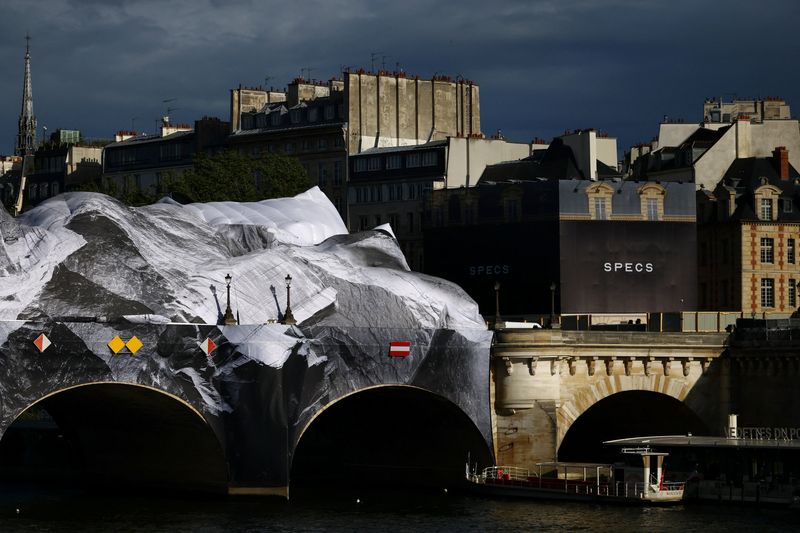
POLICY WIRE — Paris, France — Another day, another ambitious public art project runs smack into the messy, unpredictable reality of urban life. We’re talking about JR’s latest spectacle—a photographic wrapping intended to transform Paris’s iconic Pont Neuf into, well, something else. It was meant to be a grand gesture, you know, part of that Parisian panache. Instead, it’s facing delays, because, turns out, art in the wild isn’t always a pristine, gallery-controlled affair.
It isn’t some high-minded critic panning the piece or a bureaucratic nightmare—not entirely, anyway. Nope, the initial unveiling got tripped up. The very thing designed to inspire awe on one of Europe’s most famous bridges, is a bit busted. That’s right, there’s damage. The type that makes you wonder if Parisians, usually so enamored with their cultural milestones, have just collectively shrugged at this temporary transformation. And, let’s be real, a temporary artistic installation facing damage before it’s even fully opened? It just feels like a very French, slightly exasperated sigh of a problem. [QUOTE_PLACEHOLDER]
Artists like JR, renowned globally for taking his massive photographic works to the streets, typically operate on a grand scale. He’s transformed everything from favelas to the US-Mexico border fence. His medium isn’t oil on canvas; it’s cities, it’s public consciousness, it’s—crucially—public access. And that access, that direct interface with everyday life, means facing down a kaleidoscope of variables, from weather to the wear and tear of a million daily encounters. But this incident, delaying the actual reveal of what was planned for the Pont Neuf, well, it highlights a grittier side of urban exhibition.
This isn’t an isolated incident, either. Public art, despite its noble intentions, often walks a tightrope. It’s supposed to democratize culture, to bring beauty or provocation to folks who wouldn’t step foot in a museum. But that accessibility, that embrace of shared space, it opens up a Pandora’s box of vulnerabilities. From casual graffiti to targeted acts of vandalism, the street isn’t always kind to its temporary tenants. For Paris, a city that practically bleeds culture, you’d think they’d have a better handle on this, or at least a thicker skin for their artistic endeavors.
Consider the logistics. JR’s projects are monumental, requiring complex rigging, massive print runs, and precise installation by teams of specialists. Think scaffolding, cranes, temporary closures. The financial outlay isn’t pocket change, it’s serious money, backed often by institutional funding or private patrons who believe in the cultural pull of these spectacles. But what happens when that meticulously planned debut falters? You’re not just repairing a canvas; you’re adjusting schedules, rescheduling media, maybe even recalibrating public sentiment. It’s a whole heap of headaches, trust me.
And it’s not just the French or the West dealing with these headaches. Shift your gaze to the sprawling, vibrant, sometimes chaotic urban centers of Pakistan or the wider Muslim world. From Karachi to Lahore, or Cairo to Istanbul, artists — and cultural advocates fight similar battles. They’re striving to infuse their cities with contemporary art, with installations that challenge, reflect, or simply beautify. But they grapple with limited budgets, different cultural sensitivities, and, yes, the same brutal reality of urban wear-and-tear, sometimes outright indifference, or even active destruction.
Just look at the debate around preserving Lahore’s old city, where every proposal for public art or structural renovation becomes a tangled mess of heritage concerns, urban development needs, and practicalities of funding and protection. Public installations there often need community buy-in that goes way beyond a typical Parisian planning commission. They’re trying to achieve something beautiful too, often with far fewer resources to mop up the messes when things go awry. Makes a minor delay in Paris seem, well, comparatively minor. That doesn’t mean it isn’t costly, though. In 2022, Paris alone recorded an estimated €5.3 million in damages to public art installations and historical monuments, according to figures released by the French Ministry of Culture’s annual heritage preservation report.
📄 POLICY WIRE WHITEPAPER PUBLISHED: PAKISTAN'S NATIONAL SECURITY POLICY PRIORITIES
👉 READ BY CLICKING HERESo, the unveiling on Pont Neuf has been pushed back. No specific timeline yet on when the public will get its chance to actually witness the fully intact vision. It’s a hiccup, sure, but a very public one, underscoring the fragile existence of temporary art in permanently bustling spaces. For a city that cherishes its image, one has to wonder if these moments, these unexpected delays, become part of the narrative too—a subtle wrinkle in the grand artistic pronouncements that usually grace its streets.
Because the real installation isn’t just the art piece itself. It’s the whole dang process: the expectation, the construction, the engagement, the occasional setback. It’s all part of the package, even if you’d prefer a shiny, problem-free bow on top. What’s going on at Pont Neuf right now? It’s just a reminder that the street, the public, the weather—they’ve all got opinions, and they aren’t always expressed through five-star reviews.
What This Means
This incident, seemingly trivial on the surface—a mere art installation delay—carries more than just aesthetic weight for Paris and broader urban cultural policies. Economically, even minor delays on high-profile public art projects in tourist hubs like Paris aren’t just about the artist’s reputation; they represent lost immediate tourism engagement and potential adjustments to associated promotional campaigns. These are investment-backed initiatives, often intertwined with city branding strategies. When damage occurs, especially before completion, it hints at either insufficient protective measures, a disconnect between planners and ground-level realities, or—and this is key for a metropolis of Paris’s standing—a certain public apathy or outright rejection manifested in vandalism. For Paris, constantly competing for global cultural primacy and tourist euros, such hiccups dent its veneer of flawless cultural delivery.
Politically, the handling of public spaces — and cultural assets is often a subtle barometer of urban governance. If such installations become routinely damaged or encounter persistent logistical failures, it raises questions about civic security, community engagement, and even resource allocation. It can spark debates about what kind of art is appropriate for public spaces, how it should be protected, and who bears the cost—both financially and reputationally—when things go sideways. It’s not just art on a bridge; it’s a tiny battleground in the ongoing urban discourse over shared spaces and collective identity. Perhaps it’s time for cities to rethink their ‘install — and hope’ approach to temporary art. Maybe a little less grandeur, a little more resilience. Or, maybe a more radical clean sweep of strategy for securing public cultural assets is needed.