


Swarm of Shadows: Locust Plague Deepens Iran’s Existential Plight
POLICY WIRE — Tehran, Iran — Forget the geopolitical posturing, the endless cycles of sanctions, or even the lingering whispers of a nuclear deal gone sour. For many in eastern Iran, a far more...

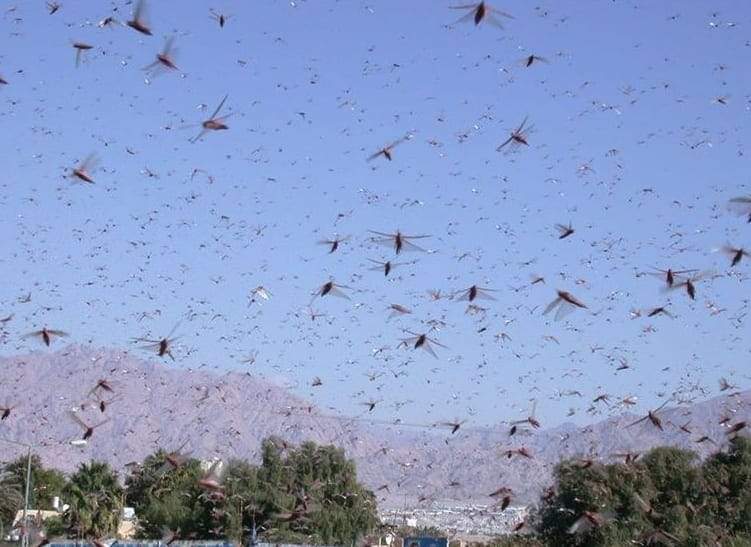
POLICY WIRE — Tehran, Iran — Forget the geopolitical posturing, the endless cycles of sanctions, or even the lingering whispers of a nuclear deal gone sour. For many in eastern Iran, a far more ancient, more visceral foe is on the march, threatening to devour what little prosperity remains: hordes of Moroccan locusts. It’s an unfolding biblical drama—but with satellite imagery and modern pest control efforts proving brutally insufficient against nature’s raw, relentless appetite.
It began as a whisper, a distant buzz on the wind that locals sometimes attribute to the relentless heat. But the buzz thickened into a roar, a swirling, ochre-tinted cloud that blocked the sun. Farms, already stretched thin by years of drought and an economy bruised black and blue, are now battling an enemy that doesn’t care about currency fluctuations or international relations. They just eat. And they don’t stop.
Because, really, what’s a government to do? When the sky itself turns into a living, chitinous wave, options dwindle fast. Hassan Rezaei, head of Iran’s Agriculture Ministry’s Plant Protection Organization, sounded more weary than authoritative when we spoke. “We’re fighting a multi-front war here,” he said, his voice etched with the weight of it all. “Sanctions make aerial spraying operations — essential for controlling these swarms — exceedingly difficult. The pesticides? The spare parts for our planes? They’re luxury goods when you’re dealing with a strangled economy. It’s not just a pest problem; it’s a sovereignty issue.”
The swarms, capable of traveling hundreds of miles a day, aren’t confining themselves to specific districts. Reports out of the Sistan — and Baluchestan provinces are grim. Estimates suggest thousands of hectares of cultivation and natural rangelands have already been impacted, with figures escalating daily. And it’s not just the eastern flank feeling the crunch; there are fears these hungry insects will push deeper, turning breadbaskets into dustbowls.
This isn’t an isolated phenomenon. Pakistan, Iran’s eastern neighbor and a country frequently grappling with its own food security challenges, has been wrestling with similar—and often related—locust invasions for years. The desert locust, another species entirely but with similar destructive tendencies, frequently crosses the porous borders of the region, creating a shared agricultural nightmare. It makes you wonder why regional cooperation on such existential threats often takes a back seat to, well, everything else. But don’t look for easy answers there; history’s a long shadow.
Globally, the scale of potential damage from these insects is staggering. The United Nations’ Food and Agriculture Organization (FAO) once estimated that a single square kilometer of an average swarm could contain 40 to 80 million locusts, consuming the same amount of food in a day as about 35,000 people. Extrapolate that for the millions upon millions currently overrunning Iran’s fields, and you’ve got a genuine catastrophe simmering, affecting up to 10% of national agricultural output, by some early internal assessments. Farmers there? They’re resorting to traditional, almost futile methods—beating pots and pans, lighting small fires—praying for a miracle.
Zahra Nourollahi, a spokesperson for Iran’s Department of Environment, offered a somber perspective, choosing her words carefully. “The international community needs to understand,” she posited, “that environmental calamities—natural ones, at least—don’t respect political boundaries. When Iran struggles with food scarcity, it creates instability. And stability, or the lack of it, has a way of trickling out into the broader region.” She’s got a point. What happens in Iran’s fields won’t stay in Iran’s fields.
For more on regional challenges, you might read about state pressures in Cairo—they don’t call them silent battles for nothing. Or perhaps consider the broader theme of political zealotry’s effect on consumers, as food prices climb due to multiple systemic shocks, not just swarming pests.
What This Means
The Moroccan locust infestation isn’t merely an ecological blip on Iran’s radar; it’s an accelerant thrown onto an already volatile fire. Politically, it strains the regime’s legitimacy as it struggles to protect its own populace from literal starvation, all while battling a deep-seated economic recession compounded by Western sanctions. The messaging becomes complicated: Is it a failure of governance, or yet another foreign-imposed crisis? The government will undoubtedly point outwards, trying to deflect. But a hungry population rarely cares for nuanced excuses.
Economically, this situation pushes food inflation into potentially terrifying territory. Crop losses mean fewer goods in markets, higher prices for staples, and a deepened reliance on imports that Iran can ill afford. It threatens to cripple a farming sector that, even in good times, provides a critical safety net for millions of rural Iranians. it could trigger internal migration as farmers abandon blighted lands, placing additional strain on already overcrowded urban centers.
Regionally, the trans-boundary nature of these pests makes them a shared problem—a shared misery, really. A weakened Iran, further destabilized by food crises, hardly bodes well for a neighborhood perpetually on edge. It’s a cruel twist, this ancient scourge returning with renewed vigor to torment a nation that’s already seen enough human-made tribulations for several lifetimes. The fields are barren. And nobody seems to have a clean answer.